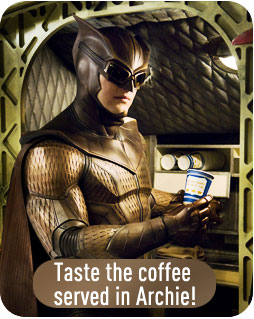
Garth Risk Hallberg argues that “Watchmen” isn’t fairly called a graphic novel, unless its film version is called a “paper movie.”
I understand where this preference for the term “graphic novel” came from: from comics fans tired of suffering the slings and arrows of derision from people who didn’t know what they were talking about and didn’t understand and respect a great American graphic form. If only these tossaway booklets could be collected into something with a spine and preferably in hardback, perhaps they would merit better treatment. Now we may have the opposite problem: Drivel getting collected into $150 “omnibus” editions while John Donne goes unnoticed on Amazon.om in the absence of book stores.
I agree with Hallberg that “Watchmen” is a wonderful comic book. And if the term graphic novel is to persist, yes, it’s an exemplar. But a great novel, in a field that includes “Anna Karenina” and “The Great Gatsby?” The idea is comical.
Ten years ago, an episode of “The Simpsons” had Bart sarcastically dissing Mad magazine, saying something like, “Wow, that’s so funny.” The 10-year-old was too advanced for Mad‘s lame juvenile antics. I hadn’t looked at the magazine since the late 1970’s, and remembered feeling that way about it then. Any hint of the subversive was long gone.
But the last several years have brought about a Renaissance (even as the magazine’s circulation has dwindled, and its publication schedule reduced to quarterly). Whenever I’ve seen a new issue in the comics store, I’ve picked it up and gotten a few actual chuckles. (Without, I should note, buying it — hence the reduced publication frequency.) At last year’s San Diego Comic Con, DC inserted into attendees a convention-only special “Watchmen” issue of Mad. It was flat-out wonderful. Now that the magazines going to come out only four times a year, I’m wondering if I shouldn’t have been supporting it all along, even if only for my kids. (And isn’t that really why we do everything? “For the children?” Political campaigns, tirades about deficits and taxes, worker-safety laws, empty populism — it’s all always “for the children.” Because, I guess, the rest of us don’t matter.)
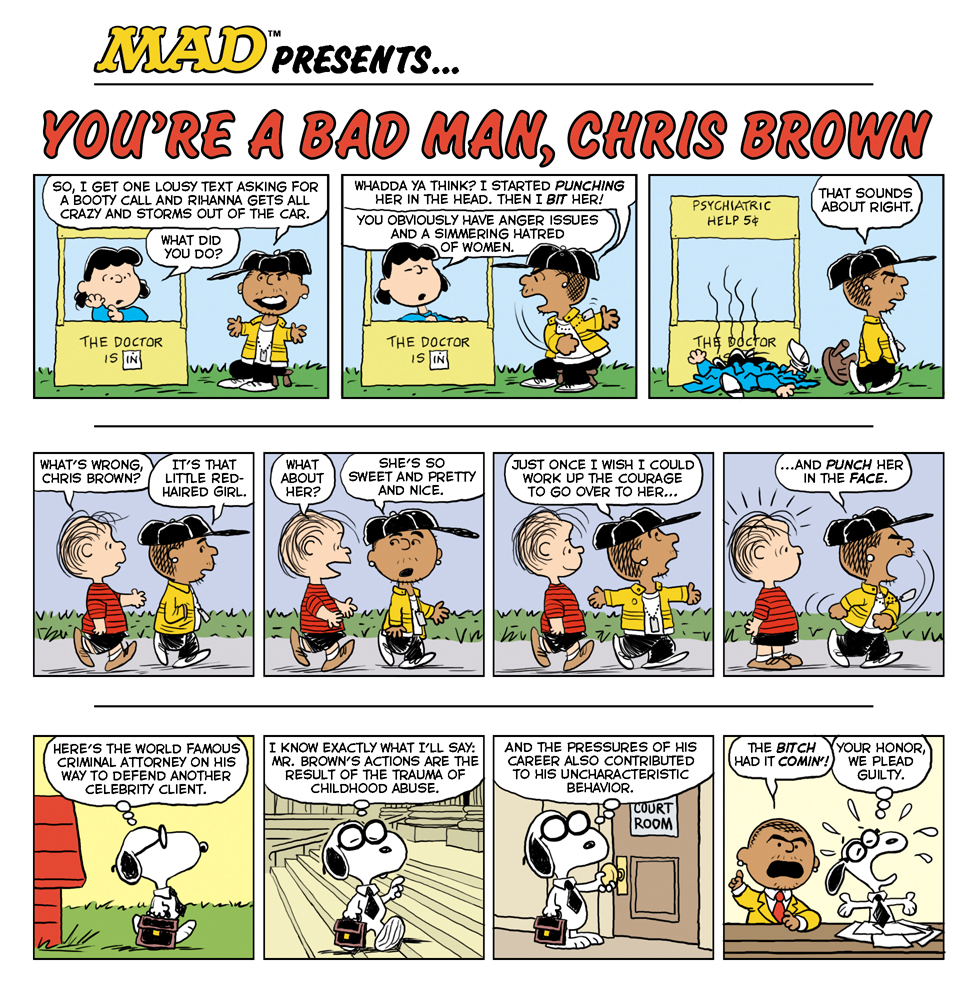
In any event, here’s something I just Stumbled across that shows again why recent Mad is so much fun.
Something I noted about the film version of “Watchmen” was that it was mostly faithful to the comic book — to its detriment. “Watchmen,” let’s remember, was not a “graphic novel” — it was a comic book, delivered in 12 serialized installments. As such, it made much of classic comic-book storytelling construction. Each issue had a strong set piece (Rorschach escaping prison; Nite Owl and Silk Spectre rescuing people from a fire; Dr. Manhattan and Silk Spectre debating mankind’s future) and a cliffhanger. By transliterating what worked so well in separate chapters released 30 days apart in a literary format, the film is saddled with a start-and-stop structure antithetical to action-adventure movies, which rely upon the classic Aristotleian structure of rising action and catharsis.
So: the comic book was great. The movie has some wonderful things in it (several of the performances, many of the special effects), and one major improvement: the ending. The ending in the comic book was an unintentional swipe from “The Outer Limits,” was utterly unconvincing in uniting humankind, and seemed only tangentially related to most of the comic’s main themes. The movie’s ending, by contrast, is far more plausible because everyone on Earth has already seen Dr. Manhattan’s power, and works better because it ties in with many other plot elements and themes (the ethical responsibilities of heroes; the moral ambivalence of vigilantism; the unintended side effects of employing great power, however well-intentioned). Ironically, against a backdrop the fanboy legion insisting upon apostolic faith to the source material, it is the element of greatest change that succeeds the most.
So then I wondered, what if they had really changed the comic book? Really done a different take on the material? Then I came across this, below, and was reminded of reading the Denny O’Neil issues-oriented era of “Justice League of America” comics, while seeing the antimatter universe version called “Super Friends” on my TV set on Saturdays.
My friends and I were able to get a room for this year’s Comic Con.
Last year they sold out in 9 minutes. This year it was just as harrowing, but three of us were working the phones and the online registration system. All seemed lost — until a celebratory cellphone call from good friend Paul Crist.
After a full night of fighting crime, there’s one thing you need to do before settling down for a relaxing cup of Nite Owl coffee: Tend to your wounds. If you’re not fortunate enough to have an Alfred or a Jarvis, that means stocking your own medical supplies. Here’s the perfect solution for those little scrapes and cuts: Ouch! Comic Strip Bandages.
It’s worth noting again how poor a job the Fourth Estate has done of informing and protecting us, especially in the last decade. Now imagine the next few years when all those newspapers are out of business and nothing better has yet come along.