Lee Wochner: Writer. Director. Writing instructor. Thinker about things.


Blog

Not music to his ears

September 24th, 2012

Last night we had a major family emergency that meant I had to run out with my 10-year-old at 8 p.m. on a Sunday: He and his sister had had a mishap with the Xbox, scratching the disk for “Call of Duty: Black Ops” and rendering it inoperable. Thankfully, we located a Game Stop that was open that late, and sanity was restored.

On the way home, we were listening to music in my car. One song in particular caught Dietrich’s attention. (Yes, my son’s name is Dietrich, as people keep inanely asking me, “Your son’s name is Dietrich?”)

“Who’s this?” he said.

“Sonic Youth,” I said. “Why?”

“This is the most awful song I’ve ever heard.”

“Well, your mother would agree with you. But your sister and I like it.”

“It’s awful. What’s wrong with it?”

“The guitars are purposely tuned ‘wrong,'” I explained helpfully.

“Yeah, but what about her voice? She sounds terrible.”

Hm. One person’s “terrible” is another person’s effect. Just last week I had forced one of the designers at my company to purposely “misdesign” a client’s ad so it would get more attention. In this way, I like to think I have some distant kinship with Picasso, who applied those “rules” of his art before he broke them. But none of this made any impression on my son, or, at least, not any positive impression.

“I don’t care,” he said. “I just want this to end!” Again, it was almost as though he were channeling his mother, who has been known to casually reach over and turn a dial, any dial, to remove the offending noise.

So now I think when I get home I will share this news with Dietrich: His new favorite band, Sonic Youth, has just recovered some stolen guitars. Guitars that were stolen 13 years ago. So now they can make even more of this discordant, irritating, off-key music.

That is, if the band hasn’t broken up, as it apparently has, in the wake of the divorce between bassist and “singer” Kim Gordon and guitarist and singer Thurston Moore. Even if that’s the case, though, there’s a whole back catalog I can introduce the kid to. And wait ’til we get to Captain Beefheart!

How long does it take to write a play?

September 22nd, 2012

I get asked this sometimes. Here’s the answer:

Sometimes 46 minutes.

Sometimes a couple of weeks.

Sometimes a few months.

Sometimes four and a half years — as in the case of the play I just finished. Started it in 2008, and then oddly today I had the feeling that I could finish it. No, I don’t know why. Hadn’t even looked at it in years. But I cracked it open and looked at it and, yes, finished it.

(Which means there’s still hope for the play I started in 1990….)

Monday misdemeanors

September 20th, 2012

On Monday, I woke up feeling somehow a little out of sorts, the way that we sometimes do and can’t explain. Maybe it was just too much Maker’s Mark the night before (but it had seemed so right at the time!) or maybe it was the recognition that there was nothing on my schedule that day (almost unheard of), but finally, in the middle of the afternoon, I decided to go see a movie. “Robot & Frank,” to be precise, of which I would recommend the first 80% — up to the point when the police stake out Frank’s house — after which I suggest you leave.

And that’s what I wish I had done, because the movie, wonderful up to that point, falls off a cliff after that, and because I suspect that that’s about when something was happening to my car in the parking lot at the Burbank Town Center. Because when I returned to my car and got in and went to back out and looked into the passenger-side mirror to ensure there was no one behind me, I found myself staring into a black empty space where my mirror had once been. The mirror was gone. I got out of the car and walked around and looked at this emptiness, and then walked to the front of the car — no idea why — and then back to the mirror, and then all around the car, somehow disbelieving that this had happened. I mean, this was Burbank. It’s not like I was parked in Eagle Rock (where my Toyota Celica was smashed into with a football-sized piece of cement in 1990 in a failed attempt at car theft). And this parking spot was near IKEA. I mean, if you can’t trust that your car is safe when it’s entrusted to IKEA, where can it be safe?

Long and short on the car: It’s a BMW, so I knew this mirror — just the glass and its little electrical cable, not the whole assembly — wouldn’t be cheap, and I was right. Replacing it cost me $438. The deductible on my auto insurance? $500. So now seeing “Robot & Frank” cost me not 10 bucks, but almost five hundred bucks. I liked the movie, but not that much.

Then my wife called. I assumed she was on her way to work, but no. “Are you on your way home? There’s an incident here and I can’t leave.” “Incident.” I figured our kids were arguing. No. I got home to find that my gardeners of 15 years, two brothers, had decided to have a drunken backyard brawl on my property in front of my children. They were drinking beer while mowing the lawn and trimming trees, then they hung around and drank some more, then they started belting each other and rolling around in the mud. I didn’t get to see any of this, but my 10-year-old son did. He reported that Juan seemed to get the worse of it because “he had more blood all over him.” My wife said she didn’t call the police because the one brother had already had drinking-related issues — which made me think that a wake-up call from the authorities was precisely what he needed — but I needn’t have worried about that, because two blueshirts in a squad car showed up anyway because two neighborhood teens had called them. I think this way: that when kids call the police, the fight must look pretty serious. It must not have seemed serious to the police, though, who were very cavalier about it but who quizzed my neighbor no fewer than six times about whether or not he was one of the combatants. When I told these cops that these men had been my gardeners for 15 years and now I was firing them, one of them said, “That’s a shame. Maybe you can work something out,” evidently confusing my locale with that of Mayberry RFD. “They were rolling around drunk in the mud having a fistfight in front of my kids,” I said. “This isn’t a Hemingway novel.”

So I got my car back today, mirror freshly replaced, and I’ve been collecting referrals for gardeners on Facebook. Someone asked why my kids don’t just “mow the lawn” — someone in Brooklyn, NY, with no sense of the scale of the job. My kids have a fair number of chores (many more than their friends, they tell me), but I’d rather have the avocado tree, lemon tree, orange tree, sugar cane, grapes, fig tree, tangerine tree, and even the trees without edible products, plus the lawn, tended by professionals. I’d just rather these professionals not roll around among these plants while drunk and beating each other.

The end of books

September 7th, 2012

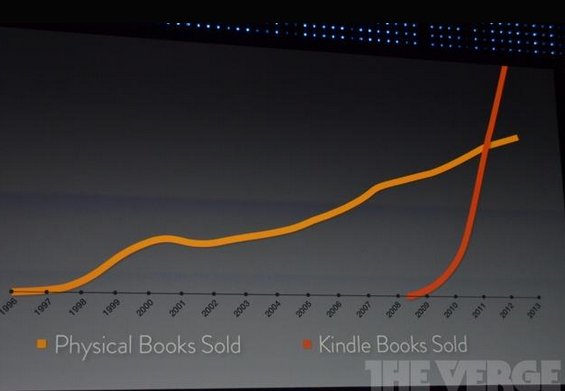
In paper format, anyway.

Take a look at the slide below; it tells the story.

And yes, I’m still reading from paper. And I will miss the paper books too. And I suspect that moving from paper to screen will mean a further decline in reading. And remember the NEA study from about eight years ago that found that the number one factor behind whether children were readers or not was the presence of books in their house? The presence of screens translates into the further presence of video and games, not “books,” such as they’ll be. So I’m concerned about this.

But here’s the disturbing photo, and here’s the story about it.

10 practical jokes you are not to play on me

September 7th, 2012

Because I’m saving them for you. Here goes!

Birthday comics

September 4th, 2012

Here are the covers of the 119 comic books that were on newsstands the month I was born. (And yes, if it seems important to know what was available the month you were born, you can enter your own date of birth too.)

My God, I wish I had all of those issues. Yes, even though every single week I consider how best to dispose of the thousands upon thousands of comics already in my possession, I might be willing to run over a close relative with a cement roller to get these. At various times I’ve had probably a third of these (bought, obviously, later in life). How did I ever let them go?

The price of fame, Part 3

September 4th, 2012

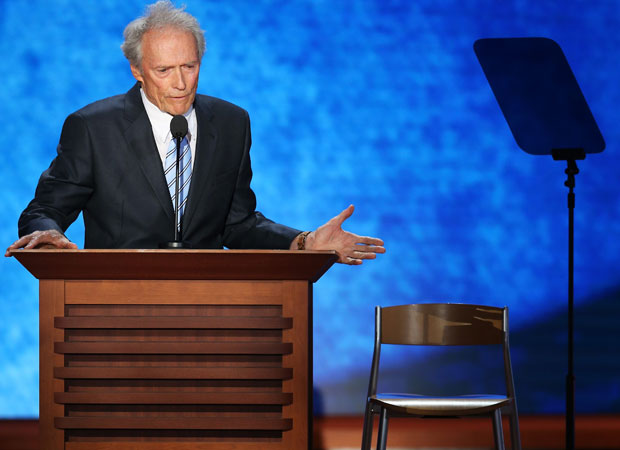
Clearly, people who took umbrage at Clint Eastwood’s debate with an empty chair at the Republican National Convention aren’t taking it sitting down. Here’s the latest artistic counteroffensive: Beside the life-sized cardboard cutout of Eastwood keeping watch over Glendale, people have started to add empty chairs.

As someone who has long enjoyed Eastwood’s movies, all I can say is I wish this were happening to Chuck Norris instead.

The price of fame, Part 2

August 30th, 2012

Another downside of stardom: No one can stop you from humiliating yourself.

The price of fame

August 29th, 2012

When Ron Palillo died two weeks ago, it immediately brought to mind a one-act play festival we were both involved in back in 1989. Now I finally have time to tell you about it, and about the ironies of celebrity that I learned from the experience.

I was in grad school at USC, with a focus on playwriting. My play “Guest for Dinner” had been selected, along with three plays by three other writers, for the annual one-act play festival on campus. (A festival that, oddly enough, I became the producer of for two years about 20 years later.) This was a festival with fully staged productions — actors off-book, and with set pieces and costumes, with a three-night run, and this festival was a competition, meaning that one of us was going to be selected as a winner of something or other. As you can expect, each of us wanted to win, and at least two of us had all the arrogance and competitiveness rightly associated with male playwrights in their 20’s. (And, probably, most artists of any age.) One thing that the two of us agreed on was that the other two plays were terrible, and that we’d be happy to lose if we had to, so long as the other guy won. This is similar to the Oscar nominees who say “It’s an honor just to be nominated.” In other words, it’s bullshit. We both wanted to win. That said, I did think this other guy’s play was good, and perhaps better than mine, and that certainly ours were light years ahead of the other two.

But then Peter, the other guy, came up with an ace in the hole. He was able to cast a celebrity in his play. He announced excitedly one day that he had Ron Palillo (“Y’know, Horshack!”) in his play. I knew exactly who Ron Palillo was — I had grown up jeering at “Welcome Back, Kotter,” mostly, I think, because I knew kids like that at school and couldn’t stand them. At least, I now like to think that that’s why, because I’m friendly now with Mark Evanier, and “Kotter” was Mark’s first TV writing job. And Mark’s a good, clever, funny writer. Even though now, in 1989, “Horshack” was past his prime, 10 years earlier he had been a pretty big sitcom star, a guy whose face was on lunchboxes and board games and toys and on television screens around the world. Starring in my play I had a very good actor named Charlie Hayden who had once had a scene with Charles Bronson. (Quoth Charlie about working with Bronson: “Like acting with cement.”) Charlie was great, but he wasn’t on any lunchboxes.

During rehearsals, I would catch little breezes of trouble from Peter about working with Ron Palillo. I had no idea what any of this was about, but the general gist seemed to be that he was difficult and demanding. On the first two nights of performance, the plays came off without a hitch. Mine ran about the way it should, with laughs in the right places and the intentional anxiety of being made to wait in others, and Peter’s, about a troubled friend (or brother?) who had to be left behind, worked fine too, and the other two were still miserable to sit through. Occasionally, we would all comment on how lucky Peter was to have a celebrity in his, and Peter would accept that he was lucky indeed, at one point saying with consideration toward the inevitable judging night, “Well, yeah, and I’ve got ‘Horshack,’ too, so there’s that.”

On that judging night, a funny thing happened. For some reason, the sort of reason impossible to suss out in the theatre, that particular night’s audience really connected with my play. The laughs were bigger and the connection with the plight of our antihero was deeper. And, in Peter’s play, Ron Palillo came in on the wrong note, seemed angry and intense for no discernible reason as he tried his hand at “Acting!” with a big capital “a” and an exclamation mark, ran around the stage, and, when he jumped up on the bed on stage to make a point, he very loudly broke the frame of the bed, the bed cracking to the floor, Palillo tumbling off it, and the other two actors left first stunned then scrambling to regain some composure and continue. Later, much of the discussion was on Palillo’s antics and his on-stage calamity, and when the judges came back… I won.

Peter had thought he might win partly thanks to Ron Palillo. Now he was certain he’d lost entirely thanks to Ron Palillo.

After the performance and the announcement of the winner, one of my professors, Bill Idelson, who had written about a million hours of television and who I really liked and admired, told me what he thought of my play when I asked: He ripped it to shreds. And so, 23 years later, I still wonder if I did win because of Ron Palillo.

By the way, here’s what I won: a plaque. That’s it. A plaque that had my name and the title of my play engraved on it as winner. I’m looking at it right now on my wall as I write this. The following year, I was in this festival again, and this time I know I had the best play — and I lost. As they say, “You win some, you lose some.” The impact in this case was nil either way. Later that same year, I had a play in a festival run by Jerome Lawrence, the revered co-author of “Inherit the Wind,” “Mame,” “The Night Thoreau Spent in Jail” and many other plays. One evening in the restroom, Jerry asked me what I thought of playwriting contests. Before I could respond he said, “I’m agin’ ’em.” He said we shouldn’t make playwrights compete against each other. He felt it was already too hard to be a playwright; why extend the suffering?

All this came back to me when I heard of Ron Palillo’s death — and then saw this piece on Mark Evanier’s blog. Mark doesn’t have very nice things to say about working with Ron Palillo either, and in my experience (and from reading his blog), Mark is generous with credit and good to work with. But I also wonder what it felt like to have been an enormous television star in 1979, and 10 years later to be performing for free in a one-act play festival at USC in the hopes that someone, anyone, from the film school, or perhaps one of the professional judges, or the next Spielberg in the audience, might spot you and give you again even the smallest taste of what you’d had so recently. And so that was the lesson of celebrity that I learned: that fame cuts both ways, for those who are famous, and also for those who expect things from association with it.
Set your DVR

August 29th, 2012