Lee Wochner: Writer. Director. Writing instructor. Thinker about things.


Blog

Lost in translation

August 6th, 2009
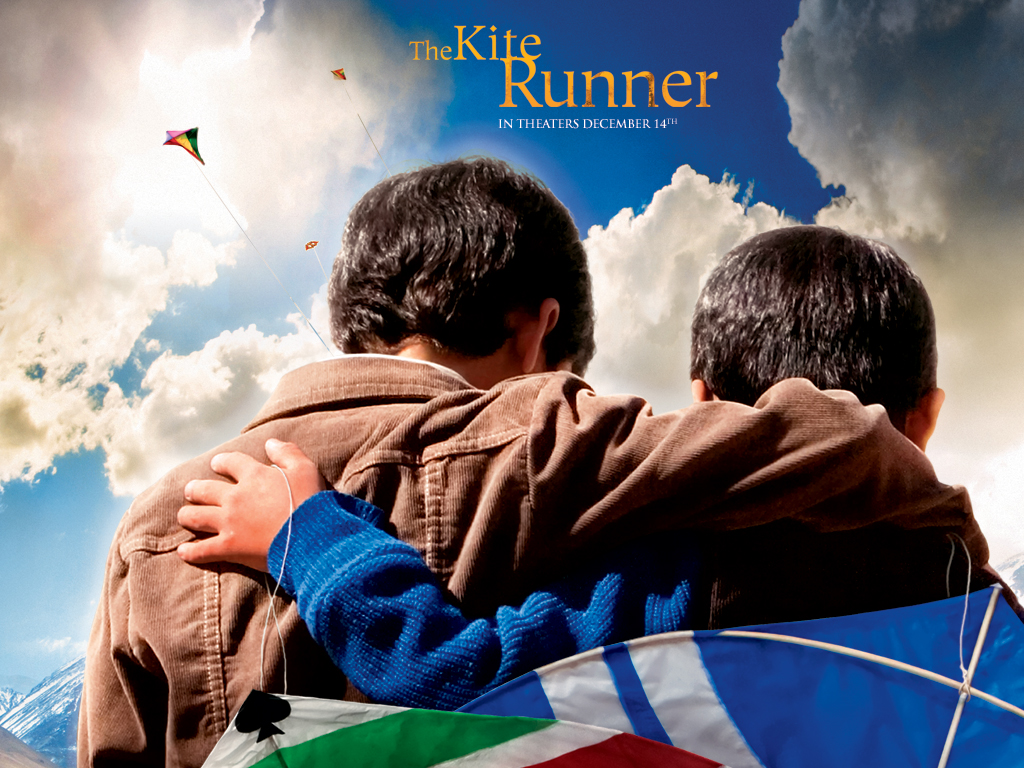
the-kite-runner-1-1024.jpg

Last night my son Lex and I watched the film version of “The Kite Runner.” When it was over, I asked him what he thought.

“It was okay,” he said.

And he was right:  It was okay.

Except when I read the novel just six months ago, it was a gut-wrenching experience. I even cried. Twice. The tragedy of childhood betrayal and mixed-up identity against the background of poverty and lowered circumstances was breathtaking. As was the palpably new sense of how horrible it would be like to live under the Taliban.

None of that is in the movie.

Well, actually, all of it is in the movie — all of the scenes. In making the adaptation, they didn’t monkey around with the story or the characterizations. There’s only one scene I noticed missing from the book, and I have to agree that it could be cut. (Although given a later scene that’s in the movie, I suspect they shot that earlier one as well.) But what’s left out, somehow, is the impact. Some things just don’t translate to other media.

A notable example:  To get out of Afghanistan when the Russians and then the Taliban movie in, the boy and his father and several others have to be transported across the border in the belly of a fuel tanker. We have that scene in the movie, but there’s no resonance:  The boy gets into the tanker. His father tells him it will be all right. The boy says he can’t breath. To distract him and provide what comfort he can, his father has him turn on the small iridescent light on his wristwatch and recite a poem. Next scene:  They are in India.

This is pretty much the form the scene takes in the novel. Except Khaled Hosseini is able to convey the lingering, choking, searing stench of fuel, and the utter darkness of the tank. Film can’t do smell (although fiction can), and film can’t do darkness (although fiction can). When the boy looks at his watch, we see a closeup of a boy looking at his watch; there’s no context because there’s no way to see deeper in the frame. The novel isn’t limited by frames. The book, a seemingly sightless medium, offers greater vision.

Sadly, I don’t think they’ve done anything wrong in this movie. It just doesn’t make a statement the way the novel does. The impact was lost in translation.

I’ve  thought a lot about translation over the years. I remember reading “Ubu Roi” in French in college and wondering whether it just shouldn’t have been translated into English; no matter how hard one tries, a pun in French doesn’t work in English. (One of Pa Ubu’s recurring outbursts is “Merdre!” which makes a pun of “murder” and “shit.” In English, I’ve seen this translated as “Pschitt!” Which is just “shit” misspelled, and with none of the menace.) I wonder how far off the mark the translations of some of my favorite writers, Kafka and Rilke among them, must be. I remember translating “La Cancatrice Chauve” myself as part of my graduation obligations and wondering just how absurd my translation was. I remember one semester in particular raising the question of translation with several different professors, all of whom gave what amounts to the stock answer:  While a translation is not as good as the original, you usually get a fair amount.

I hope that’s true. And if I had to wait to learn German and Turkish and Spanish and Norwegian, I wouldn’t have read Kafka, Goethe, Kant, Rilke, Orhan Pamuk, Borges, Gabriel Garcia Marquez, or Knut Hamsun, to name just a few. Still, I would think it’s harder to translate from one language to another than from one medium to another, especially from novel to film, because film exists in the universal language of sight. And yet here we have a powerful, wrenching novel, faithfully translated into a film that, finally, is just okay.


Bad taste in bad taste

August 6th, 2009

troutmaskreplica.jpg

A museum in Orange County is exhibiting what it believes is the worst 100 album covers.

Except they think Trout Mask Replica is one of them.

So there goes their credibility.

Ass the world turns

August 5th, 2009

In which I see a side of my friend Sam Kuglen I’ve never seen before.

Playing well with others

August 5th, 2009

Every year for 16 years now, my theatre company has held a one-act competition. We get hundreds of submissions from around the country, and some more from various other countries (in the past, England, Iceland, Ireland, and probably other countries ending with “land”). Each submission gets read by at least three different volunteer readers who are playwrights, actors, directors, and producers in the company, with plays that survive that process then getting a live cold reading during an evening of closed company readings. Which is what we did earlier tonight. Winning nets the lucky playwright a small cash prize, plus production. We then build the rest of the one-act festival around that winning play, accompanying it with plays written by resident playwrights, or some of the other submissions, or one-acts by playwrights we’ve previously produced.

Some years we get so many great plays via blind submission that it’s hard to winnow down the list. Other years we have lengthy discussions about how to somehow change the submission guidelines so that plays like these never, ever, ever show up again — at our place or any place else on planet Earth. More than once, someone has suggested for some reason that we should have one person who has to read all the submissions, and more than once my rejoinder has been, “Who do we hate the most?” Because while there might — might — be 5 or 10 terrific plays in there, and maybe a handful more good ones, there are still the other 200 or 300. If we forced someone to read all of those personally, I’m sure that  human rights groups would intercede. Even if that someone were Dick Cheney.

Fresh as I am from an evening of these readings, I thought I’d share a few thoughts about what separates the good short plays from the bad ones. Here goes:

  1. Comedies should be funny. (If you think otherwise, don’t.) That means they have to be clever. Unexpected. That most certainly does not mean that the comedy should hinge on puns. In fact, it means the precise opposite. Comedy does not hinge on puns. Repeat after me: Comedy does not hinge on puns. Unless you’re Groucho Marx and you’re going to be in the play. Then we’ll make an exception.
  2. If your play isn’t dramatic, it’s because you don’t have enough conflict. If it’s intended as a comedy but isn’t funny, it’s because you don’t have enough conflict. Comedy relies upon conflict taken to a high level, in an unexpected way.
  3. In all cases, it’s stronger to have conflict than to have two characters sit down and share their feelings. I don’t care about their feelings, and 30 years into this, I can say with authority I think just about everybody who ever sits in a theatre agrees with me, whether they can articulate it or not.
  4. Plays about sex should be sexy. At least once. Call me old-fashioned. People talking about the sex they are or aren’t going to have isn’t sexy. It’s annoying. Too many people already get too much of that in their marriage. Why would they want to pay twenty bucks for more of that? Especially when twenty bucks will get them more than that on Hollywood Boulevard.
  5. “Subtext” means that there’s something going on subtextually. You need this. No, no, no, don’t have your characters say it, have them not say it.
  6. If we all know what the next line is going to be, you shouldn’t write it. It’s even worse when we know what every next line is going to be.
  7. If people are getting ready to do something in your play — if all the action of the moment is moving toward that — then for God’s sake, please have them do that. No matter how wrong or disturbing or repulsive or upsetting it may seem. Because that’s what we go to the theatre for — an interesting and unique experience — and if you don’t give it to us, you’re just a tease.
  8. Please do not — and I’ve said this many times — please do not write sequels to famous plays in which, for example, Godot shows up. The guy who got there first made a pretty good showing with it, and you’re not going to. Also, do not take a famous play and change the title so  you can write your own version. If the play has been running in New York for more than three decades, at least two of us will know of it. The world does not await plays entitled “The Park Story” or “Burn That” or  “Indian Head Nickel.”

That’s just off the top of my head.

So:  the one we picked. Here’s why we picked it:  It’s really funny. It’s inventive. Every character, including the small one-scene characters, is well-written. We enjoyed hearing this play, and now we really want to see this play.  For several weeks. And because we picked it, now we’re going to get to. I’ll let you know when.

The first death of newspapers

August 3rd, 2009

I’ve written here so often about the miserable state of newspapers that I should give the topic its own category. My love of newspapers goes back to the family breakfast table when I was a kid and debates over the news (or, more correctly, my father latest outraged outburst). Later, my first job was with a newspaper (in classifieds, when I was a teenager), and still later I became a reporter and then editor (and later freelancer) at several different papers.

Even with that personal history, though, I still plan to cancel my LA Times subscription. I’ve been planning that for six months now and will soon do it. You’ll see.

We’ve all heard that the internet is killing newspapers. But the way in which it’s been talked about is remarkably similar to the way in which a previous media war was waged:  the one between newspapers and the then-emergent print killer called radio. As a new book points out, what’s interesting is that in both cases, the newspaper people viewed it as a moral war to protect the people.

They didn’t win that first war, and they aren’t winning this new one.

A minimalist encounter before its time

August 1st, 2009

Merce Cunningham died a few days ago, and if I hadn’t felt then as though I were dying myself, I would have noted the event here.

I just spent 20 minutes crawling all over the internet for information about the Cunningham show I saw in, I think, 2003, but I can’t find it, so I’m relying on memory. In any event, it was at UCLA Live, with Cunningham and assorted UCLA students performing against music by Eric Satie. I love Satie’s music, and was interested in Cunningham because I was just beginning to grasp the allure of dance, and there was a third great name associated with all this that I now can’t recall. (And can’t find.) Was it John Adams? William S. Burroughs? Robert Wilson? I can’t remember. In any event, I remember that the dance seemed to consist largely of standing or sitting, understandable for the then-84 Cunningham, but perhaps less so for the 20ish collaborators.

Cunningham was the house guest of someone I knew, so a small party of us went back to the house.  The hosts had spared no expense in putting on a suitable event for their honored guest. I remember at one point the host looked over and saw Cunningham sitting alone on the couch and gasped, “Why isn’t anyone talking to Merce?!?!?!” I had already been over talking to Merce, sitting alone beside him for 20 minutes during which I discovered two things: that I had nothing much to say, and neither apparently did he. Perhaps everyone else had had the same experience. Maybe it’s difficult to strike up a conversation with a minimalist.

I wish that I had met him a year or two later. Because in 2004, for a variety of reasons, I had what I’ve since called “The Year of Dance.” My background is theatre, and mostly the literary end. By that point in my life I was feeling a little burned out on theatre, but was saved by some students with an interest in dance. Over the course of that year, I worked with a dance choreographer on a play I was directing, wound up going to two hip-hop conventions, got involved with a dance-film festival, joined the advisory board of a fledgling dance company, attended the American Choreography Awards, fell in with a multi-Tony-winning dance legend, went to amazing launch events at places like the Music Box and the Key Club, and cheered up Toni Basil over drinks when she was feeling forgotten and unrecognized because I remembered both her music and all her choreography with Devo and Talking Heads and David Bowie, and so much more. The dance people and the dance shows and the dance parties were great, great fun. I came out of that year with a deep appreciation and gratitude for an artform I’d known little about. And a deep respect for dancers, who are a talented, disciplined, driven breed.

I wish it had been after that year that I’d had 20 minutes alone with Merce Cunningham. Because then I’m sure I would have had something to talk about.

Too much Comic Con?

July 29th, 2009

That’s the theory shared by half a dozen people as to why I’ve been shivering and shaking and coughing since early yesterday: that I expended every iota of energy I had at this year’s comic con, and my body is now calling in a rest break.

(Which is a shame, because I have so much I want to put on this blog right now, except I can barely think straight.)

My own theory: My system has realized that it’s going to be a full YEAR ’til the next Con and is going into the pangs of withdrawal.

Inany event, I’ll be back here tomorrow — and preferably not tapping this blog entry via iPhone. (Which especially sucks when you can type 86 wpm on a keyboard.)

Something stinks in the city of Margate

July 28th, 2009

My friend Paul just flew out this morning from a week here (for the Comic Con, of course!).

Here’s what’s been going on near his house while he’s been away. It really stinks.

Visit msnbc.com for Breaking News, World News, and News about the Economy

Single play

July 28th, 2009

heypeter.jpgJust like every other man on the Internet, Peter Smith was besieged with ads promising that “Hot Singles are waiting for you!” This particular ad was on his Facebook page.

The difference:  The woman in the ad was his wife — and the image was ripped from his or her account with no permission. She had no intent to offer to procure other women for her husband.

Brazil nut

July 23rd, 2009

Today as the shuttle bus from our hotel was pulling up to the convention center, our driver suddenly slammed the brakes, cursing out what someone in a seat near me called a fat old man on foot who cut right across the designated roadway, in the process almost getting hit by said shuttle. Under his breath the driver said, “Who’s this guy think he is?”

“He’s Terry Gilliam,” I said. And, from the looks of it, he was utterly oblivious to the chaos in his wake. (Which gave me a new insight into the wreckage of his attempted version of “Don Quixote.”)

Later in the day I got in to see the screening of clips from Gilliam’s forthcoming film, “The Imaginarium of Doctor Parnassus.” These may be, to use Gilliam’s words, “the boring parts,” but they looked pretty amazing to me. The dream world scenes look like live-action (and, of course, CGI) counterparts to his old Monty Python animations. Someone asked Gilliam what was his inspiration for those Monty Python animations and he was gentlemanly enough to once again pay tribute to his mentor Harvey Kurtzman, the genius who taught him all about going to the library and swiping from the greats of art. (Unfortunately, he learned nothing about jaywalking.) I’m looking forward to seeing “Parnassus” — and given the visual feel of those scenes, I’m going to see it on a big screen somewhere.