Lee Wochner: Writer. Director. Writing instructor. Thinker about things.


Blog

At the movies

April 1st, 2011

You know that saying “There’s nothing playing that I want to see?” That’s pretty much how I feel about the new releases out right now, and judging by reports of box-office woes, I’m not the only one. Luckily, there’s always something screening around town that isn’t part of the mainstream.

Tomorrow night over at UCLA, the Bill Frisell Trio will be performing live original accompaniment to a trio of Buster Keaton films, the full-length “Go West” and the shorts “The High Sign” and “One Week.” (I’ve seen all three of these, naturally, but they warrant repeated and repeated — and repeated — viewings. And new live music will provide a different context.) The evening also includes the trio accompanying a screening of something or other by comic-book artist Jim Woodring (looking forward to that) and something that almost sounds like an April Fool’s Day Joke:  “a documentary made entirely of visuals of decomposing film.” And there’s some sort of reception sponsored by Los Angeles Magazine in conjunction with a vodka company and a tequila company, so I’m sure my friend and I will be checking that out too.

Over at Cinefamily — which many of us still think of as the Silent Movie Theatre — this weekend is devoted to the documentaries of Werner Herzog, with April 8th as a bonus night of sorts.  I was going to say that all of Herzog’s films are interesting, but I know that in almost all usages, especially in Los Angeles, “interesting” is code for “not interesting.” As in:  “What did you think of my screenplay?” “It was really interesting!”  Or:  “Hey, thanks for coming tonight to the show! What’d you think?”  “It was really interesting! You were great!” With “great” in this case meaning “not great.” So rather than call Herzog’s documentaries “interesting,” which I assure you they all are, and in the non-ironic meaning of the word, I’ll instead say “thrilling.” As a documentarian, Herzog isn’t interested in facts; if I were looking for someone to blow the lid on, say, corporate malfeasance, a Herzog film isn’t the place I would go. What Herzog is interested in is Herzog; we expect documentaries to carry a point of view, but most Herzog documentaries carry Herzog as well — as narrator and, often, as a guide who steps into the frame as well. Which results in films that give us a taste of what it must be like to be Werner Herzog:  someone who sees nature as a threat and man’s difficulties as irreconcilable, someone with an almost comically doomy perspective who leaches sharply observed humor from the bleakest situations. Only Herzog, when film the mysteries of the north pole or the deepest underwater, would find a man whose fingers are all the same length, or a penguin that resolutely marches off into the cold to die alone. Only Herzog has the wit to film firefighters putting out the raging oil-well conflagration started by Saddam Hussein from the perspective of an extraterrestrial visitor trying to understand the situation, thereby revealing the inexplicable madness at our core. As with the Keaton event above, I’ve seen most of these Herzog documentaries — and I believe I have most of them in the box set I own — and unfortunately I’m completely booked this weekend. But I weren’t, this is a festival I would be attending. From what I hear, it beats seeing “Sucker Punch.”

Next generations

March 27th, 2011

Last night I attended the annual Burbank Chamber of Commerce gala, this one celebrating the City of Burbank’s centennial. One of the interesting things about living in Burbank is finding yourself in the same room as people you grew up watching on television. Case in point:  Two of the celebrity guests were Jo Anne Worley and Debbie Reynolds.

Now, if you’re involved in theatre in Los Angeles, you’ll run into Jo Anne Worley at least a few times, and you’ll know when she’s there. As her Wikipedia page notes, even as a girl she worried she was too loud. I saw a musical “Lord of the Rings” spoof a year or two ago here in town and part-way through it, as everyone laughed along, I realized, “Jo Anne Worley must be here.” And she was. I grew up watching her on “Laugh In.” I was too young to enjoy the show — back in the days of three channels plus whatever UHF qualified as, I remember wishing it would end so something else would come on — and now the show is too dated to enjoy in reruns or specials, so this is one zeitgeist I missed. But the “Laugh In” performers were clearly wonderful, including Jo Anne Worley, who last night unabashedly sang comic two songs (one of which my wife kept singing later — which had me wondering again when it would end and something else would come on).

I grew up knowing who Debbie Reynolds  was, but I can’t tell you why, except that my mother always spoke fondly of her. Pressed by my wife to name one of Ms. Reynolds credits, just one, I came up dry. Ms. Reynolds is clearly very smart, and aware of this situation, because she introduced herself as “Debbie Reynolds — Princess Leia’s mom.” Showing off her fine figure at age 78, she also had the line of the night:  “I would have shown you my tits, but my legs are better.” (I’ll take it on faith.) Debbie Reynolds was a 16-year-old student at John Burroughs High School, my son’s alma mater, when she was crowned Miss Burbank. Burbank has been good to many notable people. I think the most famous person to come from my birthplace, Mullica Township, was the Jersey Devil, and I hear that Port Republic is trying to claim him. She was a very good sport about her age, apologizing if her voice was raw (it wasn’t) because she’d been giving so many interviews on the occasion of Elizabeth Taylor’s death. (“They’re calling me,” she said, “because I’m the only one left.” She also made a couple of good jokes about Liz Taylor stealing her husband — the gist being that she could have him.)

Some years ago, my wife and I went to see Sid Caesar and Imogene Coca because I wanted to “while we still can.” (And, indeed, that turned out to be Imogene Coca’s last performance — and she was wonderful.) Valorie had no idea who they were. A friend and I got to see Charles Nelson Reilly’s amazing one-man show, which ran four hours (I’m not exaggerating) and which I wish was still going on, and that turned out to be not long before he died. I didn’t set out to see Debbie Reynolds in particular, but she and Jo Anne Worley both were fun and bawdy, and made for a great evening, and now I’ve got another memory of seeing great performers live and in the flesh.

All the world’s a stage

March 27th, 2011

As I’ve written here before, digital technology and the internet allow me to do pretty much everything I wanted to do when I was kid but couldn’t because I didn’t have access to people or tools, and couldn’t afford it. But now I’ve got potentially full access — everyone does — through the internet. It’s allowed me to make some very interesting connections — to the founder of Cosmic Encounter (a game I bought at a science fiction convention when I was 14, and which the next generation of Wochners now plays as well), who once commented on this blog; to writers like Christopher Priest and Mike Daisey (who’ve also commented here); and to people whose work I admire and follow, like David Thomas of Pere Ubu. My latest interesting connection:  I just got an email from a PhD candidate in Egypt who is doing her dissertation on American drama;  she found my website and blog and wanted to know my thoughts about playwriting. I’ve made theatre friends in England and Iceland and Turkey and even New Jersey through the internet. It’s a thrill to add Egypt.

Lanford Wilson, R.I.P.

March 25th, 2011

I was saddened but not surprised to learn of the death of playwright Lanford Wilson. I knew through Marshall Mason that Wilson had been failing. Wilson was a Pulitzer Prize-winner, a founder of one of our most important theatres (Circle Rep), and a writer noted around the world — but somehow, his death didn’t make the home page of the Los Angeles Times website. A sad statement indeed.

The first play ever that I bought a ticket for was Wilson’s “Fifth of July,” in 1980 (directed by Marshall). It continues to serve as an inspiration — I’ve bought hundreds and hundreds of theatre tickets since then. In an odd way, though, that wasn’t my introduction to Lanford Wilson’s work; in 1975, Norman Lear adapted a sitcom from Wilson’s play “Hot L Baltimore.” The show concerned prostitutes, a gay couple, an illegal immigrant, and every other sort of inner-city urban entanglement in a cheap hotel, a milieu utterly foreign to my backwoods semi-suburban middle-class youth. The show came with a mature-audiences warning at the beginning, which guaranteed that my 13-year-old self was going to watch it.

The playwright leaves us on the eve of opening night of two revivals of his work:  Steppenwolf is preparing to open “Hot L Baltimore” in Chicago, and “Burn This” is running right now at the Mark Taper Forum here in Los Angeles. A friend invited me for April 1st; I can’t make that date, but I’ll see it another night while it’s here. If you’re not in Chicago or LA, don’t fret; Lanford Wilson’s plays are always playing somewhere, and they always will.

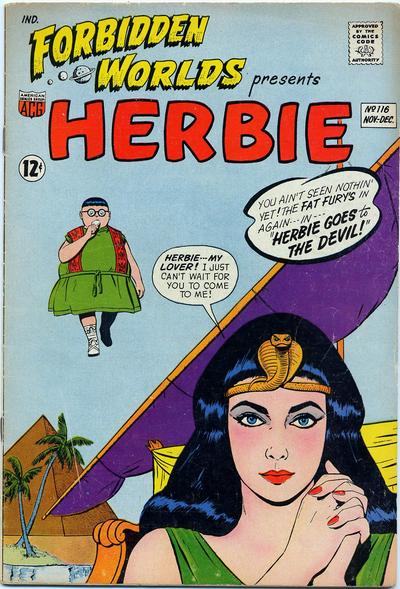
Elizabeth Taylor’s most memorable appearance

March 23rd, 2011

I don’t care about the other ones at all.

lizherbie.jpg

Alien intelligence

March 21st, 2011

Enough about artificial intelligence. Ever since that computer beat the geniuses on “Jeopardy,” we’ve heard enough about that. We know that it’s on its way, if it’s not already here. I’d rather talk about alien intelligence.

Here’s what I know about alien intelligence. Judging from both “Battle: Los Angeles,” which I saw recently, and a recent interview with Sammy Hagar, these aliens are not very smart. Interesting, yes, but clueless too.

Take “Battle: Los Angeles.” If I were an alien, Santa Monica would not be a primary target. I know, I know, I’m using sea water to power all my big death machines and drones and such. Santa Monica was never going to put up much resistance to begin with, and is notably short on armaments; it’s not like Texas. However, those squirrelly little back alleys and beach houses make it hard to ferret out the last of the human resistance — which, sure enough, they find out to their lasting sorrow in the movie. Also, in most cases it’s better to co-opt some local support if possible. So I say:  Why not invade Sacramento instead? Immediately, the majority of the population will cheer.  Also, if you’re going to invade the entire planet Earth, and you’ve got tech that allowed you to get here from, well, wherever, and global air defenses provide no real resistance, then you’ve got it all conquered easily — unless you connect all your drones via one big localized mothership thing that you’ve somehow managed to bury in our ground. Because absolutely, some never-say-die, something-to-prove Marine is going to singlehandedly suss that out, locate it, blow it up, and spread the word. And then your entire global invasion is off. Next time:  disperse your control over vast networks, with backups. That’s what we do with computers (it’s called cloud computing). Free advice.  I also want to take the opportunity to thank you for blowing up the 10 freeway; now we can build something that actually allows cars to move.

I suspect I know where these aliens got some of their unfortunate ideas:  from Sammy Hagar. It turns out that when they wanted to learn more about our planet, Sammy’s was the human brain they turned to. Granted, there are a few things Sammy knows:  how to replace David Lee Roth, and how vast the universe is. Quoth Sammy:  “You know how big the universe is? It’s freakin’ huge!” This is useful information. That first tidbit might have been what compelled the aliens to drill deeper into his brain to, as Sammy says, “See what this guy knows.” But while I can imagine their interest in the legendary Van Halen “sex tents,” it’s obvious that Sammy doesn’t provide the best insights for purposes of military strategy. That would be Will Smith, who always beats the aliens.

Mutant compliant

March 21st, 2011

Nice to see. Very considerate.

xmen.jpg

Demons, movies, and Uncle Rich

March 21st, 2011

Last month, The New Yorker ran a profile of Guillermo del Toro, director of “Pan’s Labyrinth” and the “Hellboy” films. I read that piece, and recently got a distressed email from my friend Rich Roesberg back in New Jersey that he’d meant to pick up that issue of The New Yorker but now had missed it. I promised to send it to him — but then figured it was probably available online for free. And, indeed, here it is.

I was going to recommend to Rich that he get a subscription to The New Yorker, because it’s a great magazine and it doesn’t cost that much. But hey, free costs even less. Which, again, illuminates the reason that newspapers and periodicals are dying —  their economic model — and why the United States Postal Service that formerly delivered so much mail of this sort, plus first class, is so deeply in the red. (And, some speculate, will go bankrupt.)

Spidey’s greatest challenge

March 20th, 2011

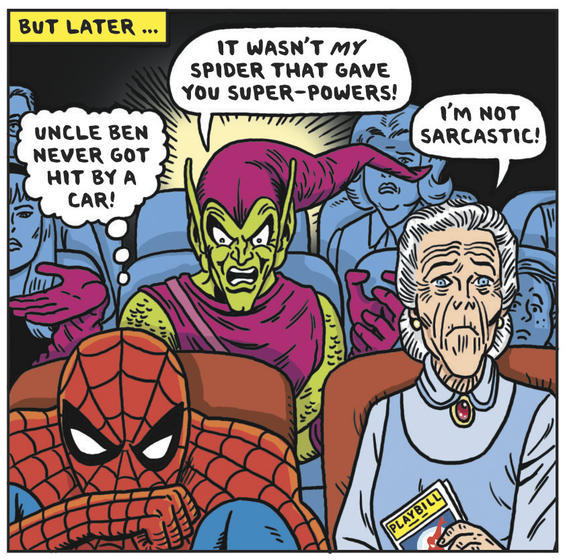
spideysupertheater.jpg

Forget the Sinister Six. For Spider-Man, the real challenge is outliving the damage this musical is doing to his reputation. Courtesy of Ward Sutton and the Village Voice, here’s his cartoon perspective on how the show went wrong.

Highs and lows in Hollywood

March 19th, 2011

Last Saturday, my friend Larry and I went to Silent Movie for an evening of the month-long John Cassavetes film fest. (The Silent Movie Theatre is still called Silent Movie, but it’s programmed by a group called The Cinefamily. They run Silents on Wednesdays and occasional other nights, and special programming the rest of the time.) I’m not a great fan of John Cassavetes’ work, but I was willing to see “Husbands,” starring Cassavetes, Peter Falk, and Ben Gazzara, if it afforded me the opportunity to see Gazzara live in person for a Q&A beforehand. I’ve always enjoyed Gazzara’s work, especially in “Buffalo ’66” and “Tales of Ordinary Madness.”

I was glad to have bought tickets in advance, because the event was sold out. Waiting in line in front of me was Danger Mouse, this generation’s answer to Brian Eno. My feeling is this:  You know you’re at a cool event when Danger Mouse is there too. And sitting next to me in the house was an actor from”Fringe” (who lit up when I told him, after I heard him bring up the Jersey Devil, that the creature was my distant cousin). One of the delights of living in Los Angeles is such memorable unexpected encounters.

Ben Gazzara was  terrific. I would say his advancing years have freed him to say anything, but I suspect he never censored himself much anyway. At age 80, his gruff macho persona is intact. When asked about shooting “Tales of Ordinary Madness,” which was derived from Charles Bukowski’s writing, he said Bukowski was “a pussy. The whole movie, I’m drinking Thunderbird, and he shows up with French wine.” He also impatiently waved off any number of the poor interviewer’s questions, making sour faces over the titles of various projects he clearly did just for the money and didn’t want to discuss. At other times, he just roared “No, no, you got it wrong.” The crowd loved him, but Gazzara also knows how to work a crowd, and how to get a laugh. After more than an hour, he said, “Awright, that’s enough,” and got up to go. Another example of good timing.

Unfortunately, what followed this was the movie. I’ve tried to like these Cassavetes films that have so many film-school acolytes, but I’m always left thinking they must think they have to like them, and therefore decide to like them, because there isn’t much in them to recommend them. My old playwriting teacher David Scott Milton (who, coincidentally, wrote a one-man show on Broadway that earned Ben Gazzara a Tony Award) knew the Cassavetes crowd and said he felt the problem with the films was editing — they needed some. I agree with that. I also think they would benefit from stories. “Husbands” is two hours and 11 minutes of Cassavetes, Falk, and Gazzara gassing around — first in New York, then in London. Sometimes they stumble onto something amusing, but nothing builds, and for much of the movie we wait while they search for inspiration. One extended near-rape scene in a London hotel is indicative of the problem:  Cassavetes’ character has picked up a blonde and they’re tussling around on the bed; it’s unclear whether she’s enjoying it or not — it seems mostly not — and the actress, unsure what she’s playing, winds up playing nothing, swinging between tears and laughter, playfulness and panic. Like the rest of the movie, there’s nothing we can make of it. Finally, and not one minute too soon, the movie ends with Cassavetes and Falk returning home, Gazzara’s character having decided to abandon his family to stay in London. I think it would’ve been good to see the scene where he struggles over that decision, or at least informs his friends of it. Instead, we find out when the two men get out of a taxi, without him, and discuss it. It’s always nice to miss the conflict.

I’ve seen most of the movies John Cassavetes wrote and directed, and really, only one is worth seeing: “Gloria.” Yes, Gena Rowlands plays the hell out of that role. But, importantly, there’s a story:  Rowlands plays the former mistress of a mobster, who now must shield an orphaned little boy from the mob that wants to kill him because of what he knows. It’s got one great scene after another, made great by the high stakes. Nobody has any time to gas around.  “Husbands” is all gas. Further proof that Danger Mouse is a genius:  He left before the movie started. Wish I had thought of that.