Lee Wochner: Writer. Director. Writing instructor. Thinker about things.


Blog

Archive for the ‘Thoughts’ Category

Rewriting from the house

Friday, November 17th, 2006

Just because playwrights are sometimes asked to participate in “talkback” sessions after a developmental reading doesn’t mean they should heed any of the suggestions.

The other night I went to the staged reading of a friend’s play. Good play, good reading. It’s amazing what you can learn about a play when you see it on its feet, performed in its entirety, and by good actors under the capable guidance of a good director.

In this case, all of the strengths of the play became clear: an arresting subject matter, strong characters, deft transitions, sparkling dialogue. It also became clear to me (as well as to the audience, it later turned out) that we need a little more insight into why one character committed the heinous act that catalyzes the play. I’m confident that that additional bit of clarity will complete the play.

I was impressed by the feedback from this audience; this is a developmental theatre, and most of the people speaking are playwrights with productions under their belt and actors used to working on new plays. By and large, when it comes to what makes a play work or not, they seemed to know what they’re talking about.

This hasn’t always been my experience, either as the playwright or as a member of the audience. I go into these things figuring that if they could have written the play better, they already would have done so. More than 10 years ago I decided that my personal mission in these instances was to be funny and entertaining, so that the theatre was glad it had invited me and so that no matter what anyone thought of the play they would at least see that I could be fun to work with. (Because, by and large, who comes to such readings? Actors, directors, producers, writers — people somehow or other connected with producing plays.)

This particular play deals with a court case — although, as one astute attendant noted, refreshingly, it does not take place in a courtroom and thereby avoids the procedural scenes we’ve seen cooked up on television six nights a week. My least favorite idea from the house the other night was this one: to remove all question of guilt or innocence, begin the play with a declamation of guilt, and work backward to investigate motive, a la “Equus.” An intriguing idea — but not for this play, not at this stage. This play is finished (almost).

When I was a teenager I remember reading a thick collection of Isaac Asimov’s stories, each with an introduction by Asimov (modeled perhaps after the Dangerous Visions series edited and interminably introduced by Harlan Ellison). Asimov said that after he had written a story, while he might do light revisions, that story was done — and to rework it and rework it would be like chewing second-day gum. It was an image that stuck with me.
Rewrites are necessary. Almost always. In every first production I’ve had, I’ve wound up doing at least minor rewrites because in working with good actors and a good director I’ve found new things — things that work, things that don’t, and sometimes opportunities that were missed. Twice, I’ve found new and better endings, but I went into each of those productions knowing that each play needed a new grace note to truly finish it.

To rewrite is good. To get stuck in rewrite and restructuring would mean not only not completing your present project — it also means not working on your next one.

Restructuring an entire play, one that already works? That sounds like chewing second-day gum.

Sheeit

Thursday, November 16th, 2006

New episode of Orlando’s Joint just went up this morning. The funniest ep yet (even if I do have only one line).

Franz Kafka: too representative for some

Wednesday, November 15th, 2006

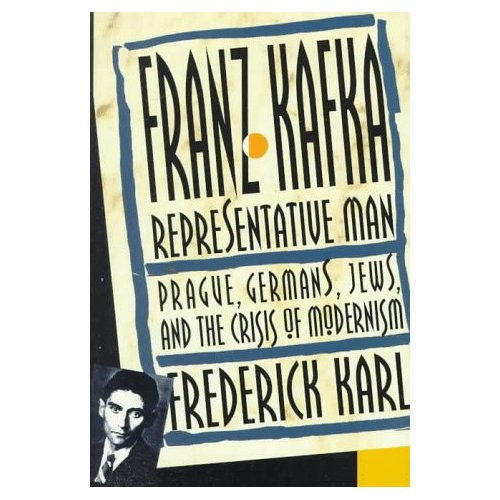
kafkarepresentative.jpgThe premise of the biography Franz Kafka: Representative Man is that more than any other individual, Kafka truly represented the 20th century in his personal alienation and with his portrayal of the faceless menace of bureaucracy. A fascinating viewpoint and one that becomes more compelling daily, given stories like this one (forwarded to me by good friend Tom Boyle):
Feds Want To Keep Torture A Secret

“If you feel you must give the Bush administration credit for its latest legal pivot in the war on terror, give it credit for having the cojones to actually tell a federal trial judge that the “interrogation methods” (what some reasonable people call “torture”) it has used on terrorism suspects is so vital to “national security” that the recipients of it may not tell their own attorneys what’s been done to them. ”

Click here for the rest.

Max Brod wrote that when Franz Kafka read his own stories aloud, he howled with laughter.

Whether or not he was a humorist, he was certainly a prophet.

Acting, or being?

Tuesday, November 14th, 2006

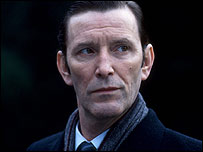
tom-bell.jpgFor me the most thrilling part of Prime Suspect 7 last night was not Helen Mirren, although for quite some time she has figured mightily in various fantasties of mine. No, it was the reappearance of the actor Tom Bell as Detective Sgt. Bill Otley.

In the series’ launch back in 1991, Otley was the sort who blocks the way of anyone trying to get something done, in this case Jane Tennison (Mirren), newly promoted to being his boss. Otley undermined her at every turn until two things happened: Tennison confronted him (which I recall as “Well, I’m not going to have it,” or something like that), and Tennison began to get results. Both the threat and the effectiveness gained his respect, and the character began to change.

In last night’s episode the character returned after a 10-year absence, far worse for wear. Jane Tennison may be a drunk, but she looks relatively well-tended; Bill Otley looks like he was set afire with lighter fluid and a blowtorch. His hair is badly dyed and plastered to one side, his face mottled, his appearance skeletal, his voice a light wind from the grave. (The photo at top is not recent.) It appears that Bell was ill at the time of filming — he died shortly thereafter — so were it not for the impression his earlier performances made on me, my first assumption would be that it’s easy to be a sick and dying man playing sick and dying. Every indication is that in this case life informed art and vice versa.

In the show, Otley makes a point of breaking through the crowd at an AA meeting to grab Tennison and buy her a coffee. He apologizes for his earlier actions. He hadn’t forgotten them and had wanted for a long time to own up and apologize. Tennison is quite moved by his confession and later calls on him when she finds herself in need and with no one else to turn to. It’s a remarkable and heartfelt journey for both characters. And it reminded me of the determined efforts of a former friend years ago to make her way through the amends demanded of her by AA.

Like Mirren, Bell is utterly watchable. Charisma isn’t for sale at any shops I know of; one has it or one doesn’t. Bell had said, “If you act you need to have threat. Without threat, nobody notices you.” Mirren certainly has that quality. I don’t think that is the quality Steven Rea or Reg E. Cathey bring to their roles, but there’s something — something — that they do that makes them stand out as well. Cathey made an enormous impression on me in his initial run on “Oz,” so much so that I never forgot him. The same with Bell in the first “Prime Suspect.”

Who are the other actors playing characters in the police station? I have no idea. Is it because they’ve been given little to do, or is it because they’ve done little with it?

Not Steve Allen

Tuesday, November 14th, 2006

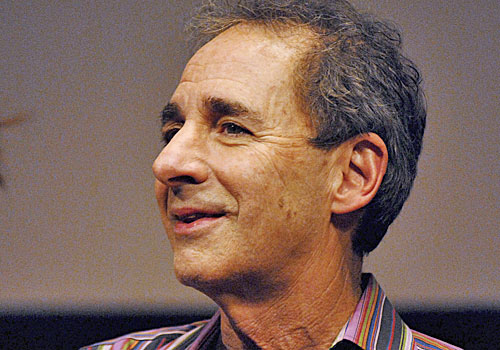
shearer.jpgClick here for a nice profile on Harry Shearer in today’s LA Times. (And do it fast, while the paper is still in business.) I’ve been a Shearer fan for a long time. I can’t think of anyone who qualifies as the Steve Allen of this generation, but Shearer probably comes closest in having the ready wit and penetrating intellect. (But not, I understand, the avuncular charm.)

Best opening line

Friday, November 10th, 2006

The best opening in contemporary drama is this one, from “True West”:

“So, Mom took off for Alaska, huh?”

Look how much it tells us:

  1. Because we see two men on stage, and the one refers to “Mom,” they must be brothers.
  2. This character who says it, Lee, didn’t know Mom was gone, and now he’s asking about her. So clearly, he’s been away.
  3. Not only was he away, he’s been out of touch with Mom. In general, middle-aged women don’t take off for Alaska on a moment’s notice. Lee knew nothing about it, so, unlike many of us, he doesn’t give Mom a courtesy call once a week.
  4. He’s also been out of touch with his brother, Austin. Austin knows Mom’s gone, so he probably knew Mom was going, too. Yet Lee didn’t.
  5. Because she took off for Alaska, Mom’s probably not coming back soon. It’s far away. (Although she does show up unexpectedly late in the play, we are led to believe that she won’t. This provides backdrop for her sons’ actions throughout the play. If she were coming home any minute, they might behave very differently.)
  6. Mom’s gone, and Austin is there in the house. Everything seems in order. This tells us that he probably has a good relationship with Mom. She trusted him.
  7. It also tells us that she was probably right to do so. Everything looks to be in order. It seems that Austin is a responsible person, so Mom’s trust is warranted.
  8. Lee, on the other hand, seems belligerent, right from this opening line. There’s something snotty about the way the question is framed: Mom didn’t “go” to Alaska, she “took off” – as though someone or something is being left behind. And the “huh?” hardly seems casual.
  9. Lee’s resentment is palpable, both at Mom because she’s not there…
  10. …And at at Austin because he is. Lee went looking for Mom, and instead found Austin in her place. Or, more appropriately given what we know of sibling rivalry, in Lee’s place.
  11. Given his upset at finding Mom missing, Lee probably came seeking Mom or help of some sort. Why is he there? Because he needed something.

Did Sam Shepard know all this before he wrote the line? Probably not. Was this the first line as he wrote it, or did he find it later in the rewriting process? I have no idea. But this one line achieves a near miracle in launching the play. It sets up a stark conflict between two very different men, united by blood but divided by need, still waging their sibling war decades into adulthood against the placid backdrop of Mom’s kitchen and, later, the unseen terra incognita of Dad’s desert wasteland.

I think “True West” is a masterpiece. Not a word I toss around lightly.

That first line tells us a great, great deal, without any resort to exposition. It seems effortless. Moreover, because it’s clearly the response to a previous line – one we don’t get to hear because it happened before we got to enter their universe – we feel that we’re dropped directly into the action of the play. This play doesn’t just start when it starts, it starts a moment before it starts. That would be a problem if our initial reaction were one of confusion – who are these guys? Where are these guys? What’s going on? – but Shepard addresses all that with this very first line.

Unlike “True West,” too many plays start long after they start.

Further down “The Road”

Friday, November 10th, 2006

My wife, who originally hooted at my admiration at The Road (and my preference for it over “World War Z”), now says that she keeps thinking about it and “may have to read it again.”

And one of my grad students, Lindsey, took my recommendation to read it and said she thought it was stunning but that it “gave me nightmares.”

I think this book is going to be with us for a long time.

Great opening lines

Thursday, November 9th, 2006

And I don’t mean for you to use in a bar.

No, I mean great opening lines in drama.

Tonight in one of my classes at USC I invested half an hour in discussing what I think is the best opening line in all of contemporary drama, this one from “True West” by Sam Shepard:

“So, Mom took off for Alaska, huh?”

(More about that — and the 13 things it tells you — tomorrow.)

Shepard grabs us and pulls us right into the play. Too many plays – including too many of his own plays – start long after they start. When I’m rereading my plays with an eye toward production, one of the questions I ask is, “Is this really the opening line?” Or, is that opening line buried somewhere on page 3? If it truly is on page 3, your play probably should be two pages shorter.

How do you know if you’ve got the right opening line? Some questions that help:

  1. Does it say something about the speaker?
  2. Does it say something about the setting?
  3. Does it say something about the play, helping us understand why we’re here?
  4. Most importantly, does it help start the play by grabbing the audience in some way?

You’ve really got only a few minutes to enlist the aid of your audience. If it’s a comedy, you’ve got less than that – audiences need permission to laugh. (Nobody wants to be the only person laughing – they’re afraid to be wrong and look foolish.)

It’s best to get your play started right away.

Getting poled

Wednesday, November 8th, 2006

polling-place.jpegThis morning I went to vote, as I have done without fail in every election since I came of voting age.

There was a polling place directly across the street from our house at the Burbank Adult School, so naturally I walked over there. They couldn’t find my name on the list, though, and so told me that my polling place was “the school.”

So I got into my car and drove to Luther Burbank Middle School, where I have voted a few times. I parked and walked all around and could see that it wasn’t a polling place.

Then I decided that by “the school,” perhaps they meant Bret Harte Elementary School. So I got back into the car and drove over there. By now, I was about a mile away from my house — notably farther away than, say, the polling place across the street from my house.

I walked in and a, well, let’s put it charitably, hippie, said, “Are you here to vote at the Green table?” This sort of electioneering is illegal — and whether or not I’m going to vote Green (which I’m not), it’s none of his business. So I said, “I’m here to vote.”

He asks my name and address, I tell him, and he scans the rolls and says, “You’re not registered to vote.”

I said, “WHAT?!?!?!?!” What I should have said is: Tell that to the 1000 prerecorded callers who have bombarded our home phone and my cellphone, let alone the seemingly hundreds of organizations that have emailed me, all of them seeking money and my vote. They all sure think I’m registered to vote.

He said, “Are you sure of your address?”

I said, “Given that I live there, yes.”

At this point, an older man came over and said, “You have the wrong polling place.” I said, “This is my third one.” (Counting “the school” that was no longer a polling place.) He takes me outside to look at a map taped on the exterior wall. It is a zigzag of district lines, with rarely a street name or number. He says, “Where do you live?”

I give him my address and he says, “Where is that on this map?”

Looking again at the map, which looks like a spectrographic survey of the Earth’s core and nothing like a map of Burbank, I say, “If you can’t find it, I sure can’t.” Then I spot the Burbank Adult School on the map. (Big letters: “BURBANK ADULT SCHOOL.” The one thing on the map that seems to deserve being named.) “Wait,” I say, “I live across from that.”

Now he’s staring at the map quizzically again and trying to determine just which polling place would cover that. Then someone from inside the building yells, “Wait! We found him!”

A woman comes outside and tells me that I should be voting at the ORANGE table. Evidently, there’s a “green” table and an “orange” table, hence the hippie’s question. I forestall the obvious question: What the Hell is this, and why are there “green” and “orange” tables at the same polling place, what could that possibly mean, and how is someone expected to know that?

A little background here: I have lots of education, I am a local political activist, vote in every election, and read lots of newspapers and magazines. So it’s not like I’m uninformed.

Now I enter the school’s auditorium just in time to hear the woman admonish the hippie: “You have to check the master list.” (Oh, of course: The master list. Don’t check the junior list, or slave list — whatever he’s got.) How many people have already been sent away?

Sure enough down front at the apron of the stage there is another table area set up, this one manned by someone I know: Lisa, the mother of one of my daughter’s friends. Since I know her, I take the opportunity to vent, making it plain that I’m not holding her personally responsible.

“In the past three years, I have voted at Bret Harte, Luther Burbank, the White Chapel church, the Burbank Adult School, someone’s home, another church, and, most recently before today, an auto body shop,” I say. “Why is my polling place constantly moved? Why is there a polling place ACROSS THE STREET FROM ME that is NOT MY POLLING PLACE? A suspicious person would reason that a game is being played here! This isn’t Florida and I’m not black, but I’m starting to think there’s active disenfranchisement at work here!”

She seeks to reassure me by saying, “You work here just once as a poll worker and you see how things can go wrong.” This in no way reassures me.

I get my ballot and go vote. Then I see — wait for it — that the little inking stamper is not correctly blotting out every circle I choose. In most cases, I have to stamp it two or three times for it to work.

I go back to Lisa. “The inking stamper isn’t working properly. I had to do it two or three times. It doesn’t work.”

“Oh, I know,” she says. “The same thing happened to me.”

Now, she’s been there all day. I can only assume she voted four or five hours before me. So… how many ballots didn’t get marked? How many people noticed?

By the end of all this, I felt like I’d been polled all right — right where it hurts.

Is it really this complicated to vote?

And while we’re busy “exporting Democracy,” are we exporting this voting system?

Thought for today

Sunday, November 5th, 2006

mills-mccartney.jpgRe the Paul McCartney divorce saga:

If you had assets worth $1.5 billion and you wanted to marry a model, couldn’t you find one with two legs? And couldn’t you get her to sign a prenup limiting her to, say, $50 million in benefits for her three years of hard work?

I guess John was “the smart Beatle.”