How the Bush White House figures the budget
Tuesday, March 20th, 2007They probably use traditional math, as expressed here by Ma and Pa Kettle.
They probably use traditional math, as expressed here by Ma and Pa Kettle.
I haven’t written about it here before, but given that I’m sure it’s going to start creeping in, it’s time to come clean:
Yes, I am a registered Democrat.
I know — you had your suspicions. Maybe it’s the way I walk, or talk, or something. But there it is.
Sometimes when people listen to me on various issues they momentarily think I’m a Libertarian, or a Republican, but no — I just happen to hold whatever common-sense provisions are so common-sense that even parties that have chased out all reason (that would be the GOP) hold them. Like: I think the government shouldn’t waste money. We may disagree on what “waste” is, but the concept is shared. I think the government shouldn’t be snooping into people’s medicine chests or bedrooms or mailboxes or email in-bins; that doesn’t make me a Libertarian, that makes me an American. Conceptually.
In January I was elected as a delegate to the California State Democratic Party, one of 12 elected delegates representing the registered Democrats in Assembly District 43. So: If you are a Democrat in Burbank, Glendale, Silver Lake, Los Feliz, Atwater Village, Valley Glen, or North Hollywood, I hope to do you proud. I ran on a “Progressive” slate that ran against another “Progressive” slate; that’s progress for you. Some members of our slate vigorously want things like redistricting, an end of term limits, and clean money campaigns — in other words, those things that help guarantee Constitutional free and fair elections, and true representation. That we have to define this as “progressive” is somewhat embarrassing; you would think these are core values.
As a delegate, I will be attending the California State Democratic Party Convention the last weekend of April in — you saw this coming, right? — San Diego. (No, I haven’t already booked my hotel room — and I bet I’ll be sorry.) Today was our orientation, and also my first introduction into people wanting my vote for resolutions to the party platform. I signed one to help it on its way (this particular one seeks to de-credential elected Democrats who endorse non-Democrats, such as Greens in particular), and I offered to take another one to the Burbank Democratic Club for endorsement (this one seeks to bring Clean Money elections to California).
If you’re wondering why I would put so much time into this (and into the Burbank Democratic Club, where only just this month I stepped down as president), you haven’t been reading the newspaper. Or this blog. And my tiny role in last November’s election results felt very rewarded indeed.
One more thing. Here’s just one indication of how much the Democratic party, which was founded in 1792 by slave owners with some otherwise rather attractive values, has changed: Today one of the resolutions introduced asked the Party as a whole to recognize the importance of white voters, who make up 72% of the Democratic vote. I’m a white guy, but it never occurred to me that one day I’d be in a room in the United States where someone was reminding us of the importance of the white people.
Who says nothing ever changes?
That’s how quickly the rooms for Comic-Con sell out every year.
When last we reported on hotel reservations for the 2007 San Diego Comic-Con, trusty friend Paul had secured us a suite. Since then, he’s been dutifully trying to get us a suite at the Embassy Suites because, well, we want to be even closer to the all-hours spectacle of funnybook debauchery and bad costumes (imagine jumbo-sized people stuffed into Ant-Girl-sized tights; lots of lycra, lots of yellow taffeta and powder-blue eyeliner and glitter). Here, from Sequential Tart, is why Alberto Gonzales has a better chance of remaining Attorney General than we do of getting a different room:
According to Comic Con International’s website 114,000 attendees, plus 9000 exhibitor staff (making a total of 123,000 people) attended 2006’s Comic Con International: San Diego.
In her February 2006 article, Why you didn’t get a hotel room in San Diego, Heidi MacDonald observed that while over 100,000 people attended 2005’s Comic-Con International: San Diego, less than 7,000 hotel rooms were available through the convention’s hotel website. (As an aside, MacDonald dug up not one, but two articles on how the San Diego Convention Center has outstripped the supply of hotel rooms.)
The situation for 2007 has not improved much. While the San Diego Convention Center Corporation (SDCCC) web site proudly boasts that there are over 10,000 hotel rooms within one mile of the convention center, page 10 of the San Diego Convention and Visitors Bureau’s 2007 San Diego Tourism Outlook reveals that only 269 hotel rooms were added in 2006, and that, “[s]ome projects expected to open in 2006 are now anticipated in 2007, when an estimated 2,300 rooms will be added, a 4.2% increase to the County’s total inventory.”
Just how many rooms are available in San Diego County? According to page 11 of the same report, the 2006 total is 51,882 (54,037 if counting Bed and Breakfasts, Spa Resorts, and Casino Resorts). Downtown, with its roughly 10,000 rooms, accounts for 27% of the county’s total.
A traditional economist — one versed in supply and demand — would say that either more rooms will become available (more hotels being built; some people quitting the Con is disgust with trying to get a room) while in the short-term at least the prices of rooms will rise. If all this is true, given the shortage of rooms — at any rate — I think my friend Alan in San Diego could rent out his sleeper sofa for $295 a night.
After more than 30 hours straight of writing, punctuated only by a few hours of passing out here in my office, I think I need to walk around the block or something.
The good news is, I’ve made strong progress on my book (about playwriting).
The other good news is that I finished a new one-act play in time for submission to a festival I was contacted about.
The not-so-good news is that I just caught myself sending emails like this one, to a friend of long standing (and sometimes sitting, and other times lying down):
Appropos of nothing, I thought I’d send you my new play, “Next Time,” written in time for submission to a one-act festival this September. (No idea if I’ll get in, but it’s run by a former grad student of mine — not sure if that helps or hurts.)
One brief moment in this play may seem familiar. About 15 years ago you wrote — and I mean HANDWROTE — a brief play in which versions upon versions of people stepped away from each other to show the layers and depths of a person. I swiped that, but because I’m lazy and it’s a short play, I’m showing only one layer, and they’re playing Monopoly. And the entire play is about layers of meaning and identity and reality, it’s completely removed from your own notion, as you see, but I wanted to acknowledge even the hint of a swipe where there might be one. So thanks for that, kind of, if, sorta.
Yes, I think it’s time for a break.
I’m not a believer in “rules” for writers. Where rules exist, good playwrights know them – and break them.
We break the rules of grammar to create dialogue that sounds like normal speech.
We break the rules of spelling to hint at character and dialect. Having a character say “tuff” instead of “tough” provides an indicator for the actor.
We break the rules of punctuation by placing commas not necessarily where they go but where we need them: to serve as brief musical rests for actors speaking our lines aloud.
And most importantly, we break the unwritten and unspoken but all too obvious rules of conformity and convention when we have our characters say, do, and be things that aren’t popular or nice. Society is that construct that ostensibly helps people get along by burying what’s uncomfortable; playwriting is a mechanism by which writers unearth the unpleasant for art and entertainment.
As opposed to rules, I believe in what I call “craft techniques” – theatrical givens passed down to us about how to help dramatic writing play better. Actors, directors, writers, all have these techniques, and they’ve kept them because they work. A few examples:
These aren’t “rules,” which inhibit us; these are techniques that help us succeed, and they’re generally related to the production.
When it comes to the writing, rather than keeping in mind rules, there are three notions that I hang onto, all of them starting with “F.”
 Playwriting should be – needs to be – freeing. The act of writing a play frees playwrights, through their characters, to explore issues and ideas however they see fit: to see where they take us, to look at things in a new light, to find out what we think and to learn what we don’t know. This is a gift we pass on to the audience. Being free in your writing is a prerequisite to writing.
At the same it, playwriting should be frightening. If you never ever stop and wonder if you’re going too far, then you assuredly aren’t. You need to go further. If you want an audience to worry about your characters, you’d better put them in situations that make you uncomfortable while you’re writing it. This doesn’t mean putting them in oncoming traffic; it usually means they’ve said too much, too unkindly, behaved too rashly and too wrongly, been too good and are now paying for it, or are just flat-out unlucky in a truly catastrophic fashion. If everyone is safe, the play is safe – and no one wants to see a play that plays it safe. Playing within the rules of good behavior is safe.
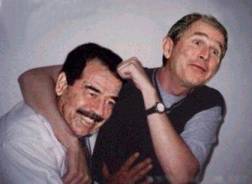 And playwriting should be fun. This is the other reason that rules are to be understood but rejected: They usually stand in the way of the creative impulse, of the fun. If you’re having no fun writing your play, imagine how little fun actors are going to have acting in it and audiences are going to have seeing it. By “fun,” I don’t mean comic (although if you’re writing a comedy, it’s generally a good thing if at least you think it’s funny). I mean: exciting. You get up in the morning eager to work on it and go to bed feeling the same way. You think about it in odd moments. It colors your perceptions, as when you see someone in a supermarket berating a child and you realize that’s the way your protagonist would act. You feel truly alive when you’re writing the play and somewhat asleep when you aren’t. Fun is motivational. If everyone had more fun – if everyone were able to have more fun – the world would be a funner place.
Rules constrict people. In larger society, that’s often a good thing. In playwriting, not. To write plays, you don’t need rules. You need freedom, fright, and fun.
 Don’t ever believe that Western governments are “free” societies — someone must always pay.
In this case, it’s brothers Vincent and Michael Hickey, at left, of Birmingham, England, who spent 18 years in jail after being wrongly convicted — but will still have to pay for their prison room and board.
Further evidence that Franz Kafka secretly runs everything.
Think you can’t predict the future?
Ray Kurzweil says you’re wrong, in this think piece in Inc.
What I love about this:
To that point: I’m writing this on a MacBook Pro. Ten years ago I would have been writing this on a PowerMac 6300, which had one of those cool new 3.5″ disk drives. I would be writing it, but I wouldn’t be posting it — blogs didn’t exist yet, and neither did the internet in the way we know it. Ten years before that, I would have been writing this on an Apple IIGS with a dial-up modem. Ten years before that, I would have been working on paper with an IBM Selectric II, and other paper conveyances (called “a stamp and envelope”) for distribution.
Kurzweil thinks this exponential growth in power is going to hit the energy industry. I agree. And then at some point, if indeed the war in Iraq was about oil, there won’t be a need for such interventions.

Speaking of newspapers, here’s a community service from the New York Times.
If you are either a college student or faculty member, the Times’ premium service is free to you.
Yesterday, the Washington Post trained its laser vision on the zeitgeist of “dumbed-down” game shows — which had me wondering if the writer had ever seen any game shows previously. (I know that my generation took its cultural cues from “Match Game.” Oh, the good ol’ days.)
Today, I discover that the paper’s online version seems to be doing video interviews with, um, nobodies, talking about nothing in particular. Click here for a case in point. To my trained ear, Mr. New (great name) is a case study in “unreliable narration,” in which while he believes himself a knight errant, we can see what a neurotic loser he is.
If only there were some news to cover, or some interesting modern philosophers to interview, and if only we had a newspaper or a website that could disseminate this information.
He wasn’t “down,” he was ill.