Yesterday, the LA Times ran a front-page obit headlined “Milton Wexler: 1908-2000.” I thought, “Why is the Times profiling people who died seven years ago? What’s the news angle?” The lead channeled the quintesssenial New Yorker-type lead, i.e., you had no idea where you were or what the story was (it was an anecdote about the dead man’s wife, 40 years ago). The kicker on the jump page (A14) read, again, “Milton Wexler: 1908-2000.” Finally, in graf 5, I learned that Mr. Wexler had died on Friday.
Shout out to the LA Times: Guys, it’s 2007.
I understand that, well, this is a typo. But it’s on your front page. And if Mr. Wexler was indeed “a towering figure in disease research,” as you say, a man whose death warrants a front-page story, then I would assume that someone had read this story and at least the on-screen mockups before sending it to print. I also doubt this was a last-minute drop-in, given that the great man had perished almost a full week before.
And before I go on, let me state again: I love newspapers. This is why this is so distressing and why it seems I keep kicking the cripple.
This sad affair reminded me of the time that Allen Ginsberg died and the Times, on its front-page obit, misspelled his name. Rule number one of journalism: Get people’s names right.
In today’s Times the sad saga continues in a different way. The paper’s editor and its publisher killed a much-ballyhooed guest-edited opinion section scheduled to run this Sunday because they now decided that a perceived conflict of interest might exist; the would-have-been guest editor, film producer Brian Grazer, is represented by the publicity firm headed by the girlfriend of the Times’ heretofore opinion editor. Here’s the story, which covers the resignation of that editor, Andres Martinez, in response.
I’m not interested in the romantic lives of newspaper editors (various 1940’s screwball comedies be damned), but I am greatly interested in the health of newspapers, especially with regard to conflict of interest. The (Los Angeles) Daily News has what I call a “roll your own” section in which people online “report” their own “events,” with many of them selected for a special print edition delivered with the paper. (Which we also get.) I don’t want people reporting on themselves in what I can only imagine would be a relentlessly positive light. Even at this stage of the decline of newspapers I hold some hope that a true reporter would at least try to report objectively. (As part of full disclosure, the Daily News section editor called me no fewer than six times last year asking me to write pieces related to my own local political activity for the paper. I demurred. Would our political club have benefited from the coverage? Sure. But I was part of forming the club because I was distressed by the ethical breaches of various government officials; to me that precludes my involving the club itself in ethical breaches. Others may disagree and plan their own route; I stuck to my preferred path.)
With regard to the LA Times opinion-section story, I’m with the editor and the publisher on this one. The Times can’t afford even the perception of conflict of interest with the business community. It took the paper years to recover from the Staples “advertising section scandal,” in which advertorial was presented as editorial in a special section devoted utterly to the arena, in a deal that included profit sharing between a newspaper and a major advertiser (!). And actually, some of us would argue that the paper has never recovered.
Last September in Fast Company, a columnist extolled the virtues of newspapers and forecast a robust future, albeit in a different delivery format. (And I think that’s probably right, at least short-term.) In the current issue (no link available yet), someone lays out an entirely different prescription: public non-profit status.
Whatever is going to happen with newspapers, they aren’t going to much resemble what’s currently landing on my doorstep. Given the recent error-prone Los Angeles Times, that may be a good thing. Or it may just be far, far worse.
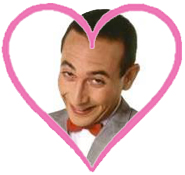 You might have thought that Pee-wee Herman was finished. But his recent splash at a nostalgia convention right here in Burbank is just part of a surprising comeback, as reported here in the LA Times. The print edition had a terrific photo of the 54-year-old Pee-wee, who has aged rather gracefully; unfortunately the photo isn’t online.
 Every day it becomes more clear that I should not have sold that Apple stock a couple of years ago. If anything, I should have sold it now so I could buy the new Apple products I want.
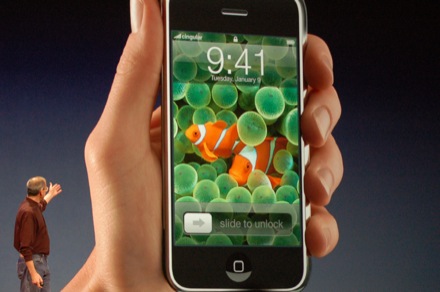 As I
As I 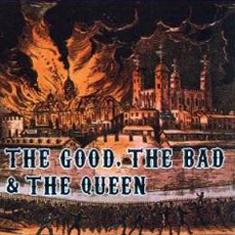
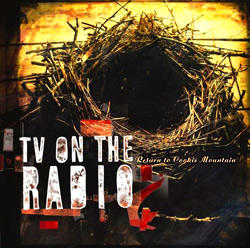 “Return to Cookie Mountain” by TV on the Radio. If “The Good, the Bad, the Queen” is a creepy clown acid trip, this album is the soundtrack to that post-apocalyptic Cormac McCarthy novel I keep talking up. I’m so taken with “Wolf Like Me,” which I had heard all of twice, that I had a dream in which I was listening to it; I guess it made an impression. I saw this band two years ago when they opened for Franz Ferdinand at the Greek, and at the time I thought this was quite possibly the worst band I’d ever seen (a distinction soon achieved by The Polyphonic Spree, who opened for Brian Wilson and who were loudly and justly hooted and laughed at by whole sections of the Hollywood Bowl). I couldn’t imagine the raves they’d earned from people like David Bowie, whose opinion always counts. Even while I thought TV on the Radio was bad, very bad, I also could see that they had probably alienated some very key people at the Greek, i.e., the people working lights and sound, because they were mostly unlit and had a sound mix so bad I felt we were listening to a band playing underwater and on a distant planet. Listening to this record proves once again that Mr. Bowie is wise in all things.
 While Pere Ubu is in no way a new band, “Why I Hate Women” is a new album by a band that continues to change. At times I find myself wondering if this may not be the best album in their 30-year history. They actually pull off what amounts to a blues song with “Blue Velvet,” featuring a haunting harmonica turn by Robert Kidney (The Numbers Band, the Golden Palominos). That song is bracketed by the atmospheric small-town ghost story of “Babylonian Warehouses” and the teenage raveup “Caroleen”; together these become a mini-suite probably never equaled in the history of the band. The rest of the album, especially “Love Song,” is just a strong. Vocalist David Thomas assays the neurotic subconscious of lost people on empty roads, but it is Robert Wheeler, playing theremin and synthesizers, whose sonic architectures evoke alien landscapes rarely explored.