Lee Wochner: Writer. Director. Writing instructor. Thinker about things.


Blog

Archive for the ‘Thoughts’ Category

Furthering the gay agenda

Monday, August 10th, 2009

My pal April Winchell has created an iPhone app designed to further the gay agenda of “destroying marriage, recruiting children and doing lots of cardio.” Here’s where you can get it.

Without government health care…

Monday, August 10th, 2009

a friend of mine would be dead. Here’s her story.

Big improvements for small business?

Monday, August 10th, 2009

By the way, the White House has (finally) put out some videos to counter the health-care disinformation campaign being spread by the usual suspects. Here’s the Chair of Economic Advisors explaining how the administration’s health-care proposals would actually lower the cost of health-care for small business. As the owner of a small business myself, I would be happy to save some money, but I would dance naked jigs of joy if I could save time and frustration on paperwork.

Still kicking Nixon around

Monday, August 10th, 2009

Thirty-five years ago, Richard Nixon announced on national television that he was resigning as president. I lay on the living room floor to watch, my cherished black leatherette-encased black cassette tape record at my side and its mike placed as close to the television as possible because I wanted to record every word. I was 12 years old and I knew this was going to be important. My parents were quiet, although I knew my father’s feeling: that somehow Nixon was getting railroaded. Looking back, I wonder if they weren’t a little scared.

A year before, the Arab Oil Embargo had put my father out of business. He was 52. He went back into the union as a heavy-equipment operator, but I’m not sure that our family’s finances ever truly recovered. Now it looked like the presidency was going out of business, too, with a twice-elected president being replaced by one nobody had voted into executive office, someone who was plucked from obscurity to replace another scandal-plagued predecessor.

I just watched the resignation speech again. I remember keenly feeling that history was being made. It was. But I had no way of knowing that 35 years later I would feel that we were just coming out of an even darker time, one that would make the trespasses of Watergate seem quaint.

Opposition research

Sunday, August 9th, 2009

Yesterday I noted that the U.S. Chamber of Commerce opposes Barack Obama’s health-care proposals. Here are some more specifics, although you’ll note that the specifics aren’t terribly specific:  They’re just opposed. I’m opposed to all sorts of things too — like uninsured sick people showing up at emergency rooms and bankrupting hospitals. And I’m opposed to the staggering (and rising) costs and inefficiencies of the current system. So what’s their counter-proposal? Unless somehow fixing this situation doesn’t seem important.

An early Christmas gift

Saturday, August 8th, 2009

At this year’s Comic Con, I saw previews from several upcoming films that I’m eager to see. But none moreso than this one, which comes out on Christmas day. This trailer gives only a hint at the wonder and fun I saw in the clips Terry Gilliam screened from “The Imaginarium of Doctor Parnassus.”

Lost in translation

Thursday, August 6th, 2009

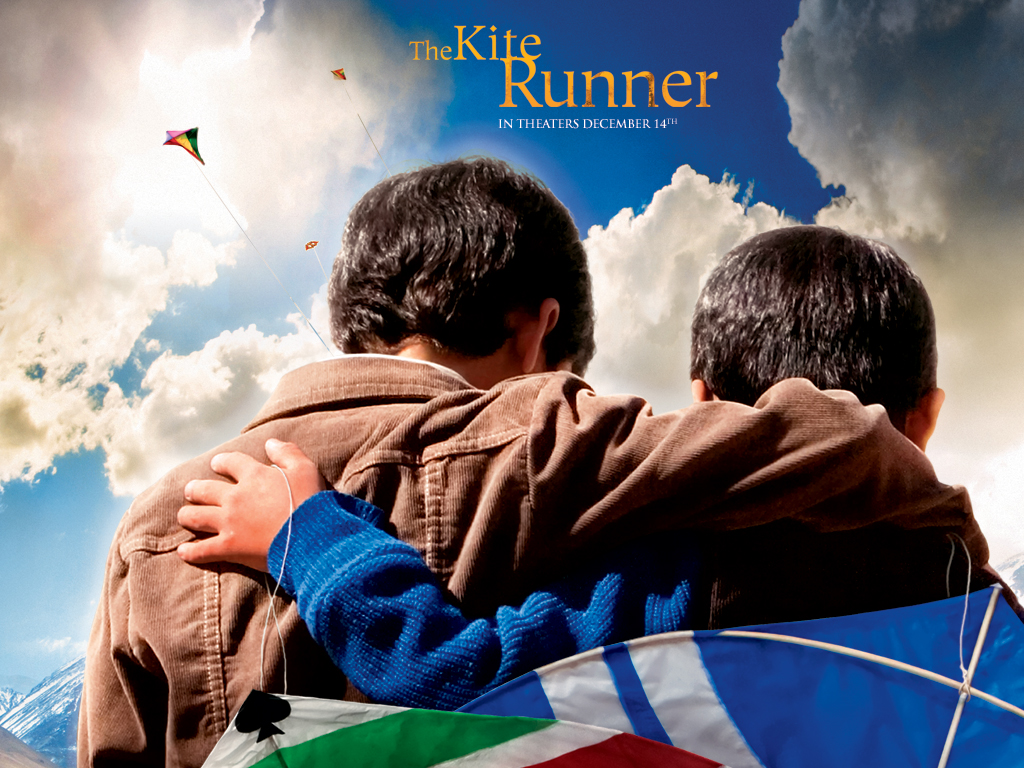
the-kite-runner-1-1024.jpg

Last night my son Lex and I watched the film version of “The Kite Runner.” When it was over, I asked him what he thought.

“It was okay,” he said.

And he was right:  It was okay.

Except when I read the novel just six months ago, it was a gut-wrenching experience. I even cried. Twice. The tragedy of childhood betrayal and mixed-up identity against the background of poverty and lowered circumstances was breathtaking. As was the palpably new sense of how horrible it would be like to live under the Taliban.

None of that is in the movie.

Well, actually, all of it is in the movie — all of the scenes. In making the adaptation, they didn’t monkey around with the story or the characterizations. There’s only one scene I noticed missing from the book, and I have to agree that it could be cut. (Although given a later scene that’s in the movie, I suspect they shot that earlier one as well.) But what’s left out, somehow, is the impact. Some things just don’t translate to other media.

A notable example:  To get out of Afghanistan when the Russians and then the Taliban movie in, the boy and his father and several others have to be transported across the border in the belly of a fuel tanker. We have that scene in the movie, but there’s no resonance:  The boy gets into the tanker. His father tells him it will be all right. The boy says he can’t breath. To distract him and provide what comfort he can, his father has him turn on the small iridescent light on his wristwatch and recite a poem. Next scene:  They are in India.

This is pretty much the form the scene takes in the novel. Except Khaled Hosseini is able to convey the lingering, choking, searing stench of fuel, and the utter darkness of the tank. Film can’t do smell (although fiction can), and film can’t do darkness (although fiction can). When the boy looks at his watch, we see a closeup of a boy looking at his watch; there’s no context because there’s no way to see deeper in the frame. The novel isn’t limited by frames. The book, a seemingly sightless medium, offers greater vision.

Sadly, I don’t think they’ve done anything wrong in this movie. It just doesn’t make a statement the way the novel does. The impact was lost in translation.

I’ve  thought a lot about translation over the years. I remember reading “Ubu Roi” in French in college and wondering whether it just shouldn’t have been translated into English; no matter how hard one tries, a pun in French doesn’t work in English. (One of Pa Ubu’s recurring outbursts is “Merdre!” which makes a pun of “murder” and “shit.” In English, I’ve seen this translated as “Pschitt!” Which is just “shit” misspelled, and with none of the menace.) I wonder how far off the mark the translations of some of my favorite writers, Kafka and Rilke among them, must be. I remember translating “La Cancatrice Chauve” myself as part of my graduation obligations and wondering just how absurd my translation was. I remember one semester in particular raising the question of translation with several different professors, all of whom gave what amounts to the stock answer:  While a translation is not as good as the original, you usually get a fair amount.

I hope that’s true. And if I had to wait to learn German and Turkish and Spanish and Norwegian, I wouldn’t have read Kafka, Goethe, Kant, Rilke, Orhan Pamuk, Borges, Gabriel Garcia Marquez, or Knut Hamsun, to name just a few. Still, I would think it’s harder to translate from one language to another than from one medium to another, especially from novel to film, because film exists in the universal language of sight. And yet here we have a powerful, wrenching novel, faithfully translated into a film that, finally, is just okay.

Bad taste in bad taste

Thursday, August 6th, 2009

troutmaskreplica.jpg

A museum in Orange County is exhibiting what it believes is the worst 100 album covers.

Except they think Trout Mask Replica is one of them.

So there goes their credibility.

Ass the world turns

Wednesday, August 5th, 2009

In which I see a side of my friend Sam Kuglen I’ve never seen before.

A minimalist encounter before its time

Saturday, August 1st, 2009

Merce Cunningham died a few days ago, and if I hadn’t felt then as though I were dying myself, I would have noted the event here.

I just spent 20 minutes crawling all over the internet for information about the Cunningham show I saw in, I think, 2003, but I can’t find it, so I’m relying on memory. In any event, it was at UCLA Live, with Cunningham and assorted UCLA students performing against music by Eric Satie. I love Satie’s music, and was interested in Cunningham because I was just beginning to grasp the allure of dance, and there was a third great name associated with all this that I now can’t recall. (And can’t find.) Was it John Adams? William S. Burroughs? Robert Wilson? I can’t remember. In any event, I remember that the dance seemed to consist largely of standing or sitting, understandable for the then-84 Cunningham, but perhaps less so for the 20ish collaborators.

Cunningham was the house guest of someone I knew, so a small party of us went back to the house.  The hosts had spared no expense in putting on a suitable event for their honored guest. I remember at one point the host looked over and saw Cunningham sitting alone on the couch and gasped, “Why isn’t anyone talking to Merce?!?!?!” I had already been over talking to Merce, sitting alone beside him for 20 minutes during which I discovered two things: that I had nothing much to say, and neither apparently did he. Perhaps everyone else had had the same experience. Maybe it’s difficult to strike up a conversation with a minimalist.

I wish that I had met him a year or two later. Because in 2004, for a variety of reasons, I had what I’ve since called “The Year of Dance.” My background is theatre, and mostly the literary end. By that point in my life I was feeling a little burned out on theatre, but was saved by some students with an interest in dance. Over the course of that year, I worked with a dance choreographer on a play I was directing, wound up going to two hip-hop conventions, got involved with a dance-film festival, joined the advisory board of a fledgling dance company, attended the American Choreography Awards, fell in with a multi-Tony-winning dance legend, went to amazing launch events at places like the Music Box and the Key Club, and cheered up Toni Basil over drinks when she was feeling forgotten and unrecognized because I remembered both her music and all her choreography with Devo and Talking Heads and David Bowie, and so much more. The dance people and the dance shows and the dance parties were great, great fun. I came out of that year with a deep appreciation and gratitude for an artform I’d known little about. And a deep respect for dancers, who are a talented, disciplined, driven breed.

I wish it had been after that year that I’d had 20 minutes alone with Merce Cunningham. Because then I’m sure I would have had something to talk about.