Writing: good, bad, variable, and influential
Sunday, July 3rd, 2011“Learning not to dislike Hemingway.”
That was the title an editor gave to a piece in today’s LA Times by book critic David Ulin. (Here it is; points go to the print edition’s copy editor — online it’s tagged “Under the influence of Hemingway,” a headline so weak that it seems a subtle jab at Hemingway’s manly writing style.) I read this piece with great interest because I’ve always read all of Hemingway with great interest since first coming across his short stories in high school, when one of those stories taught me the word “milt,” as Nick Adams strips clean a fish he’s caught. Almost 35 years later, this word has stayed with me. Indeed, I used it in my play “He Said She Said,” written two years ago and produced in LA and, recently, Omaha at the Great Plains Theatre Conference. The play concerns a vacationing PTA mom reading bad erotic poetry she’s written, and that setup flashed me back to the oddly sensual description of Nick Adams cleaning that fish. Here’s the comically bad poem from my play:
AMANDA
This is called Deep Sea Diving. Except the “Sea” is spelled “s-e-e.”
Deep see diving.
I can see you down here with me.
The shellfish scuttle out of the way
Forming a cloud of ocean dust around you.
There you are.
Don’t hide.
I can see you.
Peering at me from beneath your coral
Thinking that you’re safe and protected
I reach for you and pull you out
And take you above and slit you open
And run my tongue down the length
Of your milty flesh
Careful not to get your bones
Stuck in my throat.
Hemingway finds the right sensual word — “milt,” the sperm-containing secretion of the testes of fishes — and then in my play Amanda adulterates it into “milty.” Even as a teenage writer, I could see that Hemingway had the knack of finding the right word, something I struggled then and now with.
I picked up other tricks from Hemingway, purposely or accidentally. Here Ulin quotes Hemingway in “Death in the Afternoon”: “If a writer of prose knows enough about what he is writing about, he may omit things that he knows and the reader, if the writer is writing truly enough, will have a feeling of those things strongly as though the writer had stated them.” Note the circular reductionism, as Hemingway returns again and again to the baseline words: writer/writing; about; enough. There’s a rhythm to this that just pulls you into it; it’s practically Biblical. This element of style infected my writing early on, and that’s fine; I got it from Hemingway, and Hemingway got it from Gertrude Stein, just as Shakespeare got Troilus and Cressida from Chaucer, and Chaucer got it from Boccaccio. All of which means that whether or not I admire Hemingway’s work (and I do), I certainly have been influenced by it.
(Who else was I influenced by? My friend Joe Stafford likes to point out that many of my plays contain what Joe calls “a laundry list” monologue in which someone complains about a host of items or events. In retrospect, the inspiration for this is obvious: Harold Pinter, and The Caretaker specifically.)
So here I am, filled with admiration for Hemingway, and somewhat put out by the Times’ book critic writing a piece bearing the headline “Learning not to dislike Hemingway.” To add insult to injury, Ulin goes on to say:
“The one who most spoke to me was Faulkner, with his flowing sea of language, his sense of of the past, of history, as a living thing. Next to him, Hemingway seemed flat, two-dimensional.”
Oh, William Faulkner. You mean the famous writer I cannot read. The irony here is that, much as Ulin doesn’t care for Hemingway, I can’t abide Faulkner at all. Ever since I posted Doug’s Reading List six years ago, I’ve received many emails and personal comments that the entire list should be held suspect because Faulkner isn’t on it. But I can’t imagine a reason to put him on; I remain unclear what his impact is (on writers in general, or certainly on me). And oh, I have tried reading him, most notably Absalom, Absalom! (three attempts) and, just recently, Light in August again, this time getting to page 152 before bailing out. Here’s an excerpt prototypical paragraph:
He was standing still now, breathing quite hard, glaring this way and that. About him the cabins were shaped blackly out of blackness by the faint, sultry glow of kerosene lamps. On all sides, even within him, the bodiless fecundmellow voices of Negro women murmured. It was as though he and all other manshaped life about him had been returned to the lightless hot wet primogenitive Female….
What are “fecundmellow” voices? Like “milt,” the word aims to be erotic, but Faulkner’s neologism subtracts more than it adds, as do “manshaped” and “primogenitive.” To Ulin, Hemingway may seem “flat” by comparison, but I would respond that he doesn’t yank you out of the milieu with awkward showiness.
While I disagree with the Times’ book critic, I respect him for coming out with his opinion about Hemingway. I’ve been out about my dislike for Faulkner for six years, and I’ve suffered the slings and arrows of lit-snob derision — and I’m not the book critic of a major newspaper. I’m sure Ulin is in for a pasting from readers (and I’m betting he’ll be delighted to get a reminder that people are reading him). Ulin notes Hemingway’s influence — on Raymond Carver, Denis Johnson, Russell Banks, Tobias Wolff, Albert Camus, Norman Mailer, and Hunter S. Thompson (I would add Charles Bukowski) — but he doesn’t care for what Faulkner would call the primogenitive Writer.
All of this reminds me of something that happened last night, after the latest round of readings from my “Words That Speak” playwriting workshop. A couple of weeks ago, some of us in the workshop had plays performed in Moving Arts’ “The Car Plays,” and another playwright and I spent a few minutes last night discussing some of the plays we’d seen (of 26 different car plays, I’d seen 10). We came to the subject of one that neither of us particularly liked; “It just doesn’t go anywhere,” I said, and my friend agreed. Then he said, “But I saw some people come out of that car wiping tears away.” We think it’s a bad play; others were emotionally swept away; and neither one of us could figure it out. Just as I still can’t figure out the appeal of William Faulkner.
 I was sad to learn tonight of the death of comics artist
 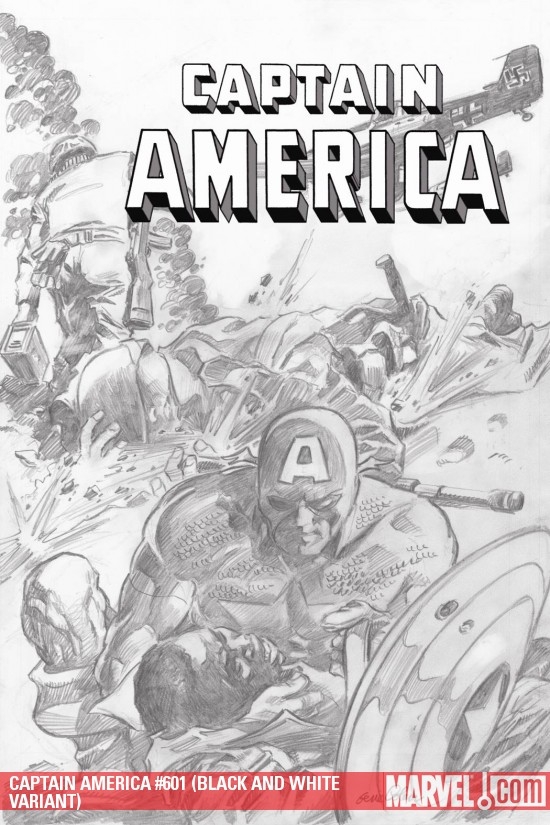 Two years ago, Marvel invited Colan to draw Captain America #601. This represented a return to the home of his fame, and his final achievement. Although the script (by Ed Brubaker) was weak, the trademark Colan flourishes were there: forced perspective that grabbed your attention, fluidity of movement, and pencils so detailed that inks seemed superfluous. It wasn’t his best work, but it was strong, especially given his terrible eye trouble, and I was glad to see anything by him. My college-age son read it, though, and having no familiarity with this artist, said to me, “What’s with the lame artwork?” Because what has happened in the past 20 years in Marvel comics is this: the photorealists have won. Comics are scripted and “drawn” to resemble film. Which is fine, but it means that with the passing of Gene Colan, we have truly seen the end of an era.