With great power comes great irresponsibility
Wednesday, January 5th, 2011Even with this latest disaster, I’m rooting for that Spider-Man musical.
Even with this latest disaster, I’m rooting for that Spider-Man musical.
Stan Lee turned 88 yesterday and he’s still going strong. Further proof: Earlier this month, the Los Angeles Business Journal recognized him as one of their “Eight Over 80”: business people in Los Angeles in their 80’s still leading professional lives. Here’s the piece.
I guess comics really aren’t for kids any more.
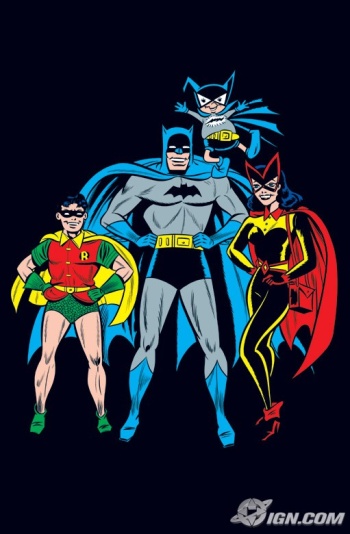
There was a time when Batman looked like this:
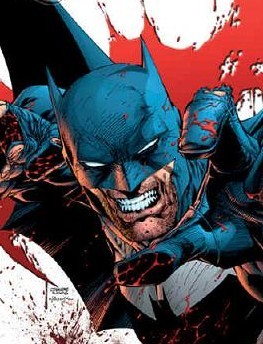
This is more like what you’ll find now:
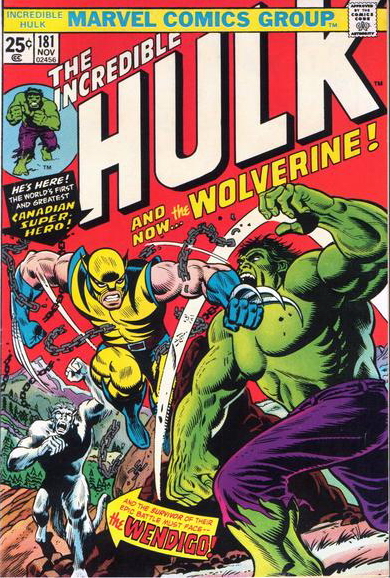
This isn’t a new trend. Even Wolverine looked a little… milder… in his debut.
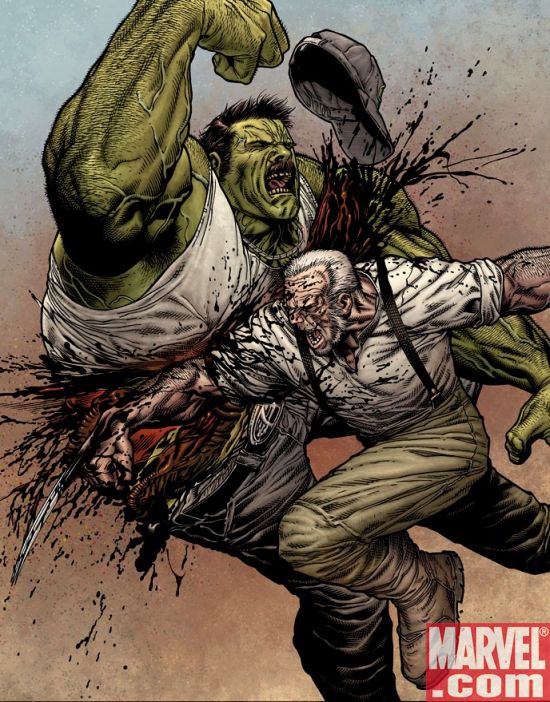
Now he’s more likely to look like one of the vicious, battered bums in the backdrop of a Bukowski novel:
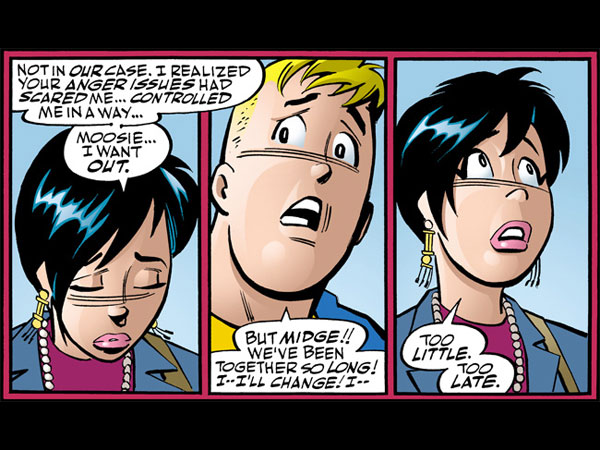
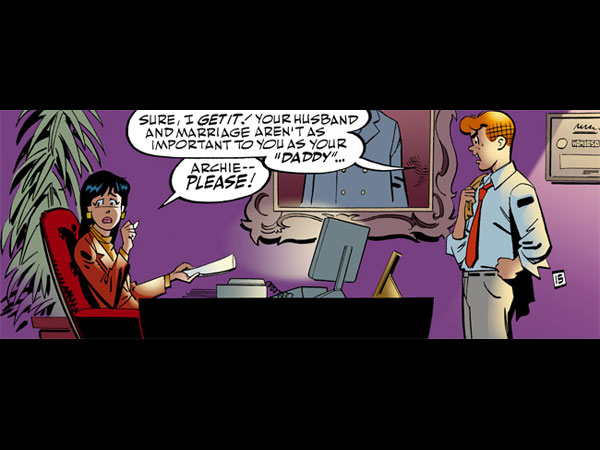
But even with all the changes that any character will go through over the course of almost 70 years, I’m still surprised to find what a downer Archie has become. I hated high school, so I couldn’t relate to the character at all, no matter how great a time he seemed to be having with Moose and Jughead and those fetching girls of his. But now even Archie is a victim of the recession, battling joblessness in what Slate calls “a middle-class hell.” Here’s their take on it, and here are some representative graphics. Looks interesting — if you can handle it.
Somehow or other, the LA Times recently finagled a phone interview with the reclusive R. Crumb, whom I got to see, once, at a comic-book convention in either Philadelphia or New York, 25 or 30 years ago. Opportunities since then have been just as limited.
I’ve enjoyed Crumb’s work for more than 30 years now. I admire his talents, his frankness, and his artistic scruples. But Crumb the man is getting left further and further behind. Which is fine for him. For me, it’s different. What he sees as relentless commercialism, I see as an offshoot of a web of possibility that almost all of us were utterly closed off from until the past 20 years. Thanks to the Internet, we can connect with almost anyone. We can self-publish — instantly. We can self-produce goods and services. We can record and upload and share and sell digital music. Artists in particular should cheer the new age. It isn’t for Crumb — but it’s great for the rest of us.

My next car won’t be this one — but you can get it.
Thanks to Paul Crist for letting me know about this.
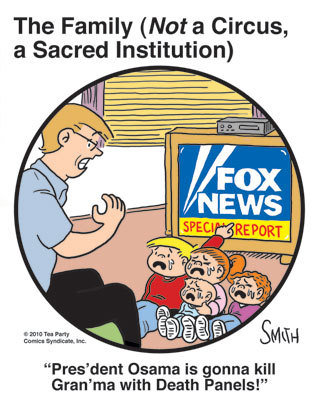
What if the Tea Party takes over more than just the Republican Party? The Boston Globe shows us what would happen if they took over the comics as well.
We’ve written here before about our enjoyment of Sir Ian McKellen. Here’s a photo of his participation in the recent protest against the Pope. (To quote a gay friend of mine, “Just say nope.”)
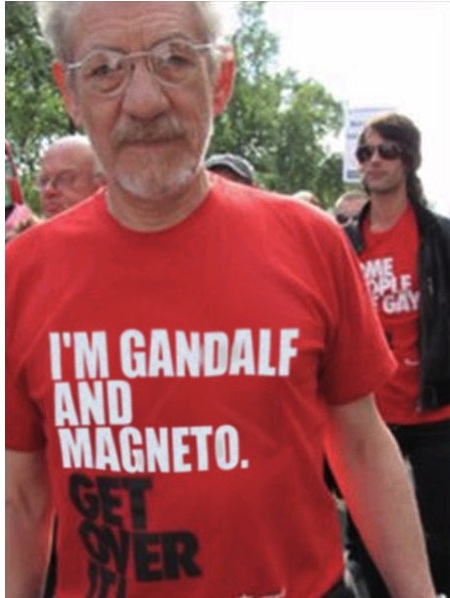
By the way, posting this image earlier a little bit ago on my Facebook page resulted in the following dialogue with a Facebook friend (whom I actually know but haven’t seen in… 10 years?). This little exchange really shows how issues of sexuality, politics, and Sir Ian McKellen, all intersect over the all-important topic of Marvel Comics.
LEE: Mind you, I had my doubts about Gandalf, but I did not realize that Magneto was gay. What about his two children, Wanda (The Scarlet Witch) and Pietro (Quicksilver)? Which brings us to the question of “how exactly do you define ‘gay’?” At least with regard to Marvel comics characters. By the way, Magneto himself is confused — 40 years as a villain, but with recurring stints as a hero. What’s up with that?
FB FRIEND: And ‘Scarlet Witch’ married an android — what do we call THAT orientation?
LEE: And then they had “children” who, it later turned out, where magical constructs who destabilized the entire Marvel universe. Things were so much simpler when relationships were between one human and another. Now you’ve got mutants and androids and magicians and supervillains. And whatever The Beast is, what with the blue fur and flews and all.
FB FRIEND: I didn’t know that about their kids. (Sorta wondered how they could…you know.)
OTHER FB FRIEND (whom I also haven’t seen in at least 10 years, and probably more like 15): I think he is saying he is both Gay (Gandolph) and Straight (Magne to),,,right?
FB FRIEND: I want to go on record, though, in supporting equal marriage rights for mutants, androids, Inhumans, aliens, cyborgs, wizards, ghosts, angels, demons, demigods, elementals, monsters, talking animals, and humans exposed to radiation (that somehow made them stronger, faster and better looking).
LEE: What kicked off Avengers Disassembled was the Scarlet Witch’s discovery that her “children” were magical constructs accidentally created by her chaos magic. From there, things got worse: She wished into existence the notion of “No …More Mutants,” which recast the entire universe into one without mutants. When the “real” Marvel Universe was finally reconstituted, most of the mutants were gone, and no new mutants were being born — a problem that has bedeviled them since. Recently, the first new mutant, named, of course, Hope, and related, of course, to Scott Summers (as, seemingly, all red-haired women in the Marvel Universe are), was born. Once you put it all down in writing as I just did, it’s easy to understand, though it does give succor to the notion of certain Evangelists and U.S. Senators that mutants and androids should not procreate. (Lest we all wind up in an alternate universe. Which seems like a danger we’d all want to avoid. Unless we’re working a dead-end job at 7-11.)
FB FRIEND: Yeah, “Disassembled”, “House of M”, “Civil War”… Ya notice that all the major trouble used to come from the bad guys, but now it’s mostly traditional heroes causing all the strife? Is this meant to mirror the divisions in our own “real”… universe?! Hmmm… The Republican party IS disassembling itself, and the Scarlet Palin’s ‘House of Tea’ is taking over. Whoa! I need to get current in my comic reading! I believe ‘Daredevil’ is the heavy now? Who could he represent? Maybe Rahm Emanuel quitting the White House to run Chicago. Yeah…I see it now…
In which Stan Lee defends video games — and once again claims that he (and evidently he alone) “created Spider-Man, Iron Man and the Hulk, the virtual ancestors of the characters in today’s games.” I guess Jack Kirby and Steve Ditko played no role.
I spent part of my day of doing essentially nothing (thank you, Grover Cleveland) rearranging the reading pile next to my bed. Why haven’t I yet bought Jonathan Franzen’s new novel even though I hunger and thirst for it? Because I’ve got this enormous reading pile to get through. I’m trying to read through it, not add to it. Which means that before I get to Franzen I should finish:
Non-fiction:
Business:
Comics and graphic novels:
Unsolicited plays
What’s missing? Two things: magazines and novels. (Or short-story collections.) My rule of thumb with magazines is this: Be devastatingly quick about it. Get it, read it, recycle it. It’s the only way to get through them. Why no novels? Because I’ve read all the ones that were in my queue. (Not my long-term queue — which consists of one book I think about often but haven’t gotten to yet: “The Brothers Karamazov.”) I go through binges of reading either a lot of biographies/histories or a lot of novels; I recently ended one of those novel-reading binges. Hence my desire for the new Franzen, “Freedom.” No, I don’t plan to get it right now. But I am leaving for Las Vegas on Thursday…. Watch me pick it up at the airport.
This line from a story on LATimes.com, about the reissue of Terry Zwigoff’s exemplary documentary, “Crumb,” caught my eye:
“A habitual crank with a pronounced antisocial streak and an aversion to mainstream culture, the director Terry Zwigoff has one of the most distinctive sensibilities in American movies.”
The rest of the piece goes on to refer to Zwigoff as someone bethrothed to non-mainstream culture; by extension, Crumb is discussed as someone outside the mainstream. I read this and wondered, does R. Crumb truly qualify as outside the mainstream?
Given this fantastic success, including the sort of success that most matters in the U.S. — financial — one has to ask, what does one have to do to be mainstream? At one time, the response might have been: appear on a sitcom. But as all mainstreams have splintered into niches, as the broadcast network triumvirate has subdivided into the limitless choices offered by satellite and cable, when shows like “Aqua Teen Hunger Force” and “Ideal” and “The Whitest Kids You Know” are able despite rather small audience numbers to to draw enough sustenance to survive, then the idea of “normal” has left the room.
So why is Crumb, for all his obvious success and enormous cultural impact, still regarded as outside the mainstream? Because 40 years ago, that’s how he seemed. When the counterculture got covered by the mainstream, when straitlaced organs like Time magazine dropped in on what was happening in Haight Ashbury, they said Crumb was out of it. And he was. But that was 40 years ago. The culture has changed. Many of the topics reserved for adult-oriented underground comix are now laugh lines on everyday TV. Given that, Crumb is the new normal.