Lee Wochner: Writer. Director. Writing instructor. Thinker about things.


Blog

Foreign ways here at home

May 4th, 2012

Yesterday morning on public radio I heard again that Los Angeles has more ethnic diversity than any other place in the U.S., and is home to more Asian cultures than any other one place. This wasn’t news, but I took greater note because I was about to spend half the day in Koreatown.

A few weeks ago, a friend I hadn’t seen in eight years sent me a very nice message on Facebook. We’d fallen out of touch, but he was writing to thank me for some career direction I’d given him 10 years ago, from which he’d been able to build a career. (And, also, for giving him a copy of The Enchiridion of Epictetus when he was severely depressed. So I guess I’m not the only one who finds it inspirational.) He wanted to know if we could get together so he could thank me personally, and he suggested a “legitimate Korean Spa.” Now, I’ve heard about Korean Spas, but I hadn’t been to one. I was definitely interested in trying this, and desperately needed a massage, so we agreed to meet yesterday at 4:30  in Koreatown for dinner and then our spa visit.

If you’re a white American and have ever wondered what it might feel like to be a minority, I recommend trying out the experience. At various times in my life, I’ve been the only new wave guy in a punk bar (shades of The Who’s “Quadrophenia”); the only white guy in a blues club in downtown Atlanta; the only white guy eating at a barbecue place back in the woods in Arkansas; and yesterday my friend Raul and I were the only two non-Koreans at the restaurant Kam Dang. And Raul is from Ecuador, so I was the only white guy. The staff spoke a little Engrish or none at all, the menus were in Korean with the occasional bit of Engrish attempted translation, and the photos of the food were no help at all — I still couldn’t make out what any of it was. Eventually, I sussed out that one thing was pork bellies in what looked like a spicy paste and the thing near it was scallops, so we ordered one each of those. Those entrees came — cooked at our table, Korean-style — accompanied by the traditional multitude of little serving bowls of who-knows-what. Here, look for yourself and tell me what any of this is:

Appearances can be deceiving. The thing lower-left that looks like a large piece of pasta in a marinara sauce turned out to be some flat celery-like thing. The swampy looking thing at 2 o’clock of that is bean curd. Above that is something with potatoes and raisins; the things in the dish to the right of that that look like ears were kind of sweet and kind of spicy and I have zero idea what they were; and so forth. If you can identify the miso soup, you win the prize, because that’s all I was able to recognize at first too. See the orange shreds that look like carrots in the dish on the middle left? Those are, somehow, pieces of fish. Fish spines? No idea. But I ate them. In fact, I ate my share of all of it, never knowing what any of it was, and it was all delicious. While eating it, I flashed back on the episode of “Star Trek: The Next Generation” where Will Riker eats Klingon food with gusto — except Riker had the advantage of knowing what everything was. Without knowing what anything was, neither of us knew how to eat it. See the little bowl of clumpy liquid next to the bean curd? That’s a dipping sauce — but what’s it for? Knowing the proper use of a condiment is important — you don’t put ketchup in coffee — but without a frame of reference, we were stumped. Finally our server impart by sign language that the grilled scallops and the mushroom caps with them should be dipped in that stuff. And that was delicious too. We downed it all with the Korean beer Hite, which I hadn’t had before and which indeed tasted too much like Budweiser, and then we were presented with little cups of what I assumed would be hot tea. No. It was cold, with rice, ginger, and sugar in it, and that too was delicious. The last time I’d eaten Korean food was more than 10 years ago and I hadn’t liked it, but I thought all of this was fantastic. Even though I didn’t know what almost any of it was.

Then we crossed the street and went to Century Day Spa.

I’ve been to spas before. I hadn’t been to one this big or this elaborate. (If you’d like to see what it looks like inside, here’s their bizarre website.) There’s a coed area, and also separate areas for men and for women for the completely naked spa experience. There’s a cold jacuzzi pool, a hot jacuzzi pool, a hot hot jacuzzi pool, and a melting your flesh off hot jacuzzi pool. I tried all of them. The latter was so hot that at first I wasn’t sure I was feeling anything, anywhere, or ever would again. Some years ago, there was a comic book where Wolverine was thrust too close to the sun and melted into nothingness — except for his eyes, which, given his healing factor, allowed him to regenerate. Now I knew how he felt. There was a hot sauna, a steam sauna, a dry sauna, a clay sauna, and other varieties, as well as traditional showers, plunging ice-cold showers, outdoor naked rest areas, and on and on. I tried all of these things, but what I really wanted, what I really needed, was that massage. So I booked a masseuse for 7:30. Promptly at 7:30, re-showered and now robed, I ascended to the second floor for my massage.

I have had massages before, but just as I’ve had food before but not quite the kind of food I had yesterday, this massage was unlike anything I’d ever had. It was awesome, peculiar, and terrifying. Over the course of 70 minutes, this attractive but powerful woman walked all over my spinal column, punched my feet, rearranged my internal organs with her fingertips, stepped on my hands, massaged my nose, kneed me in the sides, popped my fingers out of their sockets, and kneaded my buttocks with her feet. There were moments when I was waiting for my entire skeletal structure to collapse at once like an old hotel getting implosion demolition. Through it all, she said only one thing, and that was early on:  “Oh. You so tiiiiiiiiigh!” (Translation:  “You’re so tight.”) The rest of the time, she went about her work completely unseen by me as I lay either face-down or with my eyes covered, wondering desperately what she was going to do next while she either sucked on her tongue or some strange Korean candy that can last 70 minutes, because otherwise the odd sounds from her were inexplicable. When it was over, after she’d stabbed my cranium again with her fingers and ground her elbows into my scapulae, my dazed confusion was obvious. I didn’t know who I was or where I was or if I’d ever again lead a normal life. I did tell her I wanted to tip her — any stress I may have had was surely gone now, because now I could feel nothing, so I figured:  mission accomplished — and she gave me a tip envelope.
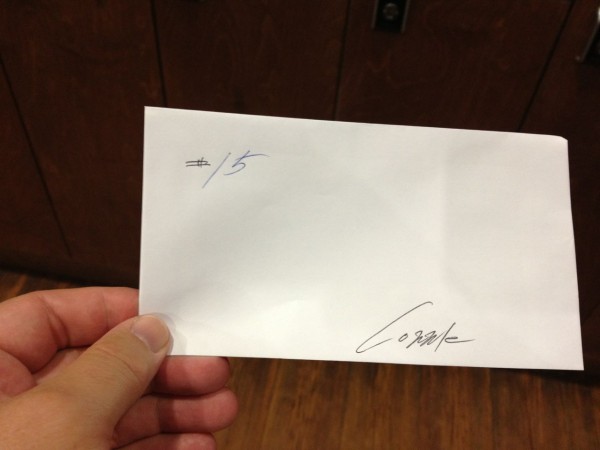
No, I couldn’t read that name either. I asked her her name. What she said sounded like “Jan” or “Koi,” which I know don’t sound like each other, but there it is.

I left her to go down to the locker room principally because I wanted to see what I looked like in the mirror, much like a burn victim getting the facial bandages removed. My face didn’t feel right, so I could only imagine what I looked like. Raul saw me coming down and said, “Your hair!” I got in front of a mirror and saw that I looked pretty much like this:

I went downstairs and did the entire sauna, etc. circuit again and then drove home with the top down, feeling 20 pounds of anxiety lighter. Now it’s a day later and I’m still feeling remarkably stress-free. And all of the sensation has returned to my body, which is also good. I’m eager to go back for more fine unidentified food and scary stress-reducing — and also to further explore whatever other cultures  are right near me that I haven’t spent enough time with.

Today’s movie trailer

April 30th, 2012

I read yesterday’s LA Times summer movie sneaks section — but saw nothing about this.

That’s why it comes with a four-stroke engine

April 29th, 2012

A man is suing BMW because he says riding their motorcycle gave him an erection that’s lasted for 20 months. I think once this story gets out, it’ll be hard to get a BMW motorcycle. How hard? Very hard.

Not buying it (broiler pan), part 2

April 29th, 2012

My curiosity demanded that I dig deeper. Here’s what I’ve learned.

In the case of the first “used” broiler pan being offered, it’s described this way:  “Packaging may have minor damage. Item is in excellent condition.” So it isn’t used, but it may have “minor” damage — while simultaneously being in “excellent condition.” Which is like being a horse and a fish at the same time. Also, its actual price is $18.56, or only 98 cents less than the actually new broiler pan without minor damage that is definitively in excellent condition. Given these circumstances, I think even Scrooge McDuck would splurge on the extra 98 cents and buy the certifiably new one.

In the case of the second “used” broiler pan, we learn this:  “Came with range, possibly never used.” This made me reflect that Jessica Alba, to name just one person, came without range and has remained that way. But in the case of this broiler pan, it’s the word “possibly” that makes it a dead deal. Either it’s used, or it isn’t; buying anything shouldn’t be a guessing game, especially used cookware.

Not buying it (broiler pan)

April 29th, 2012

I need a new broiler pan. Why? Because the old one is so burnt after years of use that my kids and I can’t get it clean any more. I have a little list of things I’m getting ready to order from Amazon, so I figured I’d see how much a broiler pan would be (as opposed to picking one up at, say, Target). And I came across the listing above.

The porcelain option at the top doesn’t seem like a bad deal — about twenty bucks for a pan that will last me years and years. It’s the offering below that leaves me a little skeptical: the two used ones available “from” $14.99. Questions:

1. Who would buy a used broiler pan?

2. Who would buy a used broiler pan online?

3. Who would sell a used broiler pan?

4. And how are there two people who would sell a used broiler pan?

I’m tempted to order one just to see what I’d get.


I Get Around

April 26th, 2012

Surfin’ USA

April 25th, 2012

Yes, I am flying to Dallas tomorrow expressly to see The Beach Boys on their 50th anniversary tour. More about this some point after I land.

Today’s music video

April 24th, 2012

In which Philip Glass writes music for… “Sesame Street.”

For years, I’ve said that “Sesame Street” teaches kids one thing — to watch TV. So while I’m not sure it’s filling an educational need, I am sure that it has a 43-year history of getting very cool creative people involved, from Jim Henson to Bill Irwin to Eric Idle to Cab Calloway to Jughead Jones (?). Maybe it’s not an educational program that we’re all funding. Maybe it’s an arts program.

Aging 12 years in 3 minutes

April 24th, 2012

In this video, you can watch the daughter of a Dutch filmmaker age 12 years in 3 minutes. It’s fascinating to watch because it shows just how quickly our lives pass. Just yesterday, I emailed a photo of my wife and me with our first-born when he wasn’t yet one year old. My caption: “Look how young we were before these rotten kids aged us 20 years.”

This video also holds relevance for me because I have a daughter who is now 13 (and will soon be 14). Note in the video how, from age 10 on, the girl is gabbing incessantly in every frame. We’ve had a similar experience at our house. As for the aging aspect, I aged 12 years in 3 minutes just last night when she recounted something she’d watched on Netflix streaming with her friend. For just a moment, I considered blocking the service — then remembered watching secretly “Satyricon” late at night on an early pay service at my brother’s apartment at age 11. At least she told me. I told no one — until now.

Dim shadows

April 23rd, 2012

I was sad to see that Jonathan Frid, the actor who cast a large shadow on my childhood by playing Barnabas Collins on “Dark Shadows,” died the other day. (And here’s the joke: Seeing the trailer for the campy new Tim Burton version killed him.) Like many other kids in the mid-to-late 1960s, I raced home from school to watch it; that’s what one had to do in those pre-VCR, pre-DVD, pre-DVR days: catch it in real time or miss it. My daily viewing was further complicated by the Glen Jupin factor. Glen Jupin was a classmate that my grandmother watched along with me in the afternoon for a little spare cash. He was also a fraidy cat, unable to handle the gothic horror of “Dark Shadows,” or its implications that various family members could be ghosts or secret monsters. Every day it was a battle with my grandmother over Glen Jupin, who wailed that the show was too scary. My retort was the obvious one: If he didn’t like it, couldn’t he go do something else? Why did I have to suffer because he couldn’t handle it? Some days I’d win, some days Glen Jupin in his pathetic striped lime-green shirt would win, and now as an adult I understand my grandmother’s decision-making process. I’m sure it seemed fair to take turns letting one of us win. To me, it just seemed arbitrary, and made me argue all the more.

In my playwriting workshop on Saturday, as we were discussing “Dark Shadows” and the late Mr. Frid, my friend and fellow playwright Tira volunteered that one could watch all the “Dark Shadows” one could ever want online via Netflix streaming. She said that she and a friend got roaring drunk and watched a bunch of them. So that night I fired up the xBox, logged onto Netflix, and started with the first episode featuring Barnabas (almost a year after the show’s debut). I watched three 22-minute episodes (22 minutes because of the lack of commercials), committing the terrible error of not having a friend over and getting roaring drunk first. At some point, I’ll watch some more, because my thinking is this: maybe they get better. In fact, I’m sure they get better; they would have to, because there is nothing conceptually possible below the nadir.

The first episode with Barnabas was episode 210, and the only part of Barnabas that was in that episode was his hand, at the very end. What precedes that is the most plodding of soap operas anyone has ever witnessed. Almost every bit of the preceding 22 minutes is a roundelay of inquiries about the whereabouts of a young ne’er-do-well named Willie Loomis whom everyone wishes gone. Here’s somewhat how the dialogue sounds:

Elizabeth Collins (to Jason McGuire, who is blackmailing her): You said that Willie Loomis would be gone!
Jason McGuire: Did I? Well, perhaps he is.
E: Well? Is he?
J: He may be. Have you seen him?
E: I haven’t. But Victoria may have. Vicki, have you seen Willie Loomis?
V: Willie Loomis! That awful man. Why, have you seen him?
E: I haven’t. Have you?
V: No, I haven’t. I thought he had gone.
E: Did he?
V: I don’t know. I didn’t see him.
E: So you don’t know if he’s gone.
J: See? He may well have done.
E: But we don’t know. (To the maid:) Have you seen Mr. Loomis?
Maid: Willie Loomis? I thought he’d gone.
E: Has he?
M: I don’t know. Should I make up his room?
E: Has he gone?
M: Not that I know of. I could make up his room.
E: Not until we’re sure he’s gone.
V: But we can’t be sure he’s gone.
J: He may well have done.

The last time I heard dialogue like this was in a production of “Waiting for Godot,” but that was purposely comic. Had Beckett and Ionesco not predated “Dark Shadows,” I’d think they owe a royalty. I can’t help thinking that Tim Burton got roaring drunk watching this and finding nothing but humor in it. Me: I fast-forwarded. A lot. In watching three 22-minute episodes, I’m estimating that I watched about nine minutes, because that seemed like the amount of actual content. Everything else was stuffing.

The pace is glacial and the staging awkward. (In the first few minutes, I watched a camera pull in for a closeup — and cast a huge shadow across an actor’s chest. Nice.) But one thing was palpable: Why Barnabas Collins, and the show featuring him, became, for a short time, such a sensation. Right at the outset, Jonathan Frid and the writers establish the anguish, the loneliness, and the inner torment of someone cast out of his own time and condemned to play a role he doesn’t want: that of someone who feasts on others. It’s a nice performance of a conflicted character, someone struggling to be evil, which would be easier, while trying to hold onto his goodness, which is harder. That made an impression in 1966, and it still does today.