Lee Wochner: Writer. Director. Writing instructor. Thinker about things.


Blog

Lincoln song updated

November 23rd, 2006

sf-abraham-lincoln.jpg

For quite some time now, my daughter Emma and I have been writing a song about Abraham Lincoln. Today after a long dry spell, we were able to add a verse. So here’s the current standing of the song. (And no, I can’t convey in words how the tune goes, but melodically it would remind one of a song by They Might Be Giants.)

Abraham Lincoln’s dead.
John Wilkes Booth shot him in the head —
That’s what the newspapers said.

Created Thanksgiving
But didn’t go on living,
Won the Civil War
After year four,
Abraham Lincoln’s dead.

Juice squeezings

November 23rd, 2006

Timothy Noah would like to read OJ’s book and makes a good contrarian argument for it.

I just don’t want OJ making any money from it.

Ditto with Rupert Murdoch and Judith Regan.

Hey — maybe I can sue these people! I feel violated.

Just burn him alive

November 23rd, 2006

tdy_lauer_tirade_061122300w.jpgIt used to be that an apology counted for something.

“Just say you’re sorry,” we were told as children. And then it would be over.

Now, though, even the most seemingly heartfelt of apologies is meaningless. For the hecklers who were the poor victims of his inflammatory attack, nothing short of hiring a news-camera-chasing lawyer like Gloria Allred and demanding millions in settlement will suffice.

So Michael Richards is either angry, or racist, or both. Who was really hurt by his outburst? Himself. And in subsequent interviews, he’s been the picture of genuine contrition. He’s been banned from the Laugh Factory. He’s been vilified by fellow comics. If his career isn’t over, this is at least a very costly setback.

None of that is punishment enough. No, he must pay the hecklers and their attorney, and it won’t be cheap.

If or when he settles up, will that be enough? Or will it take more? Maybe we could find a pretext for sending him to prison. Surely someone’s civil rights have been violated. I know I’m outraged by having seen that video — maybe he should have to send each of us ten bucks. And then have to clean up after Thanksgiving dinner.

I hope this goes far, far into trial, that both sides wrack up enormous legal bills, and that the final judgment is on behalf of the plaintiffs to the tune of: one dollar. Then both sides will learn not to be greedy, hateful, and stupid.

On opening lines (my own)

November 21st, 2006

Recently I talked about opening lines here, going on to express my ongoing fascination with the opening of “True West” here. Playwright EM Lewis responded by asking what was my favorite opening line from one of my own plays… and that, ladies and gentlemen, leads us to an example of how a writer spends 90 minutes doing something more “fun” than working on his current project.

Those ninety minutes later, I have to say I don’t have a favorite opening line. In fact, I’m not even sure I can find evidence of one good opening line. (And having the “True West” line as an example doesn’t help.) The ones that immediately stood out in my mind did so because of the spin the actor put on it, and the overall context of what was happening and what was going to follow. Once you’ve seen it produced, it’s hard to extract the experience from the written line. Here’s an example, in the form of the opening of “The Size of Pike”:

(The apartment of a fortyish working man bachelor – the basics, and displayed none too well. A TV, empty beer cans of a notably cheap brew, a pizza box, a recliner. Not a pig sty, but arbitrarily unkempt. There are two doorways, one to the kitchen and one to the bathroom, and a closed door leading outside.

At rise: JOHN and ROD surrounded by camping and fishing gear: a tent, a sleeping bag, Coleman lantern, fishing rod and tackle box, an ice chest and the like. They each hold a bag stuffed with more stuff. John carefully sets down his bag. Rod lets the one he’s carrying drop with a thud. He wipes the sweat from his forehead with the back of his
arm, then looks at John sorrowfully, shaking his head with disapproval.)

ROD
Izzat it?

(John looks around.)

JOHN
That’s it.

Great opening line? Mmm… probably not. But it sums up a lot of the theme of the play: that Rod views himself as a manly man and John as someone who is too pampered and bringing too much stuff on this fishing trip. Does the opening line signal that the play is also going to be at times comedic? No — but the director and the actors were smart enough to get that, and to get a laugh out of the first line.

What I noticed in dipping into a couple dozen of my plays was that most of them start immediately (whether they’re short plays or not). This habit probably comes from my formative years of reading bad pulp novels, where someone with a gun comes in in the first three pages. An example from my play “Speedy”:

(A woman, MINDY, addresses us.)

MINDY
(To us.)
It started with a vicious argument with my husband Rob. I don’t know how it turned that way – it happened fast – but it was about the Millers coming over.

(Lights come up on a table and Rob seated at it. Mindy seats herself in the other chair.)

MINDY
(To us.)
I didn’t want them to.

(She calmly places her hands around Rob’s throat, then this remembered scene starts and she shifts into violent emotion.)

MINDY
You prick! You fucking asshole! This was supposed to be our night out! Now you’ve got these goddamn assholes coming over and screwing everything up! I hate those fucking Millers! If I hear one more story about Jim Miller!
Who are these people who eat our snacks and drink our wine?

ROB
(Gasping.)
Sandy’s… your best… friend….

MINDY
(To us, hands still around his throat while he freezes.)
It’s true. Since college. Sandy studied biochemical engineering. I studied anthropology. We’re both managers at Barnes & Noble. I like her a lot. But this time I felt differently and said:

(To Rob.)
Best friend? Best friend? It seems to me that Caesar’s best friend was Brutus. Look how that turned out! I would gouge out the eyes of her aged grandmother with a paring knife.

ROB
(Struggling to pry her hands off.)
I think you’re –
(As he frees himself:)
Over-reacting!
(He gasps for air and rubs his neck.)

Great writing? No. Fun on stage? Yes, if done right. It also shows an attempt to stave off my foremost fear: boring the audience.

Although I haven’t come close to having a great opening line, I think this, from “Three People, According to Sociologists,” is probably closest:

Scene One

(A basement band set-up. A huge acoustic drum kit with a massive bass drum, kettles, toms, hi-hats, percussion blocks, everything imaginable but twice over. A stool behind it. To the side, a guitar in a stand, a beat-up old amplifier, another, but in better shape, distanced from it. A battered refrigerator rescued from a junkyard or garage sale. Beside it, a couch with its stuffing showing. Also, a stereo with stacks of records and tapes, all dusty, and a profusion of cables, leads, and wires leading everywhere: to the two microphones in their stands, to the stereo, to a separate small tape deck, to phase shifters and the like for the guitar. In short: a cluttered, mossy, dusty basement music set-up. Down left, a phone atop a small desk with chair. Everywhere: empty beer cans with stamped-out cigarette butts atop them, and stray trash: junk-food bags, greasy pizza boxes, empty cans and bottles.

Hard, punkish rock and roll music rises, then fades, as the lights come up on:

ROOG, thick with muscle, wearing a sweatshirt with the sleeves ripped off, jeans, and sneakers, sits at the desk by the phone, thinking earnestly. A clutter of paper scraps — names and phone numbers written on bar napkins, matchbooks and the like — is scattered atop the desk. SPIKE, anorexic-thin, with black t-shirt, black leather jacket, black sneakers, and ripped jeans, noodles around with another guitar, a cigarette dangling from his lips. He plucks stray notes, tries chord changes, etc., while he talks, his amp off the entire time.)

ROOG
(Exasperated.)
I dunno. I’m runnin’ outta guys.
(Pause. No response from Spike. He picks through the scraps, finds another phone number.)
How ’bout Jess Hames?

SPIKE
Thinks a C’s an E. Bad thing in a bass player.

As with “True West,” the audience sees the set, sees the actors, hears the first line — and immediately understands what this play is going to be about. That’s not the only mission of an opening line. But it is, after all, your opening — and so it should open the play.
The context of “nigger”

November 21st, 2006

michael-richards.jpg

Why could Richard Pryor say “nigger” and Michael Richards isn’t allowed to? Because it was in the context of Richard Pryor’s angry blackness, and Michael Richards is Jewish.

Why can Chris Rock say “nigger” and Michael Richards isn’t allowed to? Because, again, it’s part of Rock’s act — and evidently not part of Richards’.

Why can George Carlin say “nigger” and Michael Richards isn’t allowed to? After all, Carlin’s “act” is how genuine he is — when he says “nigger,” he means it. Michael Richards isn’t allowed to because of what he means by it — a hateful slander — and here, the fact of its genuineness is what will shadow his career.

Attacking people by type doesn’t get you far any more.

A better Orlando’s Joint pic

November 21st, 2006

ep7_2bit.png

Why? Because it’s got ME in it.

Click here to view the episode.

Reading today’s LA Times: Crumby coverage

November 20th, 2006

crumb1.jpg crumb2.jpg crumb.jpg
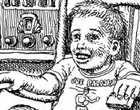
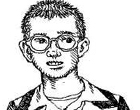
Above are three self-portraits of Robert Crumb, as a four-year-old, an adolescent, and today.

Accompanying these illustrations in today’s Los Angeles Times Opinion section is an odd little piece written by his wife, Aline Kominsky-Crumb. Click here to see it; if you want to see the full versions of these cropped images, registration is required. Here is the entirety of the text:

As a child, my husband, Robert, already felt like an alienated old man (top left). He longed for the past, never having actually known what he was nostalgic for. It was as if he were born in the wrong time. He never felt part of the contemporary culture. You can see the roots of his alienation already beginning.

You can see from this drawing (middle) how out of sync Robert was — awkward, sensitive, nerdy. He was destined to suffer the cruelties of the outsider — especially in Southern California in the 1950s, where surfers and beach bunnies were the mode.

This image (right) is reflective of Robert as a mature artist — someone who has an eye for capturing himself with total honesty and has finally honed his scathing critique of modern society. We see the artist here in his pajamas at home. He has nothing to hide; it is all there.

Like most things about the LA Times, this baffles me.

(First, a few other things that baffle me about the Times:

  1. Why doesn’t the newspaper that is situated in the entertainment capitol of the world have far better entertainment coverage than we get in Calendar — and for God’s sake, why is the writing in that section so deadly dull?
  2. Why doesn’t the paper of record for the nation’s second-largest city have a metro section (rather than a “California” section)?
  3. Why can’t the paper settle on a font? It doesn’t seem to be a problem for other newspapers — or even for me.
  4. Why is it so riddled with errors? I have on file my favorite example: the day that the bottom half of Calendar Page 2 was advertising, and the top half was corrections. Other days have only come close to that achievement. Let us never forget the day they announced on page one the death of Allen Ginsberg, probably the most important American poet of the past 50 years — and misspelled his name.

I could go on in this vein, but I’ve already surpassed “a few.”)

What baffles me about this piece is that a) I don’t know what it’s doing in the Opinion section because it doesn’t offer an opinion about anything, and b) I just can’t figure out what prompted it. Is Crumb in the news and I missed it?

Casino Royale, no cheese

November 19th, 2006

casino-royale-still4a.jpg

I haven’t been a fan of the Bond franchise since… well, I remember hating “Moonraker.” That was in 1979.

“Moonraker” typifies what disinterested me in Bond: the detached gimmickry of an outerspace conflict. It was an extraterrestrial epic in which nothing was grounded.

Much has happened in the series since then, not much of it good. Until now.

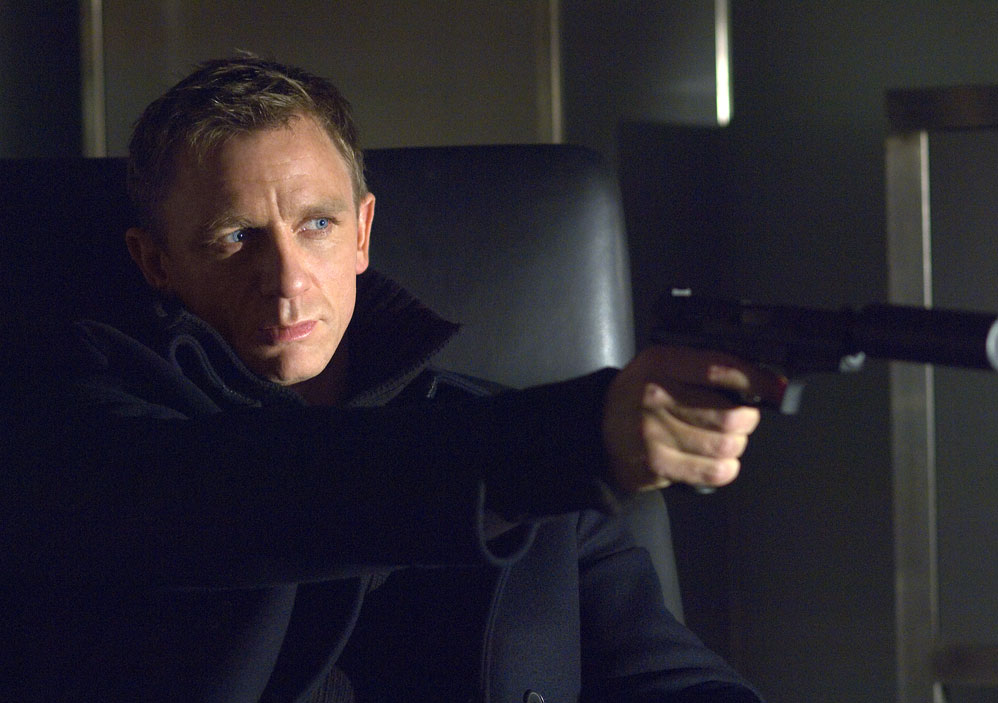
It is not just that the new Bond himself is a rehumanized model, although that goes a long way. The gadgets are gone. (This Bond’s most essential spyware? A defibrilator.) Minus the fantastic, something closer to reality reappears. That’s a good thing. While I don’t want my secret agents settling down in the suburbs, I do like to know that they can get cut and bleed and feel betrayed and heartbroken and be driven by ego and rage.
Best Bond yet? It sure felt that way today.

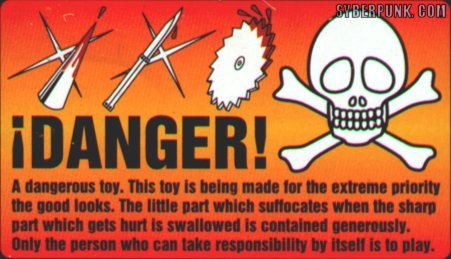
Danger, Engrish!

November 19th, 2006

danger.jpg

This is not as bad as some stage directions I’ve seen.

Thanks to Mark Chaet for sending this.

“Waiting for Godot to Leave”

November 18th, 2006

While I’m on the subject of “Godot,” Trey reminded me of this poem, which I wrote in the 90’s. It’s been published a few times — I don’t remember where. It seems especially pertinent at the moment.

Waiting for Godot to Leave

Well, he finally showed up
And of course he brought guests,
Uninvited ones,
And he ate all the h’ors d’ouevres
And he’s finishing off the punch
And he knows everybody who’s anybody
And goes on about them at great length
And he stuck his head up your dress
And he threatened to ruin me
And now he’s in the pool with our daughter
And he’s so fascinating and intimidating
And funny and awful and rude and overpowering
But just such a boor in the end.
No surprise, really.
Nobody ever lives up to their P.R.