Lee Wochner: Writer. Director. Writing instructor. Thinker about things.


Blog

From turkey to chirpy

November 27th, 2008

jiminy2.gifI know: You probably think crickets are cute. Let me tell you, forget the cute association with top hats and spats — they’re a goddamn menace. I say that because there’s one in our living room that I’m looking to kill. No matter where I go or what I do on this level of the house, he is all I can hear, and all I can think about.

My eldest asked, “Dad, why does he bother you so much?”

And I thought about that. I did. And now I have a definitive answer, at least for this very moment:

Because right now I’m trying to work on my play and a scene set in a furniture warehouse and all I can think about is that goddamn cricket I have to listen to.

My wife and I have each separately torn apart the entire living room looking for this cricket, to no avail. This cricket is such a noisome nuisance that our dog won’t even lie down in that room. I have tried closing this door. I have tried going down into the family room. Like the beating of the telltale heart, I now hear him everywhere.

Tomorrow I’m going to Do-It Center to buy cricket poison. I’m looking for something irrefusably tasty to crickets that will lure him out of his crevice and leave him smack on my floor deader than Karl Rove’s permanent Republican majority. If that doesn’t work, I’m going to buy a gecko and set it loose unfed in the living room until it catches and eats its own dinner.

In the meantime, I’m taking my laptop (and a glass of wine and a cigar) outside to the back yard to write. Are there crickets out there? Sure. But I can write with them out there — that’s where they belong.

Best and worst Thanksgivings

November 27th, 2008

Often, we feel sorry for people who spend Thanksgiving without family. But the worst Thanksgiving I’ve ever had was with family.

For years, my wife took our children to Florida to visit her folks during this holiday. About five years ago, I decided that perhaps I should go to New Jersey and do the same. My mental picture was of the Thanksgiving I grew up with:  everyone dressed up and gathered at my parents’ house, with all of us sharing in my mother’s incomparable cooking and enjoying a raucous thought-provoking discussion. (At least until someone, usually me, got into an argument with my father.) And then playing board games and card games afterward. I didn’t expect precisely this, my father having died in 1991, and the dinner now being held at my sister’s house, but I did look forward to the rest of it. The moment I stepped into my sister’s house I could see that “Thanksgiving dinner” as I understood it was out. Our extended family was now so extended that we had been broken into three groups of tables, eliminating any hope of tablewide discussion. While I and a few others had dressed for the occasion, several relatives who will go unnamed wore t-shirts and construction boots and baseball caps. (A hat at the table! I expected my father to lurch from his grave and snatch it from that head.) Worst, in the next room were relatives of relatives – in-laws and in-laws of my in-law – who were watching a football game on a large stereophonic home entertainment system with the volume turned up to 11. I couldn’t hear anything next to me, but boy I caught every bit of the football game, including the excited cheers from the people who ate their Thanksgiving dinner in there in front of the jumbo TV. After dinner I tried to put together our own game of some sort – a game involving active participation, not vicarious lassitude – but couldn’t get any two people to agree either on a specific game or to play at all. Finally I left unannounced and stomped in the dark over to my mother’s house where I read the night away and vowed never to return for Thanksgiving.

This brings me to the best Thanksgiving I’ve ever had.

On one of those holidays that my wife and children were out of town, I decided very last-minute that I would cook Thanksgiving dinner and invite some friends who had nowhere to go. This was a brief tradition for my wife and me in the late 1980’s and 1990’s because we know so many actors in particular who moved to Los Angeles to pursue fame and fortune and who didn’t have the money or inclination to go back “home” for Thanksgiving. After several years, though, my wife worked most Thanksgivings and I don’t like to entertain without her; I get either lonely or bored or annoyed or some combination of all three. But on this particular Thanksgiving, I was going to roast that turkey I’d bought, so why not invite a few people? One friend agreed quickly, but as I made other calls I learned that the invitations were too last-minute. All these people who in previous years had had nowhere but our house to go had found other houses to join once we rolled up the welcome mat. Meanwhile, I’d purchased enough Thanksgiving food supplies to feed the Norman invasion. And I’d planned to make a baked cranberry dish I’d read about in the LA Times. No way was it just going to be me and the one friend, so I dug further and further into my Rolodex and kept making calls until four others decided to join us. And then the one friend who’d RSVP’d canceled. So when the assembled crew sat down for Thanksgiving dinner it was five people who barely knew each other:  myself, my friend the vegetarian, his French roommate whom I’d never met, my manic-depressive black Republican friend, and a playwright I’d once spent a month with in Arkansas in a fellowship. We were the cast of a Robert Altman movie in the scene where they all finally meet.

But here’s what happened:

Because we had had no history, we spent the afternoon actually learning about each other. I can’t remember a thing we talked about, but I know it was about art, literature, history, music, politics, and life and death. Because we weren’t family and we weren’t truly friends, we were utterly liberated to say anything, and we had an absolute ball doing so. After the wine was drunk and the food was cleared, we decided to go see a movie, and so all piled into my car and went to see a movie that wound up being “American Beauty,” which was newly released. We didn’t know anything about it, but it turned out to be about a 42-year-old man who wakes up from his humdrum life and decides to be utterly liberated. It seemed like an absolute revelation, and the best movie we’d ever seen. “What a great movie,” said the manic depressive, who on a regular basis knew a lot about great and not-great in his own life. Then we all drove up to the Castaway restaurant on the edge of the mountain and looked out over the lights of the valley in the darkness while the vegetarian and his roommate and I smoked cigars. Finally I drove us back down to my house and we all agreed that we’d had an unexpected and memorable Thanksgiving.

Like all great events, this event was not to be repeated. I haven’t seen the playwright once since that evening, although we’ve emailed a couple of times trying to get each other to come see each other’s plays, with no luck. The vegetarian and his roommate had a vicious falling out, including a fistfight with other roommates, and almost went to court. Five years ago I called the vegetarian from the rooftop of a hotel in Hollywood not three blocks from his apartment and invited him to join me at this launch party for Nike Rockstar and he said he’d come; after 30 minutes of waiting for him, I called him back and found he hadn’t left and I figured he wasn’t coming and so I said, “I can take a hint” because this wasn’t the first time, and he said, “There’s no hint,” and I said, “Goodbye” and that was that. I’ve seen the manic depressive several times since – he was positively delightful at our 2004 Fourth of July barbecue, for example – but it isn’t frequent, perhaps once every year or two. I make an effort because he is truly brilliant, an obviously original thinker (like all manic-depressives), and has at times been a very good friend to me.

So Thanksgiving is not about family, and it is not about holding onto the past. It’s about recognizing what you’ve got, especially in light of all the people who haven’t got much of anything. This year was low-key, but there were high notes:  my wife unexpectedly dancing with me to a sentimental song of the 1920’s covered by Bryan Ferry; my 10-year-old daughter sharing her love of Georges Seurat then challenging me to swing higher than she could; my 6-year-old asking me to roll over him and “crush” him. I used to expect more. Now I know to expect nothing, and appreciate what comes.
Because Americans can never get too much of anything…

November 25th, 2008

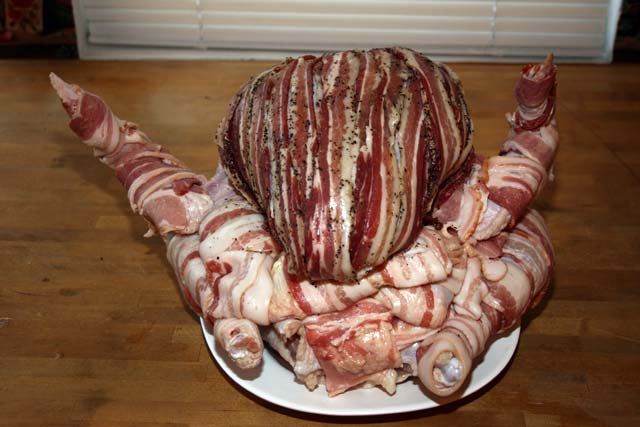
I present, for your Thanksgiving enjoyment, the Bacon Turducken, a chicken stuffed in duck stuffed in a turkey, all wrapped in bacon. I know you want the recipe, so just click the image.  Mm. That’s heart-attack-alicious.

What did the turkey die of? Shame.

bacon-turducken.jpg

Hitler Hitler Hitler

November 23rd, 2008

We’re used to American movies giving us catchphrases and iconic scenes, from “Here’s looking at you, kid” through “Make my day,” to just about every shot of “Star Wars.” I can’t think of any scene from a foreign film that has so entered the zeitgeist as the now-famous scene in “Downfall” where Hitler chews out his senior staff for their incompetence. On YouTube, it’s so widely parodied that I’m sure it’s going to be with us for quite a while.

Here’s the latest version I’ve seen, and it couldn’t be any timelier. (Good parody requires timeliness. Great satire demands timelessness. It’s the difference between last week’s “Saturday Night Live” and “A Modest Proposal.”)

This is the first one I noted; it’s the (now-famous) “Torchwood” parody of the (now-famous) scene in “Downfall.” Note: if you haven’t seen the “Torchwood” Season 2 finale yet and you don’t want it ruined for you, don’t watch this. (Valorie, this means you.)

Next, here’s Hitler complaining about Windows Vista.

Here’s Hitler pitching a fit when he gets the Red Rings of Death on his Xbox. (In other words, the hard drive is kablooey and the system won’t boot.) I’ve seen this particular Hitlerian outburst myself in our house: It was my response when I wanted to play “Marvel Ultimate Alliance.”

Here’s one where Hitler gets banned from World of Warcraft because of his poor behavior.

I could go on and on — there seems to be an endless supply of these on YouTube, and no, I’m not going to watch them all either.

I have to admire the skill behind these. It’s not merely a matter of taking the video and coming up with a new pretext for the scene and then dropping in your new dialogue. To do it well also requires understanding how to write dialogue for this pre-existing scene that will match both the running time of the words coming out of the actors’ mouths, and also the expressions and body language they’re showing. Woody Allen did this in “What’s Up, Tiger Lily?” and at some point in the 90’s I saw a stage show were some gifted improv actors provided new dialogue for a not particularly good movie. But now we have a stampede of these built around one clip. So while I admire the skill in adapting the situation and modulating it to fit the actors, there’s nothing clever about the imitators. The first one, yes, was insanely clever (and I think that was the “Torchwood” one); great concept, done well. The imitators are to that what the magazines “Cracked” and “Sick” and “Crazy” were to “Mad.” By the mid 1970’s, the field of parody magazine ripoffs became so exhausted that one of the last launches was entitled simply “Parody,” all the other synonyms for “Mad” having been used. I think we’re at that point with Hitler in “Downfall.”

Join me this weekend

November 20th, 2008

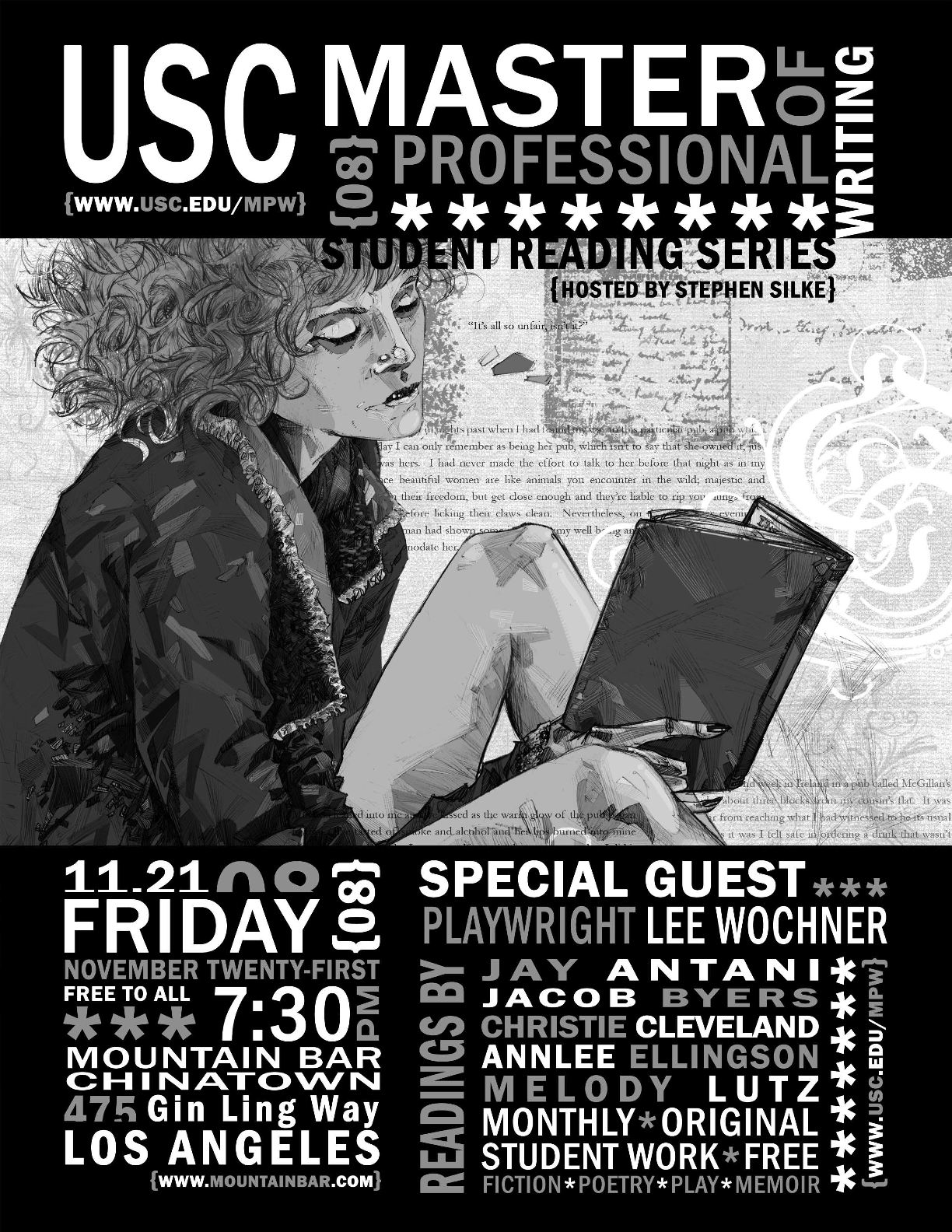
 mpw-reading-poster-nov.jpg

Tomorrow night at 7:30 I’m doing a reading downtown as part of the USC Master of Professional Writing program reading series. The reading is in a bar, so in the fine tradition of Charles Bukowski and any number of Irish poets, I have high hopes for this. The bar’s website (the URL of which is unfortunately wrong on the flyer, by the way — it’s actually www.themountainbar.com) promises “bleeding walls,” which is something I last saw in a Takashi Miike movie. I think if they were to bleed while I was reading, I would find that distracting. Anyway, please join us for this. Previous student readings have been fantastic, and hey, drinks are available. The address is 475 Gin Ling Way, and no, I have no idea where that is either, but that’s why we have mapping technology.

My friend EM Lewis’ terrific new play, “Song of Extinction” is currently running at the John Anson Ford Amphitheatre’s Inside the Ford venue in a production by Moving Arts. Ellen (that’s what some of us call her) is a gifted playwright and I’m proud to say this play was written in my workshop. The production is populated with theatre friends I’ve worked with for many years, every one of them fiercely talented — so I’m going to take the risk of vouching for this sight unseen. But hey, why don’t you be the judge? This Sunday at 5, I’ll be moderating a post-show discussion with the playwright, and the producer (another longtime theatre ally, Kim Glann), is offering a 20% discount to readers of this blog; just enter the promotion code SONG when you click here to RSVP. And students with ID are $12, so yes, USC student, this means YOU should come join us. Ellen is a graduate of that program of ours.
Flat is the new up

November 19th, 2008

“Flat is the new up.”

I heard that tonight when a friend and I attended a business lecture at UCLA by Norm Brodsky and Bo Burlingham, co-authors of the terrific new book “The Knack.” Where did they hear it? From entrepreneurs at the recent Inc. 500 conference.

In other words, forget growing during this economy; if you’re able to stay flat, you’re ahead.

Which makes me think of news I read on my iPhone while I was waiting for the lecture to start: Evidently, Congress is balking at even discussing a bailout for Detroit auto manufacturers. For GM in particular, “flat” will mean death — they’ve had so much shrinkage they’ve been underwater for decades. On top of that, the other day I heard this statistic: GM has 20% of auto sales in the U.S., and Toyota has 20% of auto sales in the U.S. GM has 7000 dealerships; Toyota has 1500. GM has all the operational efficiency of an overstuffed jelly donut.

Even with the estimated 2.5 million jobs to be lost, it’s tempting indeed to let them go out of business. (Or declare bankruptcy, learn from their lesson, and see if they can become profitable in a reorganization — and perhaps learn how to sell a car at the same time.)

Redneck Playstation

November 17th, 2008

Saturday night I went to see some friends in a play and found myself utterly mesmerized watching the Three Stooges video playing on the set of their show prior to curtain. My two companions wouldn’t admit to watching, let alone enjoying, the Stooges (and, indeed, one of them sniffed, “I don’t think I could even name one of them.”). But I love The Three Stooges (all six of them, to varying degrees).

And so, I give you this, sent to me by my father-in-law. Before clicking, please take into account my personal sensibility as noted above.

Burning down the house

November 17th, 2008

Don’t know how I missed this the first time around, but now that I’ve seen it, I love it. The sound and the look. So here it is.

While we’re on about conspiracies…

November 13th, 2008

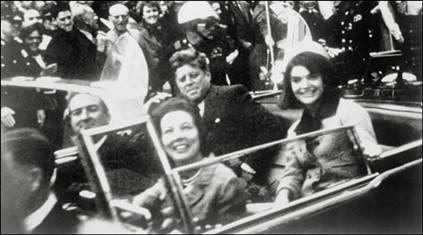
kennedy.jpg

They’ve finally ruled out the grassy knoll.

(Or is that just what they’re telling us?)

“What Do You Know About Corn?”

November 13th, 2008

The other night one of my grad students offered me goldfish crackers. Although I didn’t want any (and it was kind of her to offer), I took the bag to read the label.

Someone else thought I was reading the label to check the calories or the fat content, and said so.

“That’s not what I’m looking for,” I said.

And right away another student said, “Are you looking to see if it has corn products in it?”

I was. And then he and I were off — sidetracking the class into five minute mini-lectures on the abuse to the environment and the food chain that is forced corn feeding, to animals, and to humans. I could link to thousands of articles on the subject, but won’t (you can just Google “High Fructose Corn Syrup” to start, and you’re off and running); instead, I’ll just let you know that I’m one of these people written about recently in the LA Times: a conscientious shopper who reads labels and does everything possible not to buy HFCS products. As I told my class, when I was a kid I ate my fair share of fast food and I guzzled innumerable Mountain Dews and got as little exercise as possible outside reading comic books, and kids today with similar behavior patterns are gaining prodigious weight where I never did. The difference? Now 85% of our food includes corn, and it’s a direct result of U.S. government policies begun in the 1970’s by Agriculture Secretary Earl Butz. Yes — and I know how this sounds — all that corn you’re eating is the result of a government plot.

But bear with me.

I just finished helping my 6-year-old boy with his homework, which involved his writing a mini book report — writing his name, the date, the title and author, and then drawing three pictures from the book. I got him through the writing part, despite his howling protests that “You’re killing me!” and “You’re giving me a heart attack!” and two attempts to choke himself with his own hands because I insist on legible penmanship. (My grad students who complain about the notes I wrote on their papers would sympathize.) With regard to the drawing part, I would say that next time he’d rather have his legs sawn off than have to draw. When we were done, he packed up his homework and then recycled some old graded papers he didn’t need any more. When I saw the title of a multi-page stapled project he’d worked on, I fished it out of the trash to read.

It’s entitled: “What Do You Know About Corn?”

I don’t know its origins, although it was handed out by his teacher (who, after all, is teaching a sanctioned curriculum) and has the look of one of those endlessly xeroxed elementary school handouts. So I’m wondering if it wasn’t authored directly by Earl Butz himself, and passed down ever since. It is an encomium to corn.

After three one-page sentences that lay out the fundamentals of the story of corn — when it’s planted, how quickly it grows!, and when it’s harvested — the message politics kick in.

Page 4: “Corn is in catsup, chewing gum, ice cream, candy, and pudding.” Yes — and that is precisely the problem. Because it belongs in none of those things.

Page 5: “Corn is used to feed cattle and people.” Yes — to the distress of both. Cattle get suppurating ulcers from being force-fed corn.

Page 6 (the dramatic conclusion): “Corn is the most valuable crop grown in the United States.”

It’s hard to argue with any of the statements in this little booklet. But if we take any lessons from the 20th century’s geniuses of propaganda — y’know, the folks who brought you all those genocides and wars — it’s that in addition to spreading outright lies, it’s valuable to present facts that build your cause, whether or not these facts are good things. It’s akin to what Stephen Colbert calls “truthiness.” There’s factiness in my kid’s corn booklet from school, but it’s not goodliness.

Am I against corn? No. I grew up eating it — on the cob, where it belongs. It’s when it pops up in candy and pudding and Mountain Dew and coffee creamer — all places it doesn’t belong — and my kid gets take-home propaganda about it that I get pissed.