The folks who coined the term “global warming” have realized their mistake (too late), and now say they should have said “global climate change.” I can attest to that. My birthplace in New Jersey has been buried under an avalanche of snow for weeks now, I have a friend in Washington DC wondering what all this white stuff is that has shut down the government, and another friend sent me an email last night with the repeated refrain “Have I said how sick I am of cold and snow?”
And then there’s me.
I’m writing this from the restaurant of a 5-star hotel in Boca Raton, FL, where, I assure you, I am freezing my ass off. It’s plenty cold outside, but it’s frigid inside. This hotel, which optimistic realtors might call “Miami Beach adjacent,” was not built for sub-60 weather. The glass corridors admit a regular breeze that would freeze the flippers off a penguin. My room is beautiful (actually, too beautiful — when I walked in and saw a two-story suite I tried to offer it to someone else in the party whom I thought more deserving). It’s also positively polar. As we took a break to regroup, I told my business partner I was heading to my igloo to order some blubber.
This is Florida. But it doesn’t seem like the Florida of our collective recollection.
Wonder why the federal deficit is so high? Perhaps it’s because the last administration in its twilight had to commit billions to bailing out the banks who underwrote the near-collapse of the global economic system, and because the present administration has had to commit billions to bailing out the general economy in the form of stimulus programs.
Which directs me to my true wonderment: From 2001-2009, where were all the deficit hawks of the party of Glenn Beck? Why were they so willing to drink the tea back then?
How much time do writers actually spend writing? This writer estimates his output at between 2 and 5% of his time. If that holds true for most writers, then most writers would be better off holding a job and writing on the side — which is precisely counter to the conventional wisdom.
According to this piece in the LA Times, the affliction of Hollywood aspiration now has a clinical term: “Hollywood NOS,” where “patients suffer from the mistaken assumption that… showbiz glory will somehow insulate them from emptiness or the mundane hardships of day-to-day life.”
Favorite excerpt:
One psychiatrist, who would only speak anonymously because of his high-profile patients, described a session with a moderately well-known actress whose career was fading as she hit her 40s. The doctor told her that the “magic” part of her work life probably was over and that she would need to adjust. His patient looked out the window onto the flat white stucco building outside and said dully, “You see the way the sun is shining on the building? When I hear what you’re saying and see the flatness there, I want to kill myself. The mundane life, I don’t want any part of it. The work of it. The adversity of it, the lack of fame and specialness. I’d rather be dead.”
Sadly, this piece of reporting isn’t from The Onion. Everyone who lives around here has seen it in person all too many times.
My seven-year-old boy Dietrich amuses me to no end. He’s fond of spontaneously hitting people with odd quizzes and math problems of his own invention. (Although it’s not always amusing when it’s, say, 7 at night and all you want to do is drink your wine and mind your business and you’re suddenly expected to calculate eleventy billion divided by infinity.)
Here’s the latest quiz he just told me he used on another boy today on the school yard:
Dietrich: Dude, would you rather have a good family, or a bag of Flaming Hot Cheetos?
Other Boy: The Flaming Hot Cheetos.
I realize this isn’t a scientific survey, but still, the result should give us all pause.
On Wall Street, nothing quite equals success like enormous, obvious failure.
Par example, witness the resurrection of detested Merrill Lynch CEO John Thain, a man who held Bank of America hostage in its forced acquisition of his company — so that he could pay out $5.8 billion (that’s with a “b”) in bonuses to the people who’d led it to failure. His latest coup? He’s going to lead CIT Group, which has the distinction of being “the first company in which the government realized a loss under its $700 billion federal bailout program.” My kids ran their lemonade stand better than anything Thain has done lately, and for less money, although his new pay package is a mere $500,000 a year, plus $5.5 million in stock. But then, my kids’ business actually made money.
Yesterday during the Superbowl, Oprah helped Dave and Jay reach a detente of sorts, leaving all of us to hope that the long national nightmare of warring talk shows and network ineptitude is finally behind us. I was beginning to worry someone was going to send Jimmy Carter in to alienate everyone further.
I’d like to offer another sort of late-night bridge building. Seventeen years later, I think it’s time we finally forgave and forgot “The Chevy Chase Show.”
I was among those who tuned in on that first night in 1993 and couldn’t quite believe what I was seeing: a talented comic actor who was used to working live, bombing utterly before a national audience. At the time I thought he was arrogant and over-reaching, and I’m not proud to admit that I enjoyed his flameout as much as everyone else seemed to. But recently I saw Chase on “This Emotional Life,” and was struck by his honesty and his hard-worn grace. At one point he said — and I’m paraphrasing — “Do I have a lot of friends? Oh, sure, I’ve got a lot of friends.” And he mimed counting on his fingers and concluded: “Three. I’ve got three friends.” That was brave, especially in Hollywood. So was talking about his extended depression — and how the debacle of “The Chevy Chase Show” sent him into a years-long tailspin.
Now I look at the debut of that ill-fated show a little differently. I still don’t think Chevy should have been there. He’s not well-suited to hosting a talk show, but I now wonder: Who could have known that in advance? He’s obviously nervous and, worse, he seems tonally wrong: soft-spoken and earnest, when high-energy and sarcastic were the order of the day. His timing is also off — a little slow, and too extended. Again, surprising, given how good his timing had been earlier on “Saturday Night Live” (although — that had been 17 years earlier). This opening shows only a hint of how bad it would get — I remember tuning in a few nights later and seeing Chevy nervously sweating and casting about for something to say. Take a look for yourself at the clip below and let me know what you think.
But also, think about this: Isn’t it time to let this go? Time heals all wounds — except when your wound is on YouTube. Search “Chevy Chase” on YouTube and you get “spectacularly bad talk show” as a result. How did I come across it myself? Because I Googled the term “bad talk show” — and guess what came up. Conan O’Brien will be back (as will Jay Leno), and even Marion Barry got re-elected after the drug bust(s), and lately I’ve seen Eliot Spitzer as an “expert commentator.” Perhaps we can forgive and forget the worst celebrity talk show in network history.
The main challenge in making a good movie about Captain America has to be suit.
Case in point, from the 1970’s TV movie that so agitated me as a kid:
Think you hate looking at it? Imagine how that guy feels wearing it. I doubt it struck fear into the heart of the Red Skull, unless he was terrified of rejects from auditions for the Village People.
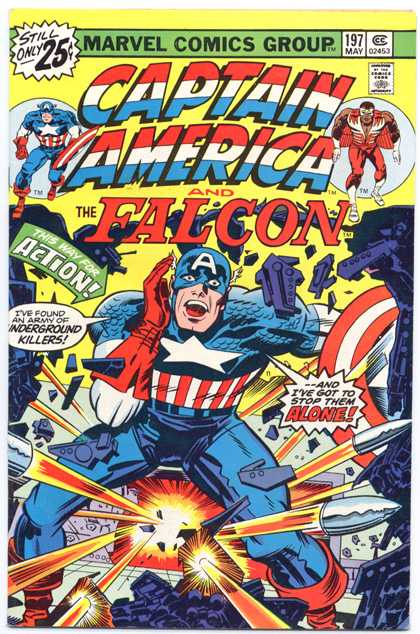
Here’s the archetypal costume, courtesy of Jack Kirby:
No matter whom you cast or how you sew it, that’s not a costume that will translate well into a live-action movie.