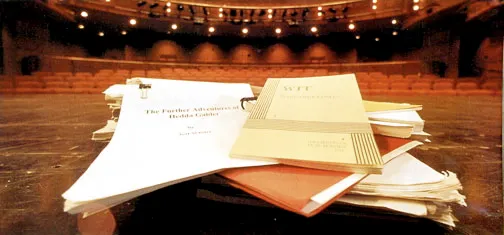
This spring and summer, I’ve carved out more time than I’ve had recently to work on my other job: being a playwright. This weekend is already serving as a wonderful reminder of why it’s great being a playwright. Oh, you’ll get lots of boo hoo hoos from playwrights (Tony Kushner once complained about how poorly playwrights are paid, even as he was loading a new $10,000 couch into his townhouse), but in many ways, it’s a dream job. Or avocation. Or hobby. Take your pick.
Based upon my experience of being a playwright, dating back a long, long time to my first play getting staged when I was 15 and in high school, here are just a handful of the reasons it’s great.
Nothing beats hearing people laugh at all of your jokes, in the right place and at the right time, without prompting by your friends or lovers. (In my experience, your family does no prompting. More likely they’ll sit there like Easter Island statues, afraid it’s about them.)
It can be nice to win an award now and then.
When you don’t, it’s also comforting to know that the judges were wrong.
Usually, when you fly in to see your play, everyone there will treat you the way you wish everyone everywhere treated you: with respect and reverence, and enormous admiration for your wit. It’s even better than how your dog does it.
Sometimes you get to be a visiting artist or teacher or judge or lecturer, usually in a bucolic location that couldn’t quite get Suzan Lori-Parks, but they’re happy to make do with you, and they buy you drinks.
Whether or not they see it, an actual production helps your family understand “what you’re trying to do.” Maybe.
You get to work with actors. Sure, some of them are as bad at it as you are (or, inconceivably, even worse), but most of the time you get mostly good people, and the surprisingly good people lift your material up to even greater heights, and you get credit. If you saw a play that really wasn’t much of anything, but you enjoyed the hell out of it — that’s what happened: the actors. And, seriously, there are terrific actors everywhere. I’ve had plays produced in a little town in the interior gold-rush area of California, and in the backwoods hilltops of Arkansas, and both times the locals were great. I salute them!
Also, the small-town people have a greater tolerance for outlandishness than you think. I think they even expect it, like: “Hey, this is an artist, so we shoulda figured on this.” So just have fun.
Every time you get a production, you’ve set up a little outpost somewhere on the globe. People there now know you, and you know them! (Remembering their names can be a separate matter.)
Those people in the outposts? Sometimes they’ll let you crash at their place. Even in pricey places like Manhattan. I’ll say no more.
You make lifelong friendships with some of the actors and directors and designers. (And lifelong enemies with some of the others.)
If it’s a production where you live, you’ll get to learn who your true friends are: They’re the ones who bought tickets.
In your mind, you’re communing with Shakespeare, Brecht, Stoppard, and whoever wrote “Bob’s Holiday Office Party.” What could they learn from you? (You’d love to share with Brecht your better ending for “The Good Person of Szechwan.”)
As a playwright, you will listen more closely to what other people say. Of course, you’ll need to determine for yourself whether or not this is a benefit.
After you have even a little playwriting income, it can be surprising what’s tax deductible. I’m pretty sure that cigars qualify as office supplies.
Big benefit: You can swear off drugs. That audience response is your drug.
This is just the starter list. There are many more delights (such as an entree to meeting famous people you’d like to meet), so I could go on. But I think now I’m going to go on to working on my new play, so that maybe I can add more of them in the coming months and years.
I don’t believe in rules for writing. There are no rules to writing. No good ones, anyway.
Yes, you can bend the language — Chaucer did it, and so did Shakespeare, and Mark Twain, and thank God for them. You have my permission, and you should give yourself permission.
No, you don’t need to write every day. That’s some sort of constraint — a self-imposed dictate, someone listening to the advice of people who don’t themselves follow it. If it works for you to write every day, splendid. If not, don’t. My generous and inspiring teacher Jerome Lawrence told me that his friend Tennessee Williams, no matter how ill or hung over, wrote every day; fine, that worked for him, and I’m glad of that. But you don’t need to act accordingly.
You also don’t need to stick to one medium. (The people listed above didn’t.) Why was it that the University of Southern California was right for me? Because the graduate writing program actively encouraged writing in more than one discipline — which, as someone writing plays and fiction and essays and (very bad) poetry and also business writing I was already doing.
But I do believe in habits.
Habits can be good, and habits can be bad, but if you develop habits to your writing, they help you reacclimate yourself to doing the work.
At base, and setting aside the spiritual realm (whatever you may believe), we are made up of chemicals. So I believe in establishing the chemistry of what you’re writing, and how it will affect you, and re-establishing that chemistry every time you’re writing that thing.
That means:
Whatever you’re drinking when the writing is working, that’s what you’ll be drinking every time you’re working on that piece.
If you started out by drinking, say, orange juice, it’s orange juice you’ll be drinking every time you’re writing that play.
Sometimes, for me, that’s bourbon. I’m careful about that. Obviously, I won’t be writing a play in the morning if it requires bourbon; the ramifications of that sort of approach are well-known to followers of writers. My late friend Gerald Locklin, who was close to Charles Bukowski, said you had to catch Buk at the right time of day: After he’d had one or two beers, but not too many. Much as I love Bukowski’s work, having known many alcoholics and seen how unhelpful that approach can be and also knowing myself and my own life, that’s not the path for me.
Although my current play does require bourbon so, yes, I work on it on Sunday late afternoons or evenings. It requires bourbon because I started with bourbon, and one way to stay unstuck is to reacclimate yourself into the environment of its creation.
The drink I strenuously don’t advise, at least for me: coffee. I once wrote a play on coffee, and found I was going through half a pot or more in each session. I had the jitters for weeks. Never again.
(I’ve been writing all morning today, and you may be cheered to learn that I’m doing it via seltzer water.)
If you started with a nice cigar, as I’m wont to do sometimes, then a nice cigar is required.
If you started writing with music in the background, you queue up that music again. I’ve written 66 plays, some of them good and probably many of them pretty bad, and dozens and dozens of them have been written to music. Sometimes punk, sometimes postpunk, sometimes classical (thanks here to Glenn Gould in particular), once a particularly cherished album by David Sylvian and Robert Fripp that somehow transported me into a different state. People in the writing workshop I’ve led for 32 years now will ask, “How can you write while listening to music?” I tell them, “You don’t listen to it. It’s just on.”
If you’re writing outside, which I like to do (hence the laptop), then you’re better off always writing that piece outside. The outside-ness is part of the environment you’ve created.
Again, the goal is to recreate the environment in which you were succeeding.
By the way, real professionals do this in every profession. Some years ago, I read a lengthy profile of the swimmer Michael Phelps even though I have no interest in him or swimming or sports in toto. What fascinated me was Michael Phelps’ system: his carefully orchestrated timeline for practice and for performance, the time he arrives, the time he puts on his trunks, the time he does warmups, and so on. His system is brilliant and inspiring, and he’s a true champion.
The other habit I endorse most:
Always stop in the middle.
In the middle of a sentence, preferably.
Because when you feel ready to pick it back up, you can start immediately by finishing that sentence.
I learned that a long time ago by reading a biography of Lester Dent, pseudonymously the Kenneth Robeson who cranked out a novel a week in the form of Doc Savage pulps while traversing the globe on a boat. Yes, the books were formulaic, but he was never stuck.
And finally: Don’t edit while you’re writing.
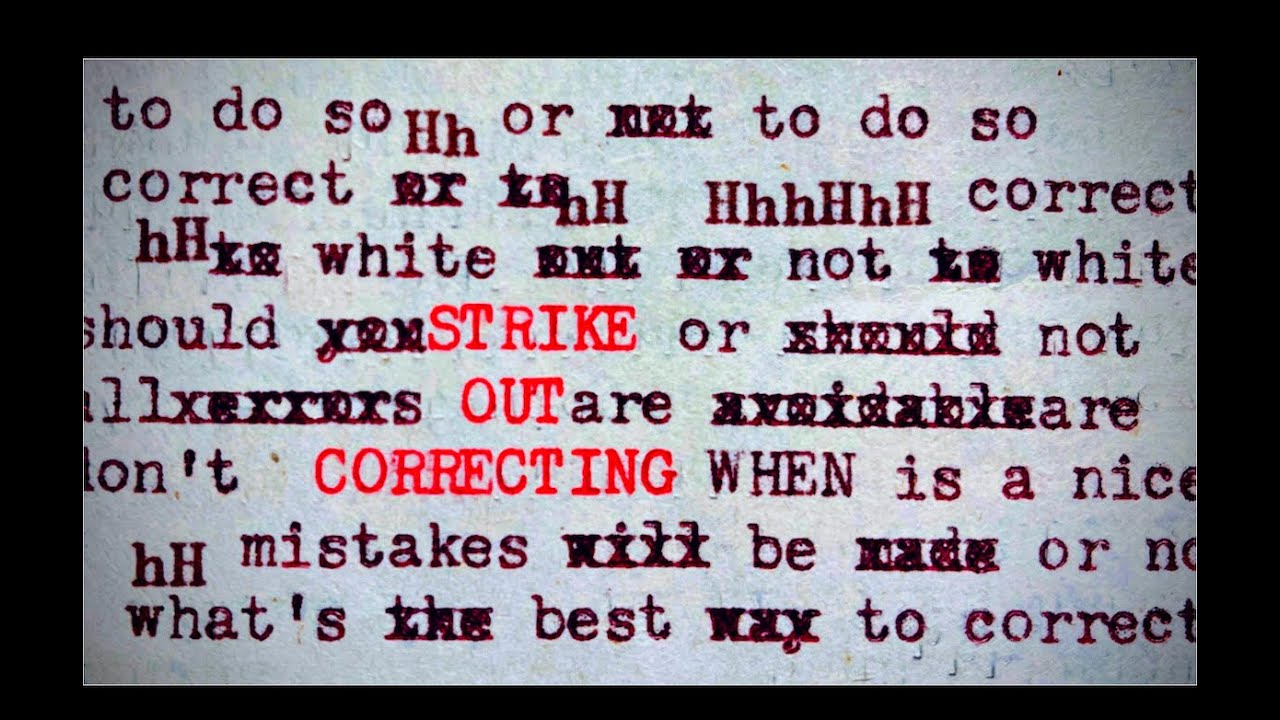
Editing is a judgmental process — a thinking process — and writing is a feeling process. If you’re editing while you’re writing, you’re sitting in judgment of what you’re writing, and that’s a wonderful way to sit back and assess yourself negatively. You’ll never finish anything that way. Every writer I know already has enough self-judgment; the only ones who don’t are the truly bad writers. Write your piece, then edit it. They are separate functions, and should be kept separate. Need some inspiration on this topic? I always recommend Natalie Goldberg’s book “Writing Down the Bones.” She’s smart and fearless.
Anything much beyond that in the way of writing advice, I’m suspicious of. The world is full of bad advice ready to disempower you. What you need to do is what works for you — what’s above is what works for me. But whatever habits you need, figure them out and stick by them. It’s easy to get stuck; habits, being habit-forming, make it easier to stay unstuck.
But, again, that’s my advice. So make of it what you will.
They’re also conjecturers, people who draw their own conclusions based on what they’re observing, and then extrapolating different pathways that might have led to what they’re seeing.
This is why we also have running narratives in our heads.
It goes like this:
“What am I looking at? I see X and Y and Z. … How did this happen? Did it happen this way, or that way, or some other way? Maybe it was this, maybe it was that, maybe it was this other thing.”
And that’s how, most of the time, we wind up writing a novel or poem or short story or play.
I just came back from a thrilling fast-turnaround trip to England, where I got to meet up with a dozen or so friends and see, twice, what’s honestly the most exciting act in music. (Pere Ubu, of course. And most exciting to me equals most exciting. I’m sure you can understand.) I also went to the National Theatre for the first time, and explored a new area of London, and spent a lot of enjoyable time in pubs and restaurants with said good friends, and navigating the byways of the British rail system.
But what I find I’m thinking about the most is a sad little drama I watched unfold while I was on the shuttle bus from long-term parking to the airport in Los Angeles. Usually, I write about these things in my writing journal, figuring if I’m ever stuck, I can go back to it and make use of it. But I’m never stuck, and I never go back.
(Sidebar: Yes, I keep two journals. There’s the writing journal — for ideas and observations — and there’s the personal journal, for my daily thoughts and activities. No, I don’t know why I keep these separate. Five years ago, I also wrote a divorce journal, again a separate log, this one with a white leatherette cover to distinguish it from the others, and again, I have no idea why. In general, I think it’s best not to probe too deeply into creativity: too closely observed and it might disappear.)
Although my flight was international (to Heathrow), and one would assume I’d be leaving from the international terminal, I was waiting to disembark the shuttle at Terminal 4, where my flight would board. This is just one of many many puzzling oddities about LAX, an airport constantly under (re)construction and where arriving passengers literally need to stand in the busy street to catch their ride or drag luggage what feels like a mile away to catch an Uber or taxi.
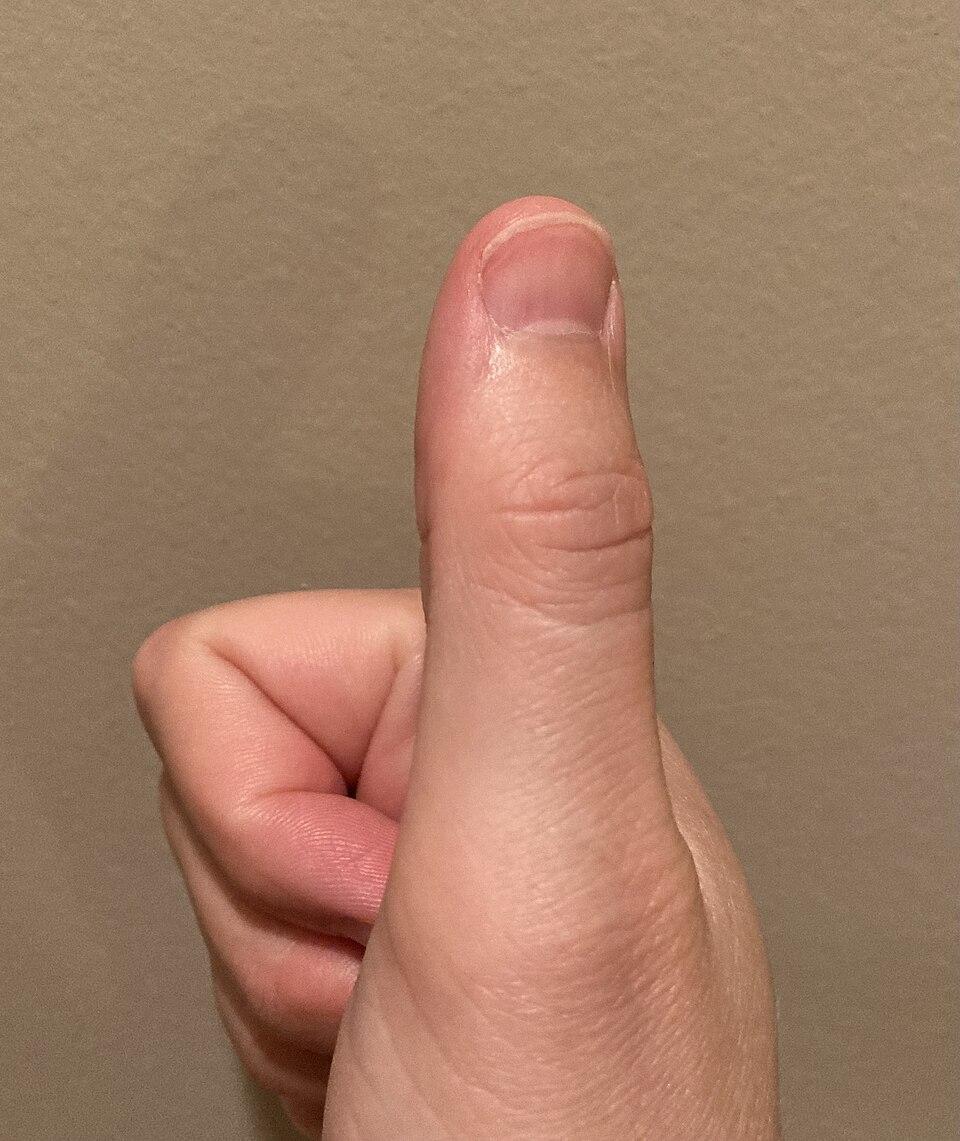
At Terminal 1 or 2, the shuttle pulled over and a boy looking to be about five years old came sullenly onboard — loudly sucking his thumb.
After him came a bouncy little blonde girl of about age 3, followed by two elders I took to be grandparents, then a woman in her 30s. All of them sounded faintly Southern, with slight twangs.
First thought: “Where’s the father?”
The little girl’s name was Anna.
I know this because Anna’s mother repeatedly scolded her, but in the most powerless, indirect way imaginable:
“Anna, you really shouldn’t be sitting that way.”
“Anna, that’s not the way to sit in that seat.”
And, most inexplicably, Anna being all of 3 years old:
“Anna, I really don’t want us to need to visit a hospital while we’re here.”
All of this with labored sighs and through gritted teeth.
The grandmother, more successfully, distracted Anna with flashy games on her iPhone, each distraction lasting a minute or so before Anna would move again and the mother would launch back into it.
The boy, who wasn’t once addressed and was probably glad of it, sucked his thumb.
The grandfather was bearing the weight of the world, his entire face pulled down by it.
What a vacation this will be for them, I thought.
Let me be clear: I helped raise three children, and traveled with all three of them at various times, including as a solo parent when they were young, and I know from personal experience how exasperating it can be and how irritated I could be at times. At age 3, one of my kids was a holy tyrant, screaming and demanding — even when I took him to the circus and got him anything and everything he wanted, he was running around and stamping his feet and being generally impossible for someone who might want to live to see age 4. (Oh, the thoughts I had.) I have video of that child scowling at me as I was teaching him now to ride a bicycle. But that kid burned it all out of his system early on, and has been an absolute delight ever since, someone who has grown into a responsible adult with a nice girlfriend, a job, and a good education. Another of my children was scarily silent and judgmental, glowering at me in every photo of any place I took her, all across the United States, and even to places that she had requested. (At age 27, she is over that, and we’ve had one gratifying trip after another.) At one point, my eldest put me through the ringer, but now to me he seems a legitimate sage, filled with calm wisdom, someone I can turn to for insight and a different perspective.
So I am not naïve about the challenges of parenting young children. Last week, I asked my friend Joseph, 46 and French, how old his kids are. “Five and seven,” he responded. I gave him the same advice I give all parents of young children: “Hang on, it gets worse.” And then, with any luck, when they become adults, it tapers off.
I couldn’t help sympathizing with all five members of this family. I could see how harried the mother of Anna and her unnamed brother were. Judging by her boy’s coping mechanism — thumb-sucking — she had developed no tools of her own; this had been going on for years. Thumb-sucking by a five-year-old is a compulsive response to distress. Whether she knew it or not, her distress didn’t seem situational — it looked to be ongoing, and this was its impact on her son. And the way the mother was handling this, in inverted passive-aggressive formulations impossible for a three-year-old to parse or obey, just seemed like a plaintive cry for help.
I had many questions about this sad little scene.
Why were all five of them here?
They were visiting — but whom?
Was there a father in the picture? Was that father here? What was he like? If he lives here, why? And if he doesn’t, why wasn’t he on this trip?
What would these people be doing while here? They had enough luggage for a week. They were on their way to pick up their rental car, as Grandpa explained to Anna of all people. Anna, who at age 3 had assumed a seat of claimed power.
Grandma’s role seemed like more work than vacation; her week or so would undoubtedly revolve around trying to soothe, calm, and support everyone else in the family. As science tells us: “The ‘grandmother hypothesis’ suggests that human females evolved long post-menopausal lifespans to support grandchildren, increasing the survival and reproductive success of their family line. Biologically, grandmothers act as caregivers and knowledge keepers, while studies indicate their brains are wired for deep emotional empathy towards grandchildren.” She was doing fine with Anna, but there was only one grandma on this trip, not enough for everyone.
The boy was never once spoken to.
Anna did whatever she wanted.
The mother vaguely hoped Anna’s behavior would improve.
Grandpa seemed very much like he’d rather be somewhere else.
What a sad start to a new adventure on a distant shore.
Unable to help myself, I started inventing a father who, if he hadn’t merely allowed all this, had actively contributed to it. A seemingly nice guy who, when friends and guests weren’t watching, was a menacing bully. Someone this mother was fleeing, or needed to. I pictured Anna’s mother having been wooed by this man, and their happy young life together, before children and finances and the pressures of time and responsibility created cracks and fissures and his inner self emerged alongside his disappointment in himself and his situation.
I spun other narratives, too, pure fantasies cooked up in my head as they are every day, but then we arrived at Terminal 4 and I got off.
It’s over a week later and I’m still thinking about them. Are they still here? How was their trip?
What’s going to happen with that boy? And with his mother?
With any luck, writing this will be the end of it for me.
In the theatre as in life, bad work can help you learn to do good work.
DuoLingo reminds me of this all the time, when it responds to my somewhat inept efforts to learn French with a reassuring, “Even when you make mistakes, you’re still learning!”
In 36 years of teaching writing in one place or another, starting at writers conferences, then at different colleges and universities, then in my private playwriting workshop, I’ve advised people to see a lot of plays and to read a lot, because while you can learn a lot from good writing, you can learn a lot from bad writing too.
Recently, I got further verification that just because a well-known and celebrated writer has written something, that doesn’t mean it’s good.
Yes, we already knew this, right? F. Scott Fitzgerald, Tennessee Williams, Ray Bradbury, Pinter, Beckett, Edith Wharton, Hemingway — they all had good work but also middling or even bad work.
I sure love “Tender is the Night” and “The Great Gatsby” and many of his short stories, but Fitzgerald’s “Pat Hobby” stories are flat-out terrible — written as quickly and as plentifully as possible for ready cash. Years ago, when I was teaching graduate-level writing at the University of Southern California, I flat-out refused to teach from them when requested because I didn’t want students thinking I endorsed them. (And this, from a Fitzgerald fan.)
Harold Pinter was a certifiable genius, and I for sure certify him as such, but “No Man’s Land” is about nothing I can discern except Pinter writing a Pinteresque play that doesn’t actually say anything — it’s the sort of gamesmanship that Pinter had perfected 40 years earlier with “The Birthday Party,” but now made weary and pointless. The only upside: I can say I saw it Christopher Plummer and Jason Robards perform those leads up close and personal in the 1994 off-Broadway revival.
I could go on in this vein, especially having seen so many David Mamet plays over the past 30 years, the pilot light having long ago gone out on the writer of “American Buffalo” and “Glengarry Glen Ross” and “Speed the Plow” and “Oleanna.” “The Old Neighborhood,” seen in New York in 1997, was so disastrous that I spent the viewing time admiring the lighting grid, and the aftershow reassuring two women on the sidewalk outside that, no, they were right and the New York Times was wrong, that it was indeed terrible.
I don’t expect any writer to do consistently great work. For every “Slaughterhouse Five” or “Cat’s Cradle,” there’s a “Slapstick” sitting in the oeuvre. Sometimes (usually) you can’t even tell if your own work is good or bad — that’s what we have audiences and critics for, and even they don’t know. As a teacher, I just try not to be the person who would have laughed “Waiting for Godot” out of the room, or, God forbid, anything by the completely brilliant Eugene Ionesco.
Which brings to mind this: If you don’t take chances, you don’t grow as an artist. So I applaud writers who take chances. For this reason, I try to be generous about Nathaniel Hawthorne’s execrable children’s stories. Just one of my poor kids had to suffer through these before I realized my mistake. Maybe the author of “The Scarlet Letter” wasn’t the best choice for children’s literature.
This brings us to “Curse of the Starving Class,” a Sam Shepard play I’d never seen before. I’m an admirer of much of Shepard’s work; since the beginning, I’ve taught from “True West,” which features probably the best first line of any play ever (“So, Mom took off to Alaska, huh?”), providing a wealth of exposition while not sound at all expositional. (At one point, I diagnosed 13 different things that simple line tells us about the situation.) “Buried Child” may be an even better play, with a central metaphor that digs deep. I also like some of Shepard’s essays and short stories, and if he’d written a cook book, I’d probably have read that, too.
“Curse of the Starving Class,” meanwhile, seems like an early draft of later plays in which themes related to disaffected and aimless lower-class white people with few options are better explored. It isn’t stylized enough to be outlandishly comic or bizarre, and its premises, setups and outcomes are so paper thin that we can’t emotionally commit to the theoretical plight of any of the characters. When the underage girl tells us she was let out of the local jail because she flirted with the sheriff, or when a man signs a sheet of paper and thereby loses possession of a house it isn’t clear he owns, we just aren’t sure what universe we’re living in. And, when Act One is largely told with just four characters, but by the end of Act Two there are 11, several of them with just one brief appearance or merely a few lines, we have to wonder whether Act Two wasn’t written in a drunken burst over a single night.
I admire the pluck of the community producers who put this on; judging from the program, the young actor playing the girl made a case for the play and was thrilled when it was chosen. Playwrights need their plays to be produced — even from the grave, I like to think. Two of the actors were working pros, and that showed, and most weren’t, and that showed too. But through all that, you could still hear the play and the main problem: no focus, no overarching theme, not enough of a comedy or a drama, or even a queasy feeling, just living or dying on discrete moments.
So, what can we learn from this example of bad work?
(And, yes, the play in its day won an Obie for Best Play. But that doesn’t mean they’re right.)
We who write plays can learn this:
Seeing a bad play can help us re-evaluate our own work that we’ve struggled and sweated over and say, You know what? It’s good enough: Send it out.
It’s been two months since I last posted on this blog.
Two Months.
I launched this blog in 2006, and never before have gone two months without posting. A few days, or a couple weeks, once in a great while a month, but two months? Never before.
So now I’m here reexamining where that time went. Was the time spent not writing here well-spent elsewise?
The end of September, I was in a play. That was quite an undertaking. What had started as a lark a full year before (“Hey, we’re workshopping this play, just doing a scene once a month in a kind of salon thing, would you like to be involved?”) turned into an actual full-blown production that I thought long and hard before committing to, first of all because, and I had thought this might be a crucial factor: I’m not an actor.
Oh, I performed in plays in high school and in college, and I’ve done readings since then, script in hand, and I read roles some weeks in my weekly playwriting workshop. But being in the production of a play? I hadn’t been in one of those in… I counted the years… I think 42 years.
Anyway, I committed to doing the play because 1) I thought it’d be fun (turned out it wasn’t) and 2) because as a practicing Stoic (emphasis on practicing, because I’ll never get there) I know I’ll die some day relatively soon and I want to do new things and make the most of every dollop of time I have while I’m here. Now, a month later, I can say I did that. And now I know that I don’t want to do it again. Kind of like the marathon I ran about 15 years ago: I can say I did it, and now I don’t want to do it again. But there’s one difference: With the marathon, I knew I wasn’t a professional runner — those were those people who’d be many miles and hours ahead of me in the race, and whom I had absolutely no hope of catching, let alone competing against. But, see, with the play production I was confronted with amateurs, and I was the professional. I’ve written, directed, and/or produced literally hundreds of plays, events, readings, happenings, whatever, and I’ve learned all sorts of things the hard way — including how to avoid trouble, how to help make it a pleasant experience for the audience and the actors and the production people, how to be courteous and supportive and uplifting when needed and how to be the sadly necessary unpleasant producer person when needed. In this particular production, the actors were treated like packing peanuts, just something poured into the box as needed. In the course of a rehearsal process that started, in a way, a full year beforehand, how many times before opening did I get to rehearse my major scene with the other cast members? The answer is: Never. Not once. On opening night, just before the audience was let in, we were asked to run it quickly in the space of about 20 minutes. Beautiful.
But I don’t want to complain about this more (I could go on), because I did get to work with a bunch of good actors and make some new friends, and a group of us enjoyed bitching about it one night at the local bar, so I feel I’ve already closed the book on it.
When I wasn’t rehearsing the play (with some of the cast scheduled and available), I was also wrapping up the fourth, or was it fifth, draft of my own new play. I spent a good amount of time in October on that. I wanted to hit some submission deadlines with it, and could have, but I had an aching feeling it was missing something, so I sent my previous play, which had a run in the Hollywood Fringe a few years back but hasn’t had a full production. And then, recently, while driving around and not-thinking about my play, it hit me what it’s missing, so that’s going to be part of my focus in November-December: supplying the missing part, aka draft five or six.
And I spent a lot of time with my beautiful fiancée. This was time well-spent indeed. She is a joy in my life — sometimes the joy — and is part of the reason I wake up every morning with gratitude. Seriously.
And of course I spent a lot lot lot of my time working on my business, Counterintuity. Clients count on us, and therefore on me, and most organizations of all sorts are under duress right now unless they’re headed by one of those 12 lucky rapacious sorts who own mega-yachts and do “business” with a certain tumescent boil in human form.
And I’ve spent about 30 minutes every day (for a year and a half now) learning French on DuoLingo. In the Dungeons & Dragons nomenclature, I’d say I’m a Level 62 French Dilletante.
And I’ve mourned more friends who have died.
What didn’t I spend any time doing in the past two months, let alone the past four months? Playing Skyrim, a game on the PS4 that I enjoy. I know I didn’t because when I logged in yesterday to play for just a bit I discovered that my last saved position was from August, with no memory of how to get out of this particular maze.
So: I’ve been doing some rehearsing and some acting, some restaurant-going and card-playing and hanging out with my adored woman, and the quotidian chores of living: doing laundry, washing dishes, walking dogs, buying groceries.
And right now I’m having a little bourbon and a wonderful Zino Platinum Grand Master cigar and writing this and enjoying all of it.
Once upon a time, I wrote book reviews for the Los Angeles Times — including for the holiday book section, which made recommendations for Christmas gifts. (Remember book sections?) Each review had to be 100 words or fewer.
So, while I’ve written in 100-word spaces before, and even shorter (winning awards for captions and headlines in a previous life), I never thought to sum up my entire life in 100 words.
But that’s the challenge issued to me by longtime pal Mike Folie, who is a talented and heartfelt playwright and writer whose work I’ve always admired. (His one-man show about his sadly departed wife was breathtaking. Seriously. I gasped at the end.)
Mike shared with me that Garrison Keillor did this exercise: Tell your life story in 100 words or less.Here’s Keillor’s example, shared by Mike:
My parents were in love with each other, had six kids, I was third, an invisible child. I had no interest in crashing into people so didn’t play football or hockey and avoided brain damage. I dabbled in poetry and when I was 14, I read A.J. Liebling and decided to be a writer. I went into radio, which requires no special skill, and took the sunrise shift, which turned me toward comedy, listeners don’t want grievous introspective reflections at 5 a.m. I told stories for forty years and still do. I married well on the third try.
And here’s mine:
I grew up woods-adjacent, with a barren stretch of highway for frontage and endless forest and train tracks and no people behind me. Comics and books became my only friends, and I switched schools a lot. Accordingly, I became a writer. In my teens, I started getting published and started my first business, and discovered theatre in high school. I married a good woman and had three good children and after a long long while married a different good woman. I also did a lot of teaching, some of which I’m proud to say stuck on some writers.
Mine may require an update or appendix in years to come — and I certainly hope so.
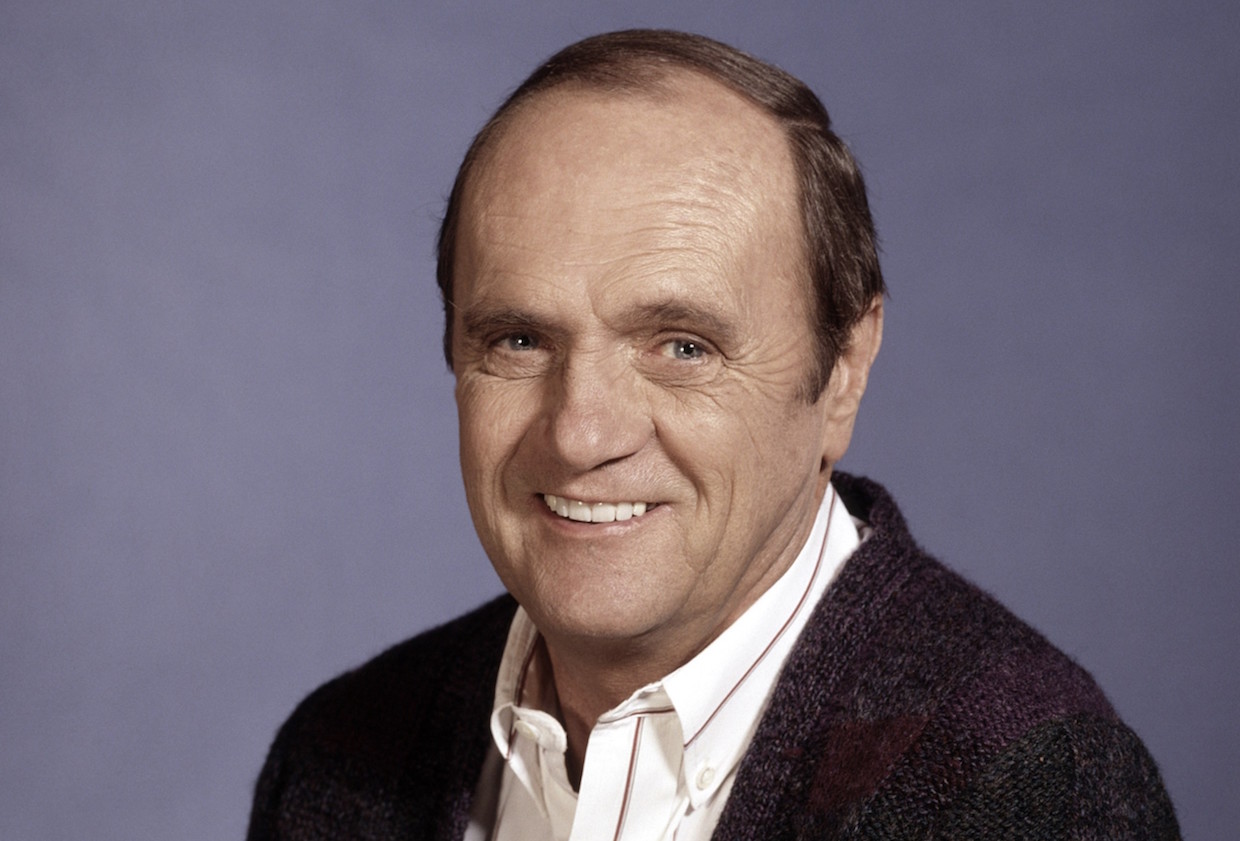
Back in my college days, we had a drinking game called “Hi, Bob.” You would turn on The Bob Newhart Show, and every time a character said, “Hi, Bob!” you’d have to do a shot. Given the number of entrances on that show, I don’t recommend this if you’re no longer college age.
Today being the day that Bob Newhart died, today is yet another time I wish I did a better job of keeping a journal.
Oh, I keep a journal. But I don’t write in it every day, and so I frequently miss the days and details of when something noteworthy happens.
Like: the evening I met Bob Newhart and had a little conversation with him.
Wish I could remember more of what it was about.
Twenty years ago this October, I was a guest at the 10th anniversary event for the Richard and Karen Carpenter Performing Arts Center in Long Beach. Bob Newhart opened with a 20-minute set in which he was pretty damn funny, and then Richard Carpenter played and sometimes sang, accompanied by a 15-piece band, and different singers from the extended Carpenter family, doing lots of Carpenters songs.
Afterward, everybody lined up onstage for food, served buffet-style. I wound up right behind Mr. Newhart. The line was long and slow, so I think we actually talked for 15 minutes or so as we crept along, plates in hand. As I recall, we mostly talked about the food on the buffet line, with him eyeing the ham steaks with appreciation.
So, I can say I met him. Which is the sort of thing that happens a lot in Los Angeles and environs: You just meet people. Some of them you just run into and wind up talking to, like Keanu Reeves and Tom Hanks and Bryan Cranston (in line at plays), others you’re doing something with (Giancarlo Esposito, Tim Robbins, William H. Macy). Sometimes you’re at the supermarket and you realize you’re talking to James Karen, who appeared in Samuel Beckett’s only movie but who people living on the East Coast from the 1970s through 1990s remember as “the Pathmark Shopping guy.”
While my association with Bob Newhart was obviously fleeting and unremarkable, in another way my association was longer, that is, about 10 years. That’s because there was another standup comic from that era whom I knew better: Shelley Berman. Shelley and I both taught in the master’s program in writing at USC. In the late 1950s, Shelley’s standup routine caught fire with a telephone routine: Just him, on a stool, engaged in a telephone conversation, with us hearing only his side of it. Some years later, Bob Newhart did a bit like that, just him on a stool with a one-sided telephone conversation, but Newhart got more famous for it — and, to be fair, for records that were built out of quite different routines, and for two sitcoms that had nothing to do with that. But for years, Shelley would say, “He stole that from me.” Mentioning Newhart was not a good idea.
I don’t have any opinion about whether or not one can “own” an act with a one-sided telephone, and I should note that I also know a gentleman who absolutely swears that the idea for “The Terminator” was stolen from him by James Cameron. It’s that kind of town.
I just know that Bob Newhart made me laugh a lot for many years, with his standup routines, with his two sitcoms, with his brilliantly funny role in “Elf” and, for 20 minutes, at the Carpenter Center. Even when we were picking up our dinners, he made me laugh. I just wish I could remember in what way.
I’m at a small-bore writing retreat somewhere in a small town in middle America at a string of scrubby individual motel rooms like one used to see, or still sees in resorts near, say, Big Bear, California, where each room is its own little building. Nearby there are classic decaying school buses, shallow puddles, patchy grass, and what looks like a rundown convenience store with some gas pumps.
I’m standing out there with my fellow five writers when our special famous writing guest walks up: Charles Bukowski. He looks the same as from all the photos we’ve seen. Except he’s wearing crocs. And he’s not drinking or smoking. Also, he isn’t ornery, just contrary. And useless as a writing instructor. When it comes time to read the first attending writer’s work, we settle into a circle of chairs and Bukowski decides that he will read the work aloud with her, and when he does so, he reads his parts as he imagines various characters would sound, filled with bellicosity for men or an off-putting flutiness for women. He’s putting his all into his terrible theatricality, at the expense of understanding any of the material. He’s so delighted by his own performance that he goes on far too long, leaving the rest of us to worry that he’s never going to get to our own material — although I’ve begun to think that I don’t want him to read any of mine anyway.
Recalling all the well-known people I’ve met in my life and never got a photo with, when we break and start for some reason to move into the surrounding woods, I ask Bukowski if I can take a photo with him. (I don’t use the word “selfie” because I hate the sound of it and because I’m sure Bukowski will mock me for using it.) He says, “Sure. Let me show you how it will look,” and takes my phone and starts taking photos purely of himself, framed by the trees and murky pools of water. I say no, that I want to be in it too, and he reluctantly allows this. The other writers stand around in judgment because I wanted a photo.
Somehow or other, we’re now inside in a cafeteria and Bukowski is getting passive-aggressively interviewed by a reporter. It’s clear she doesn’t like him and now I don’t either. Where did his fire go? Is this really the person whose novels I gobbled down, maybe 15 or 20 of them? Where’s the fun? Now she’s remarking to him that he hasn’t written a book in 20 years, and why not? And I think, Well, for one thing, he’s been dead for 40 years. Then it hits me: Waitaminnit, he’s dead!
That’s what someone I used to know would say during her Oscar party whenever the phone rang and she answered it. The joke being, of course, that that’s what nominees used to say in the press interviews when they’d lost: “It’s an honor just to be nominated.”
I say “used to say” because I haven’t watched the Oscars since I stopped going to that party, and that was… about 30 years ago… so I don’t know if the losers still say this. I don’t have anything against the Oscars, but I don’t have anything for them either. I don’t see many movies, the show isn’t very entertaining, if there is something entertaining no doubt it’ll be shared a zillion times on social media where I’ll come across it regardless, and overall I figure that rich celebrities already get enough attention.
So when Greta Gerwig got snubbed, with no nomination for Best Director, I couldn’t get worked up about it. I didn’t instantly assume that it was part of a vast anti-feminist conspiracy led by Academy voters, as evidently everyone on social media immediately began to claim. I just figured that most of the people who vote for these nominations gave more votes to other directors.
For the record, I thought “Barbie” was an astounding achievement. (Hey — a movie that I saw. And in a movie theatre!) But if we’re going to talk about theoretically deserving artists who never got the award that they were theoretically entitled to, well, that list will be very long indeed.
Among many other distinguished personages, Orson Welles, Alfred Hitchcock, Sidney Lumet, Akira Kurosawa, and Stanley freaking Kubrick never won an Oscar for Best Director.
F. Scott Fitzgerald never won a Pulitzer. Although Edward Albee did win the Pulitzer (three times), in 1963, the advisory jury nominated “Who’s Afraid of Virginia Woolf?” but the board awarded the prize to… no one. (Maybe it’s not always an honor just to be nominated.)
The enormously influential Gertrude Stein never won the Nobel Prize for literature. (She did win the first-ever Pulitzer Prize for Criticism.) Franz Kafka never won a prize of any sort (although there’s now one named for him).
Five times, Mahatma Gandhi was nominated for the Nobel Peace Prize, without winning once. Meanwhile Henry Kissinger won the peace prize for murdering millions of people, and Barack Obama got one for doing nothing that merited it.
I could go on with lists of scientists, writers, painters, playwrights, business heroes both local and not, animal saviors, environmental champions, people of high talent or a do-gooding nature and on and on, who never got properly recognized, sometimes because people didn’t like their work, sometimes because they preferred other people’s work, sometimes because they just didn’t like these people, and sometimes because the decision was arbitrary.
Case in point:
One story goes that in 1969, the jury deciding the Nobel Prize for literature was evenly split between Samuel Beckett and Eugene Ionesco, three-to-three, with much heated debate. It was finally resolved when, after lunch, one of the Ionesco supporters, who also liked Beckett’s work, simply changed his vote. Result: a Nobel Prize for Beckett (who called winning it “a catastrophe”) and none for Ionesco, whose plays are less widely recognized and less frequently produced.
What will be the result for Greta Gerwig of this terrible snub? Probably $20 million to direct “Barbie 2.” Not the worst outcome.
“[Even with Gaza, Darfur, Trump, and climate change], something else is also true: In some ways, 2023 may still have been the best year in the history of humanity.”
Two factors he lists: In 2023, global child mortality reached a record low, and extreme poverty also reached a record low (about 8% of people worldwide).
It’s easy to overlook the positive, as Kristof notes:
“None of this eases the pain of those who have lost their children in 2023, nor is it a balm for those caught in war or climate catastrophes. Yet at year-end, it’s worth acknowledging this backdrop of progress — not to distract anyone from all that is going wrong, but to offer a reminder that when we try hard enough, we can accomplish amazing things. Right now, looking at the anguish worldwide, I’d say we’re not trying hard enough.”
In that spirit, and in recognition of the good luck I’ve been blessed with, and also with recognition that many people haven’t, both among my circle and elsewhere in the world, I have to acknowledge that I’ve had a good year. Maybe it also helps to be older, and wiser, and to recognize good happenings when they happen to you.
Here are just some of the highlights.
Romance
Atlantic City, September 2023.
In May, I met and fell in love with my girlfriend. Instantly. I don’t understand how this happened, but when she showed up at the restaurant where we’d agreed to meet, I was struck by a thunderbolt that told me, “This is it. This is the woman.” I’d had many dates, and two previous actual girlfriends, over the course of two-and-a-half years, but this was instantly different, because she was and is instantly different. I’ve been in love before, and vividly recall how I felt when at age 20 I met my now ex-wife, but I don’t know if I ever before knew what romantic “butterflies in my stomach” meant. And every day since then, I ask myself what I can do to do even better, to keep this going, and if possible to keep it going for, oh, the next three decades. She tells me that she loves me too. I can’t believe my good fortune.
So, right there, that has made for a damn good seven months. Long may it last.
Music
2023 was a terrific year for music, with spectacular new albums from old-timers like Yo La Tengo, Peter Gabriel, Blur, John Cale, and Pere Ubu. Even the Rolling Stones put out a new album that I think is pretty good — and I don’t generally care for the Rolling Stones.
Lots of great concerts in 2023, too, most memorably Yo La Tengo (!!!) at the Teragram Ballroom, and Devo (even more exclamation marks) at the YouTube Theatre, at which I got so excited that my girlfriend caught me on video pogoing along to the music.
It was an honor to host two members of Pere Ubu at my house this summer (!), and for my sons and I to help the band load in and load out for their fine show here in Los Angeles. And I enjoyed meeting up with other longtime Pere Ubu fans for drinks after the show in New York, which I flew in to see.
Theatre
Let’s be honest: It’s always a dice roll going to see a new play. Jukebox musicals may be idiot-proof (enlist some great singers to do classic songs you love against the backdrop of a thinly concocted narrative), but the successful production of a compelling new play is a true highwire act. Forty years of attendance has taught me that if you expect a 90% failure rate, you’ll never be disappointed. There were other plays I enjoyed, but these were the two standout productions this year:
“Heroes of the Fourth Turning” at Rogue Machine, an intellectually honest look at extreme-right-wing evangelicals and their worldview, brilliantly written, acted and directed, was a production I doubt I’ll ever forget. I don’t go to the theatre to be entertained, I go to delve; one way I can be sure I’m in the right place is if a few disgruntled fellow attendees leave mid-scene. In this particular case, success! Those of us who stayed were riveted.
“Kill Shelter” at Theatre of NOTE, about a struggling single mom who also has to daily euthanize dogs who have no future, was both heartbreaking and uplifting — and, somehow, occasionally comic. When each puppet-dog was put down, I cried, even though it was a thing of wire and felt; to someone who has spent 45 years in the theatre, that was epic suspension of disbelief. The play also offered an even-handed defense of kill shelters, a subject I’m sure most people would rather not hear about. Ashley Rose Wellman is a young playwright of talent. I wish I’d seen this earlier in the run, because I would have gone to see it again.
Life and Death
My mother died. That might not seem like a good thing, but it was. She was 98, she figured her time had come, so she lay down, slept for a few days, and passed away. Making her, right to the end, an inspiration. If you pray to a god, you should pray to that god that some day you’re so strong and wise as to be able to do the same. Almost none of us will get this kind of death. Will I miss her? Absolutely. My father died 31 years ago, and I still miss him. But they both left me a lifetime of instruction, so I’m grateful.
Family and friends
Playing Cosmic Encounter, of course: me, son Dietrich, John D., son Lex, and great-nephew Brody, November 2023.
I took my son to London for 10 days, my other son came to join us for Thanksgiving, those two plus my daughter and I were all together for my mother’s services, my great-nephew has come to stay with me twice, and I got to spend five days with my whole extended family back East both in September and earlier this month. It’s been a good year for family.
It’s also been a great year for friends, both new friends, and friends of 40 years.
If you’re lucky, your romantic partner will have quality family and friends of her own, and mine sure does. We’ve been having dinner and playing cards with her sisters and her brother-in-law (and at some point, I will win). We’ve gone to lots of events with her circle of friends — what I’ve started calling her Legion of BFFs — and always had a great time, whether it was the Pops in the LA County Arboretum, the holiday light show, a country-club fundraiser, dinner and drinks, or seeing the Barbie movie. Good people attract other good people.
As for my own friends, the level of caring some of them dropped on me when my mother died, as well as the heartfelt way they embraced my new love, said everything about their friendship. Friends I hadn’t seen in decades showed up at my mother’s viewing to pay their respects. Others called me more than once just to make sure I was doing okay. My friend Ski single-handedly cooked and catered an entire evening for all attendees at my sister’s house the night before my mother’s funeral service. True friends show up for you even when it isn’t fun.
2023 and 2024
At The Americana at Brand, November 2023.
If you haven’t had a good 2023, I’m sorry.
I’m sharing all these successes because I know I’ve been lucky. And because I know luck runs out. Not every year will have as many bright spots. More people will die, you will meet with misfortune, your health will fail, some despicable figure might make a comeback.
But when you have this much love dropped on you in a year, you must acknowledge it. Both to get through the bad times, and because you want to do right. Only a churl would let good times go unrecognized.
My best to you in the new year. Even when trouble befalls – and it will — pick up on the positive.