The past several months I’ve been watching apocalyptic disaster films with my four-year-old son and eight-year-old daughter. We started with “Last Man on Earth,” in which Vincent Price stars as the eponymous enemy of vampiric zombies (or zombie-like vampires) who slowly and ineptly stalk him at night. For the kids, the most memorable part is when Price finally finds some companionship in the form of a bedraggled poodle — until he discovers that said poodle is also infected and he has to put it down. (My daughter especially seems to think the movie is about the poodle.) On a scare level, even given that the film features nominally flesh-eating undead, the film rates a zero even for young children, who endlessly roam the house muttering, “Morgan… come out…” in a caricature of one of the scenes.
After we had exhausted the charms of this odd little film — in the end, Price winds up battling what seem to be mutant humans who are introduced far too late — I figured we’d move on to “The Birds.” Still somewhat scary, still in a sense apocalyptic. Not having seen “The Birds” in 30 years or more, I had forgotten two things:
- That for the first half it’s a tedious romantic comedy built around the misadventures of a man who wants to buy lovebirds and the woman determined to deliver them to him;
- That the ending is lame — and as you find out from the bonus DVD feature about that ending, evidently Hitchcock or the studio or both decided that the true ending would have been too expensive to film… so they just didn’t.
Still, for that brief period of the movie (half an hour?) when the birds are truly on the attack, the kids (this time including my 15-year-old son) were held in its grip. Apparently, birds can kill schoolteachers, pluck out farmers’ eyes, peck through roofs, blow up gas stations and, I guess, if truly pissed, unleash a torrent of birdshit all over you. All of this made an impression.
What is more powerful than flocks of antagonistic birds? Try a swarm of killer bees, as seen in “The Swarm.” This time, there was action throughout, starting with the murder-by-bee of a picnicking mother and father while the son helplessly watched from within the car. Now the kids were riveted. Bees are evidently far more destructive than zombies, birds, or whatever election horseplay Karl Rove can cook up: Bees can derail trains, blow up nuclear power plants, and decimate Houston.
So, what’s next? We watched “The Omega Man,” but this didn’t go over so well, I think because of the testosterone-amped Charlton Heston’s character. After the relatability of Vincent Price’s zombie chores — find them, stake them, haul them to the dump, burn them, much like cleaning the kitchen and taking out the trash — Chuck Heston’s zombie war was clearly high fantasy. It just didn’t carry the threat of dad getting really mad.
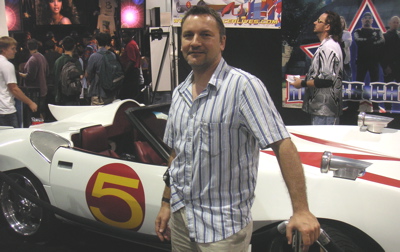 So lately we’re watching “Speed Racer.” For one thing, since the lease on my Mustang is up, I think it’s going to be my next car. For another, Spritle and Chim Chim are clearly the heroes of the show — something my kids relate to. (While they don’t hide in the trunk and jump out at key moments to save their older brother, they do like to get into my wife’s minivan through the hatch.)
Once “Speed Racer” is exhausted, I think we’ll move on to other forms of disaster movies, starting with “The Poseidon Adventure.” Or, if we want to see a disaster of truly magnificent proportion, we’ll just rent the recent remake.
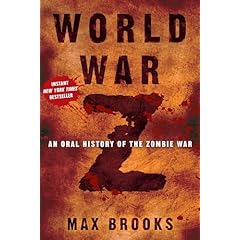 Ninety-nine pages in, and the zombie war is not going well — at least for me. As an “oral history,” the book constantly shifts interviewees — we’re listening to a former Pakistani now in Iceland, or a mercenary who high-tailed it out of Long Island, or a doctor in mainland China. This makes for a travelogue of adventures you weren’t invited to. With every new interview, I wish the book had been written as a straightforward novel, so that we could follow a handful of people and not only witness the events from their perspective — but also grow to know them through their experiences. Instead, this book is like speed dating: Just when you get to know someone, the bell rings.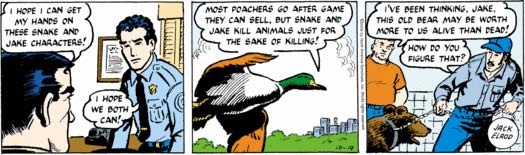

 You’ll also note that the cover price of Captain Marvel #1 was 12¢. In 1968, comics went to 15¢ (making this one of the last 12¢ issues). When had they last been available for 10¢? Try 1962. The cash register in panel five shows a sale of 10¢, which is correct for Action #242, but again, it’s displayed alongside a comic from 10 years later that would have cost more.
 This week several of the playwrights I work with started to worry. Again.
 Trust yourself and follow your characters. If you have strong characters, they will speak to you. Listen to them.