The writing habits
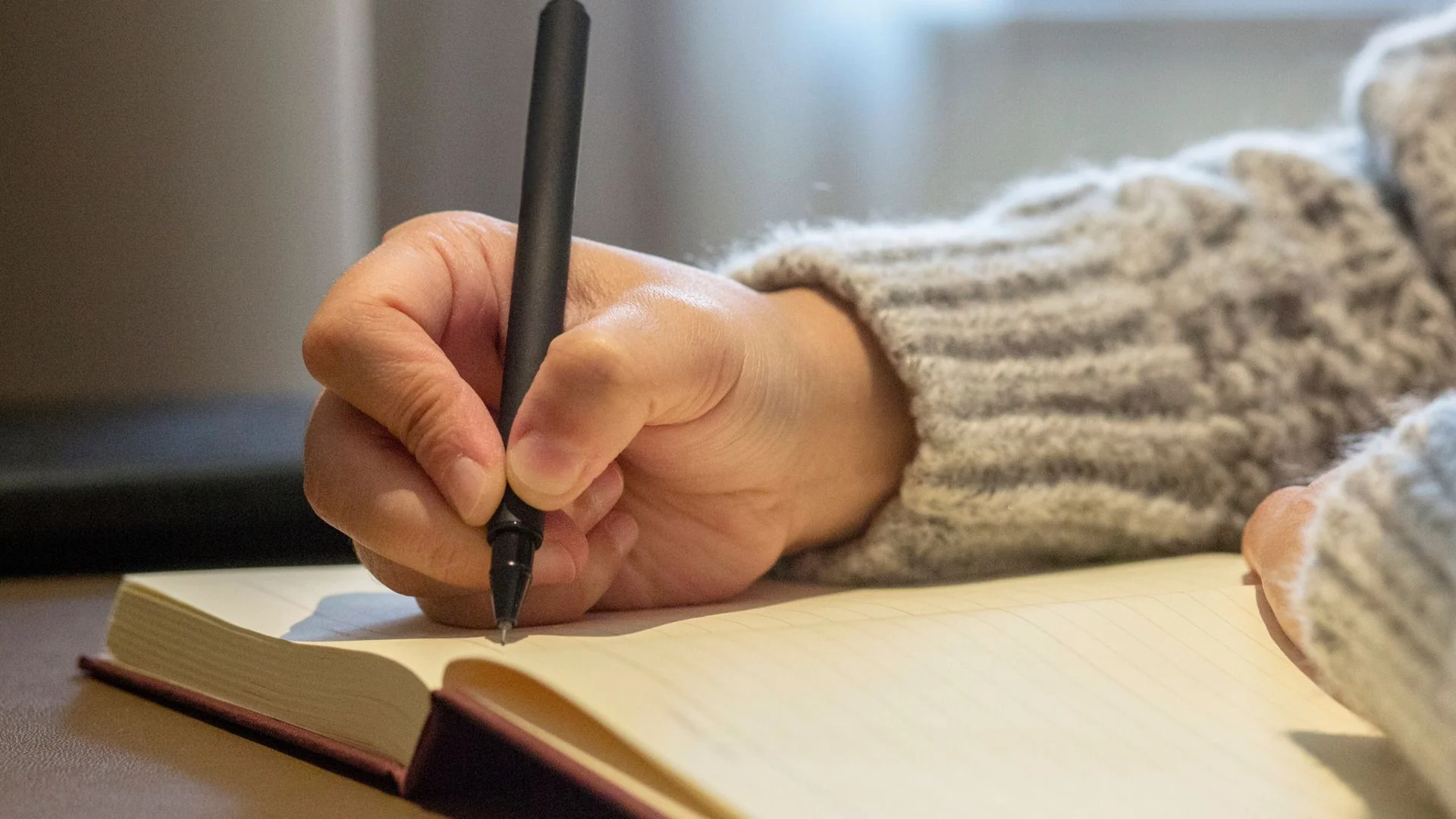
I don’t believe in rules for writing. There are no rules to writing. No good ones, anyway.
Yes, you can bend the language — Chaucer did it, and so did Shakespeare, and Mark Twain, and thank God for them. You have my permission, and you should give yourself permission.
No, you don’t need to write every day. That’s some sort of constraint — a self-imposed dictate, someone listening to the advice of people who don’t themselves follow it. If it works for you to write every day, splendid. If not, don’t. My generous and inspiring teacher Jerome Lawrence told me that his friend Tennessee Williams, no matter how ill or hung over, wrote every day; fine, that worked for him, and I’m glad of that. But you don’t need to act accordingly.
You also don’t need to stick to one medium. (The people listed above didn’t.) Why was it that the University of Southern California was right for me? Because the graduate writing program actively encouraged writing in more than one discipline — which, as someone writing plays and fiction and essays and (very bad) poetry and also business writing I was already doing.
But I do believe in habits.
Habits can be good, and habits can be bad, but if you develop habits to your writing, they help you reacclimate yourself to doing the work.
At base, and setting aside the spiritual realm (whatever you may believe), we are made up of chemicals. So I believe in establishing the chemistry of what you’re writing, and how it will affect you, and re-establishing that chemistry every time you’re writing that thing.
That means:
Whatever you’re drinking when the writing is working, that’s what you’ll be drinking every time you’re working on that piece.
If you started out by drinking, say, orange juice, it’s orange juice you’ll be drinking every time you’re writing that play.
Sometimes, for me, that’s bourbon. I’m careful about that. Obviously, I won’t be writing a play in the morning if it requires bourbon; the ramifications of that sort of approach are well-known to followers of writers. My late friend Gerald Locklin, who was close to Charles Bukowski, said you had to catch Buk at the right time of day: After he’d had one or two beers, but not too many. Much as I love Bukowski’s work, having known many alcoholics and seen how unhelpful that approach can be and also knowing myself and my own life, that’s not the path for me.
Although my current play does require bourbon so, yes, I work on it on Sunday late afternoons or evenings. It requires bourbon because I started with bourbon, and one way to stay unstuck is to reacclimate yourself into the environment of its creation.
The drink I strenuously don’t advise, at least for me: coffee. I once wrote a play on coffee, and found I was going through half a pot or more in each session. I had the jitters for weeks. Never again.
(I’ve been writing all morning today, and you may be cheered to learn that I’m doing it via seltzer water.)
If you started with a nice cigar, as I’m wont to do sometimes, then a nice cigar is required.
If you started writing with music in the background, you queue up that music again. I’ve written 66 plays, some of them good and probably many of them pretty bad, and dozens and dozens of them have been written to music. Sometimes punk, sometimes postpunk, sometimes classical (thanks here to Glenn Gould in particular), once a particularly cherished album by David Sylvian and Robert Fripp that somehow transported me into a different state. People in the writing workshop I’ve led for 32 years now will ask, “How can you write while listening to music?” I tell them, “You don’t listen to it. It’s just on.”
If you’re writing outside, which I like to do (hence the laptop), then you’re better off always writing that piece outside. The outside-ness is part of the environment you’ve created.
Again, the goal is to recreate the environment in which you were succeeding.
By the way, real professionals do this in every profession. Some years ago, I read a lengthy profile of the swimmer Michael Phelps even though I have no interest in him or swimming or sports in toto. What fascinated me was Michael Phelps’ system: his carefully orchestrated timeline for practice and for performance, the time he arrives, the time he puts on his trunks, the time he does warmups, and so on. His system is brilliant and inspiring, and he’s a true champion.
The other habit I endorse most:
Always stop in the middle.
In the middle of a sentence, preferably.
Because when you feel ready to pick it back up, you can start immediately by finishing that sentence.
I learned that a long time ago by reading a biography of Lester Dent, pseudonymously the Kenneth Robeson who cranked out a novel a week in the form of Doc Savage pulps while traversing the globe on a boat. Yes, the books were formulaic, but he was never stuck.
And finally: Don’t edit while you’re writing.
Editing is a judgmental process — a thinking process — and writing is a feeling process. If you’re editing while you’re writing, you’re sitting in judgment of what you’re writing, and that’s a wonderful way to sit back and assess yourself negatively. You’ll never finish anything that way. Every writer I know already has enough self-judgment; the only ones who don’t are the truly bad writers. Write your piece, then edit it. They are separate functions, and should be kept separate. Need some inspiration on this topic? I always recommend Natalie Goldberg’s book “Writing Down the Bones.” She’s smart and fearless.
Anything much beyond that in the way of writing advice, I’m suspicious of. The world is full of bad advice ready to disempower you. What you need to do is what works for you — what’s above is what works for me. But whatever habits you need, figure them out and stick by them. It’s easy to get stuck; habits, being habit-forming, make it easier to stay unstuck.
But, again, that’s my advice. So make of it what you will.