Thumbsucker blues
By their nature, writers are observers.
They’re also conjecturers, people who draw their own conclusions based on what they’re observing, and then extrapolating different pathways that might have led to what they’re seeing.
This is why we also have running narratives in our heads.
It goes like this:
“What am I looking at? I see X and Y and Z. … How did this happen? Did it happen this way, or that way, or some other way? Maybe it was this, maybe it was that, maybe it was this other thing.”
And that’s how, most of the time, we wind up writing a novel or poem or short story or play.
I just came back from a thrilling fast-turnaround trip to England, where I got to meet up with a dozen or so friends and see, twice, what’s honestly the most exciting act in music. (Pere Ubu, of course. And most exciting to me equals most exciting. I’m sure you can understand.) I also went to the National Theatre for the first time, and explored a new area of London, and spent a lot of enjoyable time in pubs and restaurants with said good friends, and navigating the byways of the British rail system.
But what I find I’m thinking about the most is a sad little drama I watched unfold while I was on the shuttle bus from long-term parking to the airport in Los Angeles. Usually, I write about these things in my writing journal, figuring if I’m ever stuck, I can go back to it and make use of it. But I’m never stuck, and I never go back.
(Sidebar: Yes, I keep two journals. There’s the writing journal — for ideas and observations — and there’s the personal journal, for my daily thoughts and activities. No, I don’t know why I keep these separate. Five years ago, I also wrote a divorce journal, again a separate log, this one with a white leatherette cover to distinguish it from the others, and again, I have no idea why. In general, I think it’s best not to probe too deeply into creativity: too closely observed and it might disappear.)
Although my flight was international (to Heathrow), and one would assume I’d be leaving from the international terminal, I was waiting to disembark the shuttle at Terminal 4, where my flight would board. This is just one of many many puzzling oddities about LAX, an airport constantly under (re)construction and where arriving passengers literally need to stand in the busy street to catch their ride or drag luggage what feels like a mile away to catch an Uber or taxi.
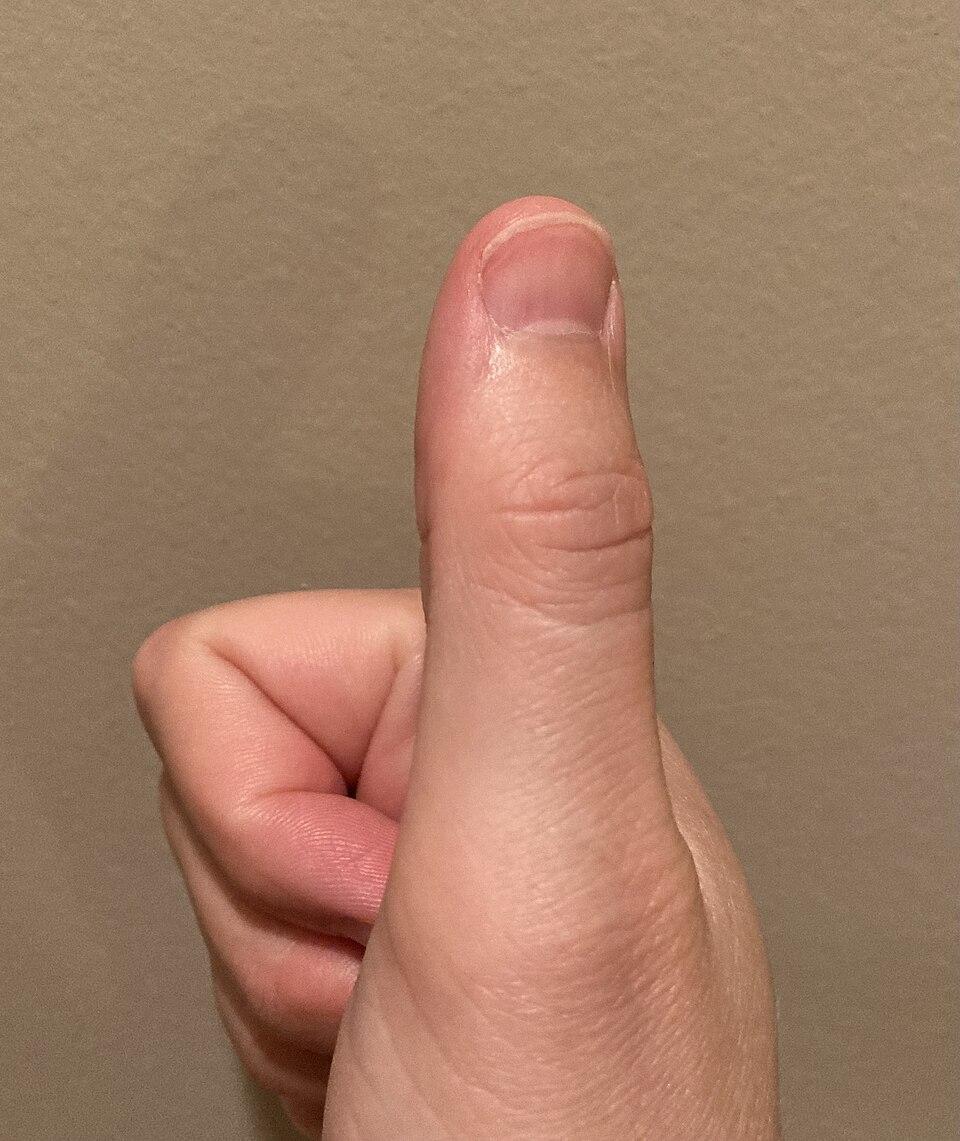
At Terminal 1 or 2, the shuttle pulled over and a boy looking to be about five years old came sullenly onboard — loudly sucking his thumb.
After him came a bouncy little blonde girl of about age 3, followed by two elders I took to be grandparents, then a woman in her 30s. All of them sounded faintly Southern, with slight twangs.
First thought: “Where’s the father?”
The little girl’s name was Anna.
I know this because Anna’s mother repeatedly scolded her, but in the most powerless, indirect way imaginable:
“Anna, you really shouldn’t be sitting that way.”
“Anna, that’s not the way to sit in that seat.”
And, most inexplicably, Anna being all of 3 years old:
“Anna, I really don’t want us to need to visit a hospital while we’re here.”
All of this with labored sighs and through gritted teeth.
The grandmother, more successfully, distracted Anna with flashy games on her iPhone, each distraction lasting a minute or so before Anna would move again and the mother would launch back into it.
The boy, who wasn’t once addressed and was probably glad of it, sucked his thumb.
The grandfather was bearing the weight of the world, his entire face pulled down by it.
What a vacation this will be for them, I thought.
Let me be clear: I helped raise three children, and traveled with all three of them at various times, including as a solo parent when they were young, and I know from personal experience how exasperating it can be and how irritated I could be at times. At age 3, one of my kids was a holy tyrant, screaming and demanding — even when I took him to the circus and got him anything and everything he wanted, he was running around and stamping his feet and being generally impossible for someone who might want to live to see age 4. (Oh, the thoughts I had.) I have video of that child scowling at me as I was teaching him now to ride a bicycle. But that kid burned it all out of his system early on, and has been an absolute delight ever since, someone who has grown into a responsible adult with a nice girlfriend, a job, and a good education. Another of my children was scarily silent and judgmental, glowering at me in every photo of any place I took her, all across the United States, and even to places that she had requested. (At age 27, she is over that, and we’ve had one gratifying trip after another.) At one point, my eldest put me through the ringer, but now to me he seems a legitimate sage, filled with calm wisdom, someone I can turn to for insight and a different perspective.
So I am not naïve about the challenges of parenting young children. Last week, I asked my friend Joseph, 46 and French, how old his kids are. “Five and seven,” he responded. I gave him the same advice I give all parents of young children: “Hang on, it gets worse.” And then, with any luck, when they become adults, it tapers off.
I couldn’t help sympathizing with all five members of this family. I could see how harried the mother of Anna and her unnamed brother were. Judging by her boy’s coping mechanism — thumb-sucking — she had developed no tools of her own; this had been going on for years. Thumb-sucking by a five-year-old is a compulsive response to distress. Whether she knew it or not, her distress didn’t seem situational — it looked to be ongoing, and this was its impact on her son. And the way the mother was handling this, in inverted passive-aggressive formulations impossible for a three-year-old to parse or obey, just seemed like a plaintive cry for help.
I had many questions about this sad little scene.
Why were all five of them here?
They were visiting — but whom?
Was there a father in the picture? Was that father here? What was he like? If he lives here, why? And if he doesn’t, why wasn’t he on this trip?
What would these people be doing while here? They had enough luggage for a week. They were on their way to pick up their rental car, as Grandpa explained to Anna of all people. Anna, who at age 3 had assumed a seat of claimed power.
Grandma’s role seemed like more work than vacation; her week or so would undoubtedly revolve around trying to soothe, calm, and support everyone else in the family. As science tells us: “The ‘grandmother hypothesis’ suggests that human females evolved long post-menopausal lifespans to support grandchildren, increasing the survival and reproductive success of their family line. Biologically, grandmothers act as caregivers and knowledge keepers, while studies indicate their brains are wired for deep emotional empathy towards grandchildren.” She was doing fine with Anna, but there was only one grandma on this trip, not enough for everyone.
The boy was never once spoken to.
Anna did whatever she wanted.
The mother vaguely hoped Anna’s behavior would improve.
Grandpa seemed very much like he’d rather be somewhere else.
What a sad start to a new adventure on a distant shore.
Unable to help myself, I started inventing a father who, if he hadn’t merely allowed all this, had actively contributed to it. A seemingly nice guy who, when friends and guests weren’t watching, was a menacing bully. Someone this mother was fleeing, or needed to. I pictured Anna’s mother having been wooed by this man, and their happy young life together, before children and finances and the pressures of time and responsibility created cracks and fissures and his inner self emerged alongside his disappointment in himself and his situation.
I spun other narratives, too, pure fantasies cooked up in my head as they are every day, but then we arrived at Terminal 4 and I got off.
It’s over a week later and I’m still thinking about them. Are they still here? How was their trip?
What’s going to happen with that boy? And with his mother?
With any luck, writing this will be the end of it for me.
March 22nd, 2026 at 10:35 pm
The absent father can be a big issue. I just watched the Netflix documentary, INSIDE THE MANOSPHERE, where it was speculated on.